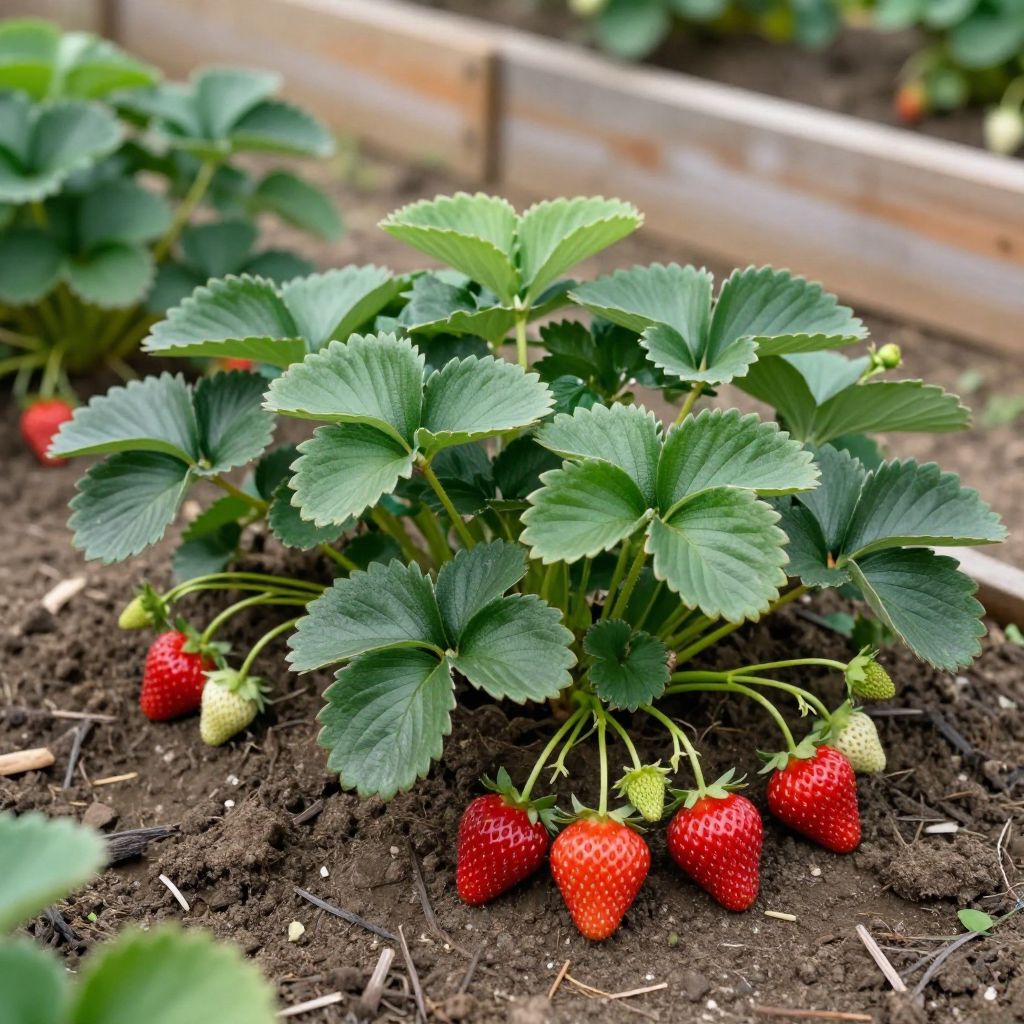
Do strawberries grow on bushes? Not exactly. Strawberries grow on low, spreading plants that form crowns and send out runners, rather than on woody bushes. They’re usually grown as groundcover, in rows, raised beds, containers, or hanging planters, depending on the variety and your space.
If you’re trying to identify a strawberry plant or grow one successfully, it helps to know how it actually grows. Once you understand its habit, you can plant it in the right spot, keep it productive, and avoid a few common mistakes that reduce fruiting.
Do strawberries grow on bushes?
No, strawberries do not grow on bushes. The common garden strawberry, Fragaria × ananassa, is a low herbaceous perennial that grows from a crown and spreads by runners. The fruit develops on short stems above the leaves, so strawberries are better described as trailing or mounding plants, not bushes.
What a strawberry plant really looks like
A healthy strawberry plant has a compact crown, three-part leaves, white flowers, and thin stems that hold the fruit above the foliage. As the plant matures, it may send out runners, which are long stems that root at the tips and create new plants.
Key growth parts to know
- Crown: The central growing point where leaves, flowers, and roots originate.
- Runners: Horizontal stems that make baby plants.
- Flowers: Usually white, and they must be pollinated to form fruit.
- Fruit: The edible part develops after flowering and pollination.
Because strawberries stay low to the ground, they are often mistaken for small bushes when they become full and leafy. But unlike shrubs, they do not develop woody stems.
Best growing conditions for strawberries
Strawberries grow best in full sun, well-drained soil, and steady moisture. They need at least 6 to 8 hours of direct sunlight in most climates to flower and fruit well, though very hot regions may benefit from light afternoon shade.
Soil and drainage
Strawberries prefer loose, fertile soil that drains well. Heavy, soggy soil can lead to root problems and weak plants, so improve it with compost before planting if needed.
- Use soil that holds moisture but does not stay waterlogged.
- Mix in compost to improve structure and fertility.
- Avoid planting in low spots where water collects.
If your soil is clay-heavy, raised beds or containers can make growing strawberries much easier. Good drainage is one of the most important factors for healthy plants.
Sunlight
More sun usually means more flowers and better fruit quality. In cooler climates, full sun is ideal. In very warm climates, strawberries may still need strong light, but some afternoon protection from intense heat can help reduce stress.
Watering
Keep the soil evenly moist, especially while plants are establishing and during flowering and fruiting. Irregular watering can lead to small berries, poor fruit set, or dry, stressed plants.
Water at the base of the plant rather than overhead when possible. This helps keep leaves drier and can reduce disease pressure.
How to plant strawberries the right way
You can plant strawberries in garden beds, raised beds, containers, or strawberry towers, as long as they get enough light and drainage. The most important planting detail is setting the crown at the right height.
Planting steps
- Choose a sunny site with well-drained soil.
- Work compost into the top layer of soil.
- Dig holes wide enough to spread the roots naturally.
- Place the plant so the crown sits level with the soil surface.
- Firm the soil gently around the roots.
- Water thoroughly after planting.
Do not bury the crown. If the crown is too deep, it may rot. If it sits too high, the roots can dry out. Getting this one step right makes a big difference in plant survival.
Spacing
Spacing depends on the growing system and variety, but strawberries generally need room for air movement and runner growth. Crowded plants are more prone to disease and smaller fruit.
- Leave enough space between plants for leaves to spread.
- Keep rows or bed plantings open enough for airflow.
- Thin or remove excess runners if plants become overcrowded.
How to care for strawberry plants through the season
Once established, strawberries are fairly easy to maintain, but they do best with consistent care. The main jobs are watering, feeding lightly, managing runners, and protecting fruit from rot and pests.
Mulching
Mulch helps conserve moisture, suppress weeds, and keep fruit cleaner. Straw is a classic mulch for strawberries, but shredded leaves or other light organic mulches can also work if they do not smother the crown.
- Apply mulch after planting, but keep it away from the crown.
- Refresh mulch as it breaks down.
- Use mulch to keep berries off wet soil.
Feeding
Strawberries do not usually need heavy feeding. Too much nitrogen can produce lots of leaves but fewer berries. Compost at planting time and light seasonal feeding, based on your soil’s needs, is usually enough for many home gardens.
If plants look pale or growth is weak, check soil fertility and drainage before adding more fertilizer. Sometimes the problem is not lack of food, but poor roots or too much shade.
Managing runners
Runners are a normal part of strawberry growth. They are useful if you want new plants, but they can also drain energy from fruit production if left unchecked in a small bed.
- Leave a few runners if you want to propagate new plants.
- Trim extra runners to keep the bed tidy and productive.
- Let rooted runner plants establish before moving them.
Common problems when growing strawberries
Most strawberry problems come from too much moisture, too little sun, overcrowding, or pests eating the fruit. Catching issues early makes them much easier to manage.
Small fruit
Small berries can happen when plants are young, crowded, underfed, shaded, or stressed by drought. Improve light, keep soil evenly moist, and thin out overcrowded plants if needed.
Rotting fruit
Fruit that touches wet soil can rot quickly, especially in humid weather. Mulch helps, and good spacing improves airflow around the plants.
Leaf diseases
Spots, blights, and mildew can appear when leaves stay wet or plants are packed too tightly. Water at soil level, remove badly affected leaves, and avoid overhead watering in the evening.
Pests
Birds, slugs, snails, and some insects may feed on berries or foliage. Netting can help with birds, while careful garden hygiene and hand-picking may reduce slug and snail damage.
- Check plants regularly for chewed leaves or damaged fruit.
- Remove overripe berries promptly.
- Keep beds weed-free to reduce hiding places for pests.
Pruning and renovation tips
Strawberries do not need heavy pruning like shrubs, but they do benefit from cleanup. Remove dead or damaged leaves, old fruit stems, and excessive runners when needed to keep plants healthy and productive.
In beds that produce year after year, older plants may become less vigorous. Replacing tired plants and keeping only the best runners can help maintain a stronger patch.
When to remove runners
If your goal is fruit production, remove most runners so the mother plant can focus on berries. If your goal is to expand your patch, allow a few healthy runners to root in place or pot them up.
How to propagate strawberries
The easiest way to make more strawberry plants is by rooting runners. This is a simple method for home gardeners and usually gives you plants that match the parent plant.
- Choose a healthy runner from a productive plant.
- Pin the runner’s tip into moist soil or a small pot.
- Keep the new plant lightly watered while roots form.
- Once it has a good root system, cut it from the parent plant.
You can also divide some established crowns, but runner propagation is usually simpler and more reliable for beginners.
Harvesting strawberries at the right time
Pick strawberries when they are fully colored and fragrant. Unlike some fruits, strawberries do not ripen much after picking, so harvesting at the right stage matters for flavor.
- Harvest in the cool part of the day if possible.
- Gently twist or snip the stem above the berry.
- Handle fruit carefully to avoid bruising.
Check plants often during harvest season. Ripe berries can go from perfect to overripe quickly, especially in warm weather.
Can strawberries be grown in containers?
Yes, strawberries grow very well in containers if you provide enough sun, moisture, and drainage. Containers are a good choice if your soil is poor, your space is small, or you want to keep fruit easier to reach.
Use a pot with drainage holes and a quality potting mix. Container plants usually dry out faster than in-ground plants, so they need closer attention to moisture, especially in hot weather.
Common mistakes to avoid
- Planting the crown too deep.
- Growing strawberries in shade.
- Letting soil stay soggy.
- Ignoring runners in a crowded bed.
- Letting fruit rest on wet soil.
- Overfertilizing with nitrogen-rich products.
Conclusion
Strawberries do not grow on bushes, but on low, spreading plants that need sun, drainage, and steady care. If you plant them correctly and keep the crown at soil level, you’ll give them the best chance to produce healthy leaves, flowers, and sweet fruit.
If you want to grow strawberries in a small space, you may also find this guide useful: can you grow strawberries indoors.