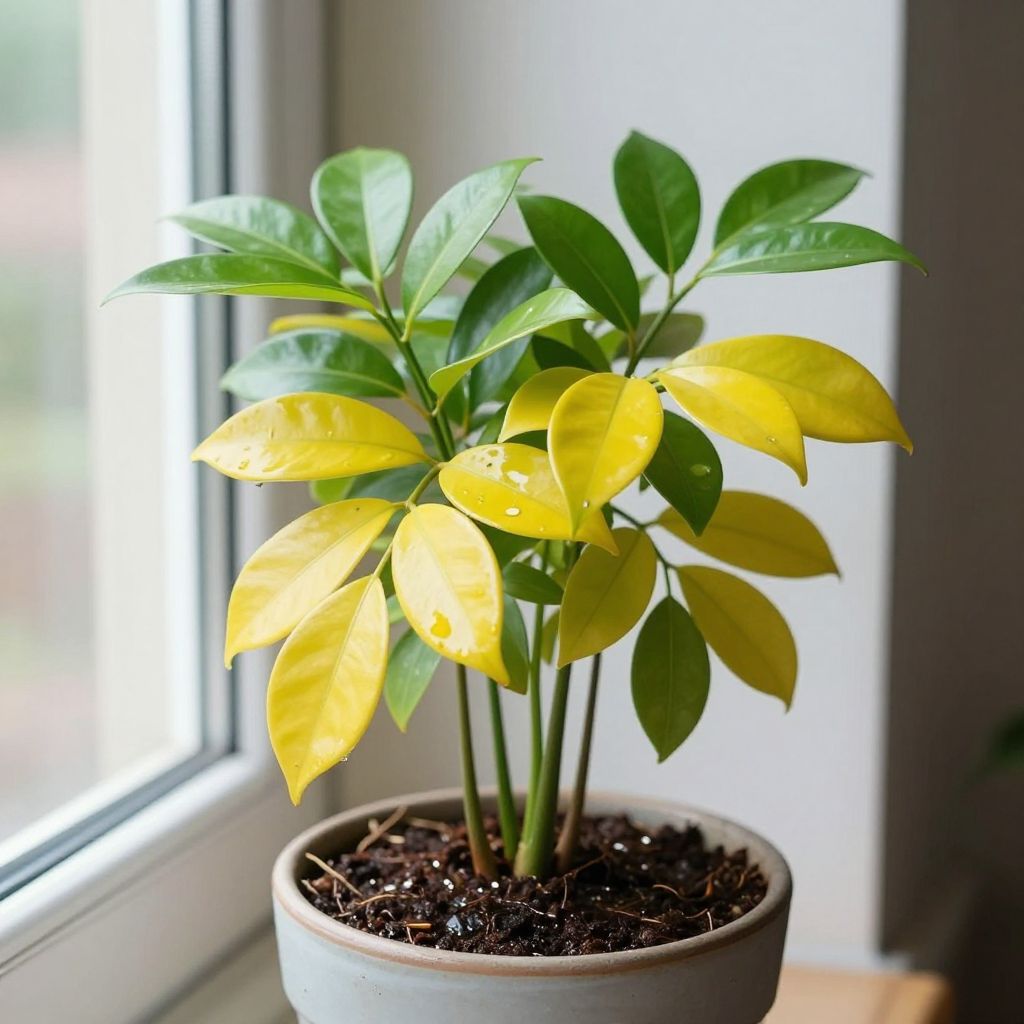
Why is my zz plant turning yellow? In most cases, a yellowing ZZ plant is reacting to too much water, poor drainage, or stress from low light or cold conditions. The good news is that Zamioculcas zamiifolia is usually forgiving, and if you catch the problem early, you can often correct it before serious damage sets in.
The key is to look at the whole plant and the soil, not just the leaf color. Yellow leaves can point to overwatering, underwatering, root rot, sun scorch, pests, or normal aging, so the best fix depends on what else you notice.
Why is my zz plant turning yellow?
A ZZ plant turns yellow most often because its roots are staying too wet for too long. Less often, yellowing comes from underwatering, too much direct sun, cold drafts, nutrient issues, pests, or natural aging of older stems. Check the soil first, then inspect the roots, light, and overall growing conditions before changing your care routine.
Start with the soil: overwatering is the most common cause
ZZ plants store water in thick rhizomes and stems, so they do not like frequent watering. If the potting mix stays damp, the roots can suffocate and rot, and yellow leaves are often the first visible sign.
Signs overwatering is the problem
- Leaves turn pale yellow, then soft or mushy.
- Stems may feel weak, floppy, or swollen near the base.
- The pot feels heavy long after watering.
- Soil smells sour or musty.
- Lower leaves yellow first, especially after repeated watering.
What to do
- Stop watering immediately.
- Check the pot for drainage holes.
- Slide the plant out and inspect the roots and rhizomes.
- Trim away any black, mushy, or foul-smelling roots with clean scissors.
- Repot into fresh, fast-draining mix if the soil is soggy or compacted.
A good ZZ plant mix should drain quickly. A cactus or succulent potting mix works well, or you can improve regular houseplant soil with coarse perlite or pumice.
How to water more safely
Instead of watering on a fixed schedule, water only when the top several inches of soil are dry. In many indoor settings, that may mean every 2 to 4 weeks, but light, temperature, pot size, and season all change the timing.
- Water thoroughly, then let excess drain away.
- Empty saucers and cachepots after watering.
- Use pots with drainage holes whenever possible.
- In winter, expect the plant to dry out more slowly.
Could underwatering be causing the yellowing?
Yes, but it is less common than overwatering. A very dry ZZ plant can yellow, wrinkle, or drop older leaves, especially if it has gone too long without a deep watering or has been kept in a very hot, bright spot.
Signs of underwatering
- Leaves look dull, thin, or slightly wrinkled before yellowing.
- Stems may shrink or feel less firm.
- The potting mix pulls away from the sides of the pot.
- Leaves may crisp at the edges if dryness is severe.
How to correct it
Water deeply so the entire root ball is moistened, then let the pot drain fully. If the soil has become water-repellent and runs straight through, soak the pot in a basin for 20 to 30 minutes, then drain well.
Afterward, return to a “dry, then water” routine rather than frequent small drinks. ZZ plants prefer a thorough soak followed by a long dry spell.
Is your zz plant getting the right light?
ZZ plants tolerate low light, but they still need some indirect light to stay healthy. Too little light can weaken the plant over time, while strong direct sun can scorch the leaves and cause yellow patches.
Low light problems
In very dim conditions, a ZZ plant may grow slowly, stretch toward the light, and gradually lose color. The leaves may not yellow all at once, but older foliage can fade and decline.
Too much sun problems
If the plant sits in direct afternoon sun, yellowing may appear with brown, crispy patches or bleached areas. This is especially common near hot windows or on patios where the plant is exposed to harsh light.
Best light placement
- Bright, indirect light is ideal indoors.
- A few hours of gentle morning sun can be fine.
- Avoid harsh midday or afternoon sun through glass.
- Rotate the pot occasionally so growth stays even.
Could cold stress be the reason?
ZZ plants are tropical and dislike cold drafts, chilly windows, and sudden temperature swings. Exposure to cold can cause yellowing, drooping, and damage that may not show immediately.
Watch for these conditions
- Leaves near a drafty door or window yellow first.
- The plant sits close to an air conditioner or heating vent.
- Soil stays cold and wet for long periods.
- Outdoor plants show damage after cool nights or frost.
Keep the plant in a stable indoor spot away from cold drafts. If you move it outdoors for summer, do so only when nighttime temperatures are consistently warm enough for tropical houseplants in your area.
Root rot and potting issues can mimic other problems
When a ZZ plant has been overwatered for a while, the roots and rhizomes can rot. Once that happens, the plant may yellow even if the surface soil looks dry, because the damaged roots can no longer function properly.
How to inspect the roots
- Remove the plant from the pot.
- Gently shake off loose soil.
- Healthy roots are firm and pale; rotting roots are dark, soft, or mushy.
- Check the rhizomes at the base for soft spots or decay.
If you find rot, cut away damaged tissue with sterilized tools and repot only the healthy sections in fresh, airy mix. If most of the rhizomes are damaged, propagation from healthy stems or leaf sections may be the only way to save the plant.
Can pests make a zz plant turn yellow?
Yes. While ZZ plants are relatively pest-resistant, they can still get mealybugs, scale, or spider mites indoors. These pests weaken the plant by feeding on sap, which can lead to yellowing and general decline.
What to look for
- Mealybugs: white cottony clusters in leaf joints or along stems.
- Scale: small brown or tan bumps stuck to stems or leaves.
- Spider mites: fine webbing and speckled, fading leaves.
How to treat pests
- Isolate the plant from others.
- Wipe visible pests off with a damp cloth or cotton swab.
- Prune badly infested leaves or stems if needed.
- Repeat treatment regularly until the pests are gone.
Check the undersides of leaves and the base of the stems, where pests often hide. Early treatment is much easier than trying to rescue a heavily infested plant.
Is yellowing ever normal?
Sometimes, yes. Older leaves may yellow naturally as the plant redirects energy to new growth. This is usually slow and limited to a few lower leaves, not the whole plant.
Normal aging looks like this
- Only one or a few older leaves yellow at a time.
- The rest of the plant looks firm and healthy.
- New growth is still appearing normally.
If the yellowing is limited and the plant otherwise looks vigorous, you may simply prune off the aging leaf stalks once they have fully yellowed.
How to fix a yellowing zz plant step by step
When you are not sure why your ZZ plant is yellowing, use a simple troubleshooting sequence. This helps you avoid overcorrecting and making the problem worse.
- Check the soil moisture. Feel several inches down, not just the surface.
- Inspect the pot drainage. Make sure excess water can escape.
- Look at the light. Move the plant if it is in harsh sun or deep shade.
- Examine the stems and roots. Look for softness, rot, or pests.
- Adjust watering. Water only when the mix has dried well.
- Repot if necessary. Use a well-draining mix and a pot with drainage holes.
Pruning yellow leaves and stems
Once a leaf or stem has turned yellow, it will not turn green again. You can remove it to improve appearance and help the plant focus on healthy growth.
Pruning tips
- Use clean, sharp scissors or pruners.
- Cut yellow stems at the base.
- Remove only what is fully yellow or clearly declining.
- Avoid heavy pruning of healthy green growth.
If several stems are yellowing at once, address the underlying cause first. Pruning alone will not solve a watering or root problem.
How to prevent yellowing in the future
Prevention is mostly about giving the ZZ plant a stable, well-drained environment. These plants do best when they are slightly neglected rather than fussed over.
- Use a pot with drainage holes.
- Choose a gritty, fast-draining potting mix.
- Place the plant in bright, indirect light.
- Water only after the soil has dried well.
- Keep it away from cold drafts and hot vents.
- Inspect regularly for pests and soft, rotting stems.
Also avoid oversized pots. A pot that is too large holds excess moisture for too long, which increases the risk of root rot.
When to repot a yellowing zz plant
Repotting is helpful when the soil stays wet too long, the mix has broken down, or the roots are crowded and unhealthy. If the plant is otherwise stable, repotting is best done during active growth, but an emergency rescue repot can be done whenever rot is present.
Choose a better potting setup
- Use a container only slightly larger than the root mass.
- Pick a mix that drains quickly and does not compact easily.
- Do not bury the rhizomes too deeply.
- After repotting, wait before watering if the roots were trimmed and the soil is already slightly moist.
Conclusion
If you are asking why is my zz plant turning yellow, the first thing to check is the soil moisture, followed by drainage, light, and root health. In most cases, a small change in watering habits and potting mix will put the plant back on track. Inspect it today, correct the cause, and remove only the leaves that are truly finished.
For more houseplant troubleshooting, you may also find it helpful to read about ZZ plant care basics and how to spot overwatering in houseplants.