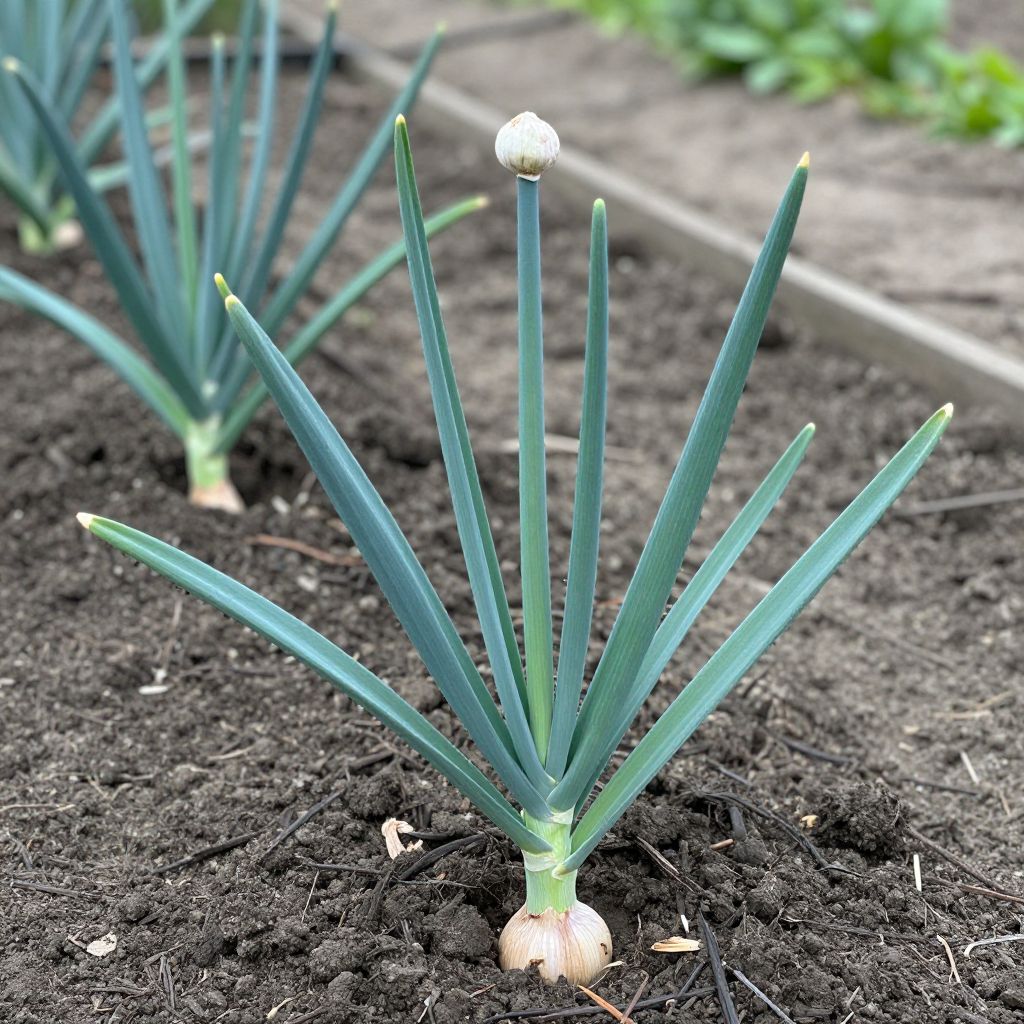
Wondering what does a garlic plant look like in the garden? Garlic is easy to recognize once you know the clues: narrow, flat green leaves, a straight central stem, and, later in the season, a rounded flower stalk called a scape on hardneck types. The edible bulb stays underground, so the visible plant is mostly leafy and upright.
If you are trying to identify garlic among onions, leeks, or wild lookalikes, the details matter. Garlic has a distinctive smell when the leaves are bruised, grows from a clove, and develops a bulb made of segmented cloves beneath the soil.
What does a garlic plant look like?
A garlic plant usually looks like a clump of narrow, strap-like leaves rising from the soil, with each leaf emerging from a central base. The leaves are flat rather than hollow, often blue-green to bright green, and the plant may reach about 12 to 24 inches tall before the bulb matures. Hardneck garlic can later send up a stiff flower stalk, while softneck garlic usually does not.
How to identify garlic at each growth stage
Young garlic seedlings
At the earliest stage, garlic looks like a few thin green blades pushing up from the soil. The leaves are narrow and grass-like, but they are usually flatter and broader than true grass blades.
Because young garlic can resemble onion seedlings, the best clue is the smell. Gently rub a leaf between your fingers; garlic has a strong allium scent.
Vegetative growth
As the plant grows, it forms a small fan of leaves from a single base. The leaves overlap slightly, and the plant stays upright rather than sprawling.
Healthy garlic foliage is firm and turgid. Pale, limp, or yellowing leaves can suggest poor drainage, nutrient stress, or disease.
Bulb development
Most of the bulb forms underground, so you will not see much change above the soil at first. Later in the season, the lower leaves begin to yellow and die back as the plant shifts energy into the bulb.
That natural decline is part of the harvest process, but premature yellowing can also point to pests, disease, or inconsistent watering.
Hardneck scapes
Hardneck garlic produces a curled flower stalk called a scape. It rises from the center of the plant and often curls once or twice before straightening.
Softneck garlic usually does not make scapes, which is one reason it is often easier to braid after harvest.
What garlic looks like underground
Below the soil, garlic develops a bulb made up of individual cloves wrapped in papery skins. The bulb is usually round to slightly flattened, and the cloves are arranged around a central stem in hardneck types.
Softneck types often have more cloves and a less rigid center. If you gently dig around a mature plant, you may see the top of the bulb sitting just below the soil surface.
How garlic differs from similar plants
Garlic vs. onion
- Leaves: Garlic leaves are typically flatter; onion leaves are more hollow and tubular.
- Bulb: Garlic bulbs divide into cloves; onions form a single layered bulb.
- Stalk: Garlic may produce a scape in hardneck varieties.
Garlic vs. leek
- Growth habit: Leeks grow as a thicker, single shaft with overlapping leaf sheaths.
- Bulb: Garlic forms a distinct segmented bulb; leeks do not.
- Size: Leeks are usually much larger and more upright at the base.
Garlic vs. wild garlic or garlic chives
Garlic chives have flatter leaves and a milder flavor, while wild garlic can vary by species and may appear in clumps. If you are foraging, be careful: many plants smell similar, and some wild lookalikes are not edible.
For garden identification, the safest approach is to confirm the plant came from a planted clove and to check for the characteristic segmented bulb.
Growing conditions that shape how garlic looks
Garlic’s appearance changes with growing conditions. In rich, well-drained soil with full sun, plants tend to look sturdy, upright, and evenly green. In poor or crowded conditions, leaves may be smaller, paler, or more prone to disease.
Sunlight
Garlic grows best in full sun. In partial shade, the leaves may be thinner and the bulb smaller, and the plant may lean or stretch toward light.
Soil and drainage
Garlic prefers loose, fertile soil that drains well. Heavy, waterlogged soil can make the leaves yellow and increase the risk of rot.
If your soil is dense clay, work in compost before planting and consider raised beds for better drainage.
Watering
Garlic needs steady moisture while it is actively growing, but the soil should not stay soggy. Uneven watering can lead to stressed plants and smaller bulbs.
As harvest approaches and the tops begin to dry down, reduce watering so the bulbs can cure properly.
How to plant garlic so it grows well
Garlic is usually grown from individual cloves, not from seed. Each clove becomes one new plant, so choose the largest, healthiest cloves from a disease-free bulb.
- Separate the bulb into cloves just before planting.
- Plant each clove with the pointed end up and the flat root end down.
- Set cloves about 2 inches deep in most gardens; in colder climates or lighter soils, slightly deeper planting may help.
- Space cloves several inches apart so bulbs have room to expand.
- Water after planting and keep the bed evenly moist until roots establish.
Mulch can help conserve moisture, suppress weeds, and moderate soil temperature. Straw, shredded leaves, or similar organic mulch works well if applied in a loose layer.
Seasonal changes: what to expect through the year
Fall or early planting in mild climates
In many regions, garlic is planted in fall so it can establish roots before winter. The tops may stay small at first, then resume growth when temperatures rise.
Spring growth
During active growth, the plant becomes taller and fuller, with more leaves emerging from the center. This is when garlic looks most like a neat green fountain.
Late season and harvest time
As bulbs mature, the lower leaves yellow and dry. A common rule of thumb is to harvest when several lower leaves have browned but some green remains at the top.
Do not wait until every leaf is dead if you want good bulbs; overmature garlic can split or deteriorate in the ground.
Common problems that change garlic’s appearance
Yellowing leaves
Yellowing can be normal near harvest, but early yellowing may indicate poor drainage, nutrient deficiency, frost stress, or disease. Check soil moisture first, then inspect the base of the plant for rot or damage.
Stunted growth
Small, weak plants may be crowded, planted too shallowly, or growing in compacted soil. Garlic needs room for roots and loose soil for bulb formation.
Pests and disease
Keep an eye out for thrips, bulb rot, and fungal issues such as white rot or rust, depending on your region. Damaged leaves may show streaking, spotting, or distortion.
Rotate garlic to a new bed every few years if you have had disease problems, and avoid planting in soil that stays wet for long periods.
Practical care tips for healthy-looking garlic
- Remove weeds early so they do not compete for light, water, and nutrients.
- Use compost to improve soil structure before planting.
- Keep the bed evenly moist, especially during leaf growth and bulb sizing.
- Feed lightly only if your soil is poor; too much nitrogen can produce lush leaves but smaller bulbs.
- Watch for scapes on hardneck garlic and remove them if you want the plant to focus on bulb growth.
Harvesting and curing garlic
When the lower leaves have browned and the upper leaves are still partly green, it is time to check a bulb. Gently lift one plant with a garden fork rather than pulling hard on the stem, which can damage the bulb.
After harvest, brush off loose soil and cure the bulbs in a dry, airy place out of direct sun. Proper curing helps the outer skins dry into the papery wrapper you expect from store-bought garlic.
A quick visual checklist for identifying garlic
- Narrow, flat, upright green leaves
- Strong garlic scent when bruised
- One plant growing from one clove
- Segmented bulb underground
- Possible curled scape on hardneck types
If you want to compare garlic with other alliums in your garden, it can help to read more about bulb crops, soil preparation, and harvest timing so you can recognize the differences at each stage of growth.