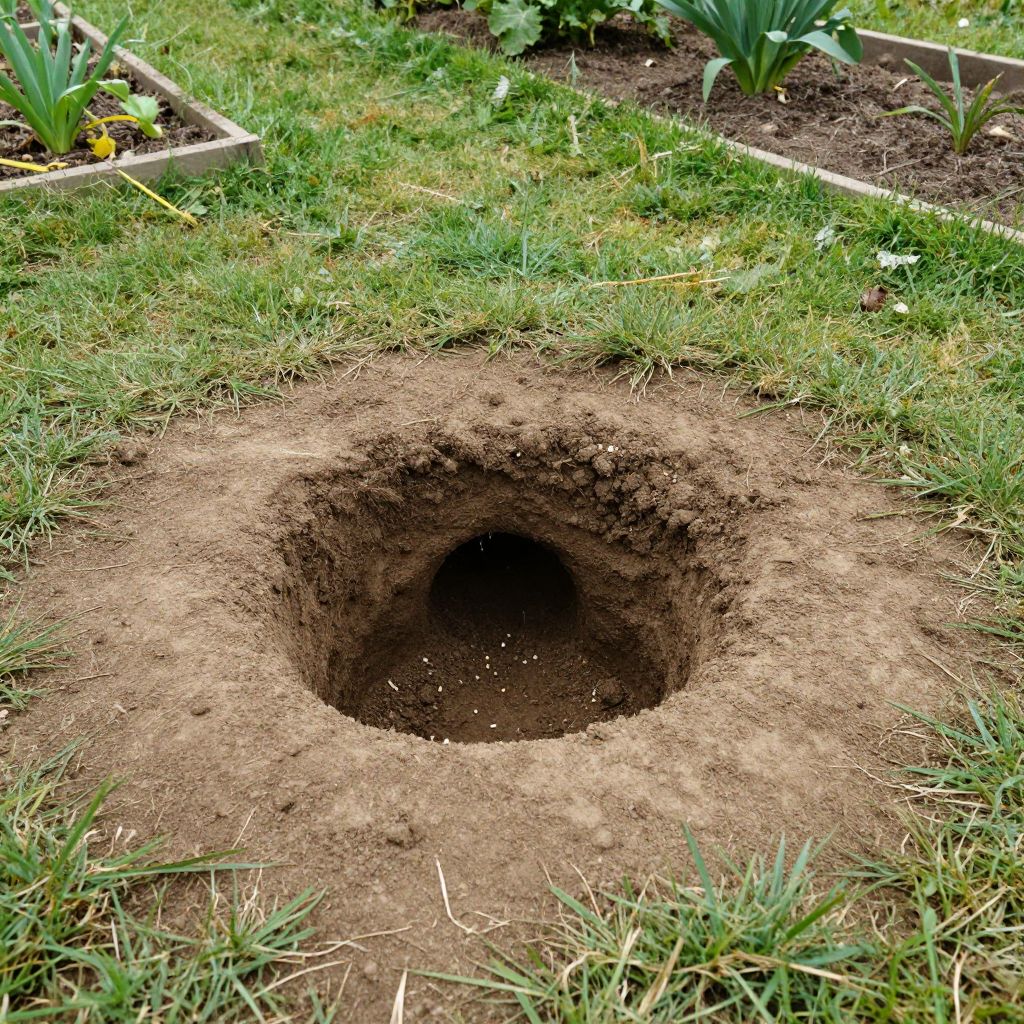
What does a rabbit hole look like in a garden? If you’re trying to identify rabbit activity, the answer is usually a small, rounded opening in loose soil, often hidden along a hedge, fence line, or under shrubs. The entrance is typically about 4 to 6 inches wide, with little or no soil mound around it.
Knowing how to spot a rabbit hole can help you protect seedlings, bulbs, bark, and young plants before damage spreads. It also helps you tell rabbit burrows apart from holes made by moles, voles, groundhogs, or other wildlife.
What does a rabbit hole look like?
A rabbit hole is usually a neat, round or oval entrance in soft soil, grass, or mulch, about the size of a grapefruit to a small melon. It often sits near cover such as brush, tall grass, decks, sheds, or dense plantings, and it may have a worn path leading to and from the opening.
How to identify a rabbit hole in the garden
Rabbit burrows are often easy to miss because they blend into the landscape. Look for a low, unobtrusive entrance rather than a large pile of excavated soil.
Common visual clues
- Size: usually about 4 to 6 inches across, though entrances can vary.
- Shape: round or slightly oval, with smooth edges from repeated use.
- Location: near cover, especially under shrubs, hedges, sheds, woodpiles, or dense groundcover.
- Soil: loose or lightly disturbed soil, often with very little spoil heap.
- Paths: narrow runways through grass or mulch leading to feeding areas.
Signs rabbits are using the area
- Cleanly clipped plant stems, especially on tender seedlings and vegetables.
- Leaves and shoots eaten low to the ground.
- Small round droppings nearby.
- Flattened grass or repeated trails through beds.
- Bark gnawing on young trees and shrubs in winter or during food shortages.
Rabbit hole vs. other garden holes
Correct identification matters because different animals need different control methods. A hole alone does not prove rabbits, so compare the opening, surrounding soil, and nearby damage.
Rabbit holes vs. mole tunnels
- Rabbits: visible entrance hole, often under cover.
- Moles: raised ridges and mounds, usually no obvious open entrance.
Rabbit holes vs. vole runways
- Rabbits: larger openings and above-ground feeding damage.
- Voles: small openings, surface runways, and gnawed roots or bark near the soil line.
Rabbit holes vs. groundhog burrows
- Rabbits: smaller, less conspicuous entrances.
- Groundhogs: much larger holes, often with a noticeable dirt mound and heavy excavation.
Where rabbits usually dig and why
Rabbits prefer spots that feel protected. They often choose sites with nearby cover so they can retreat quickly from predators and disturbance.
Typical garden locations
- Along fences, walls, and hedgerows
- Under decks, sheds, and outbuildings
- At the base of shrubs or ornamental grasses
- In weedy corners, compost-adjacent areas, or overgrown borders
- Near vegetable beds with tender new growth
Seasonal behavior
Rabbit activity can increase when cover is dense and food is plentiful. In colder months, they may browse bark, buds, and evergreen foliage more heavily if other food is scarce.
How to inspect a suspected rabbit hole safely
If you suspect a burrow, inspect it without collapsing the entrance or startling any animal inside. Wear gloves and avoid reaching into the hole.
- Observe from a distance first for fresh tracks, droppings, or repeated movement.
- Check the opening size and whether it is tucked under cover.
- Look for clipped stems, chewed bark, or nearby feeding signs.
- Use a flashlight at dusk or dawn if you want to confirm activity.
- Mark the spot and monitor it for 24 to 48 hours before taking action.
Do not block a burrow immediately if you are unsure whether it is active. You could trap an animal inside or force it to relocate into another part of the garden.
What to do if you find a rabbit hole
The best response depends on whether the burrow is active, how much damage is happening, and whether the area is part of a planting bed, lawn, or structure perimeter.
Step 1: Confirm activity
Fresh droppings, clean edges, tracks, or new plant damage suggest the burrow is in use. If nothing changes for several days, it may be abandoned.
Step 2: Protect nearby plants
- Use wire mesh or hardware cloth around vulnerable beds.
- Install individual plant guards around young trees and shrubs.
- Cover seedlings with secure row cover or cloches where appropriate.
- Raise the lower edge of fencing and bury it if rabbits are entering under it.
Step 3: Reduce shelter
Rabbits are less likely to linger if the area feels exposed. Trim back dense weeds, remove brush piles, and keep grass mowed around vulnerable edges when practical.
Step 4: Monitor the hole
If the burrow appears abandoned, watch it for renewed use before filling it. Active burrows can be reopened quickly, especially if food and cover remain nearby.
How to fill or close a rabbit hole
Only close a burrow when you are confident it is unused. If you are uncertain, consult local wildlife guidance or a professional pest control service familiar with humane wildlife management.
Basic closure approach
- Wait until you have seen no activity for several days.
- Check for fresh droppings, tracks, or disturbed soil.
- Fill loose soil back into the opening in layers, tamping gently.
- Top with soil and mulch that matches the surrounding area.
- Watch the spot for reopening over the next week or two.
Avoid sealing an active burrow with concrete, large rocks, or deep compacted fill. That can create drainage problems and may not solve the wildlife issue.
Preventing rabbit holes in the garden
Prevention is often easier than repeated repair. The goal is to make the site less attractive for nesting, burrowing, and feeding.
Garden-proofing tips
- Install fencing with openings small enough to exclude rabbits.
- Keep the bottom edge tight to the ground or bury it slightly.
- Remove thick brush and unused debris piles near beds.
- Protect young trees with sturdy trunk guards.
- Choose less vulnerable planting areas for tender crops.
Planting choices that help
Rabbits tend to target tender, succulent growth. If rabbit pressure is high, place highly palatable plants closer to protected areas or use barriers around them from the start.
Common mistakes gardeners make
Misreading a burrow can lead to wasted effort or more damage. A careful approach saves time and protects both plants and wildlife.
- Assuming every hole is a rabbit hole. Many garden pests create similar openings.
- Blocking the entrance too soon. This may trap an animal or push it elsewhere in the garden.
- Ignoring the surrounding damage. Feeding signs often tell you more than the hole itself.
- Leaving dense cover in place. Overgrown edges invite rabbits to stay.
- Using only one control method. Fencing, cleanup, and plant protection work better together.
When to get extra help
If the burrow is close to foundations, retaining walls, patios, or utility areas, take it seriously. Repeated digging near structures can undermine soil and create maintenance issues.
Also seek local advice if you are dealing with a protected wildlife species, if the hole keeps reopening, or if the damage is extensive enough to threaten valuable plantings.
Quick checklist for identifying a rabbit hole
- Round or oval opening, usually 4 to 6 inches wide
- Located near cover such as shrubs, fences, or sheds
- Little or no soil mound around the entrance
- Nearby clipped stems, droppings, or runways
- Visible feeding damage on low plants, bark, or seedlings
If you want to protect your garden, start by checking the hole’s size, location, and nearby plant damage, then add fencing or guards before the rabbits settle in. For more practical pest and plant-protection advice, keep reading related gardening guides on wildlife control and garden bed maintenance.