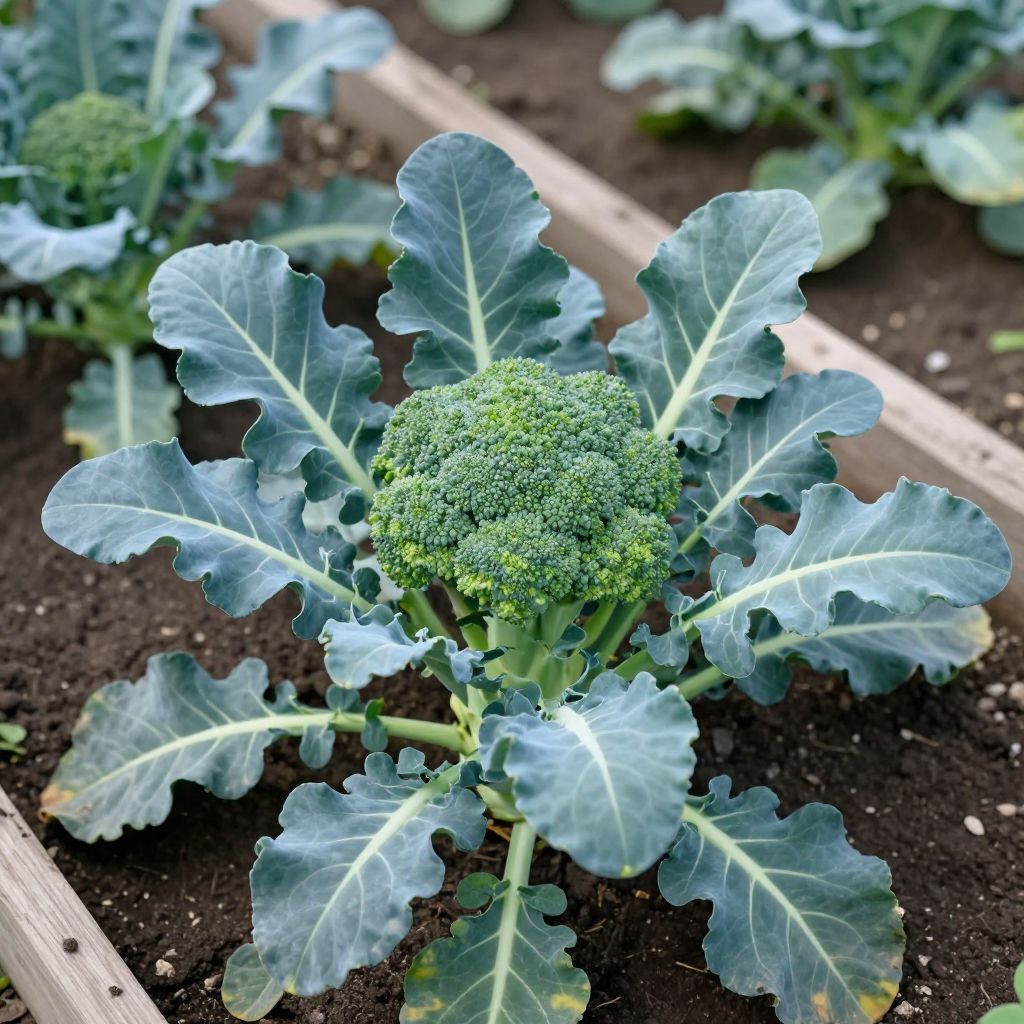
If you’re wondering what does broccoli look like growing, the short answer is that it starts as a leafy brassica plant with thick blue-green leaves, then forms a central head made of tiny green flower buds on a stout stalk. Before harvest, the head looks like a tight, rounded cluster rather than the supermarket floret shape you buy.
Knowing the plant’s growth stages helps you identify it early, care for it properly, and harvest at the right time. Broccoli can look very different from seedling to mature plant, so the details below will help you recognize it in the garden and avoid common mistakes.
What does broccoli look like growing?
Growing broccoli begins as a low rosette of broad, waxy, blue-green leaves. As it matures, the plant develops a thicker central stem and a compact dome-shaped head in the center, made of tightly packed green flower buds. If left too long, that head loosens and may open into yellow flowers.
How to recognize broccoli at each stage
1. Seedling stage
Broccoli seedlings are small and easy to confuse with other brassicas. They usually have two smooth seed leaves first, followed by true leaves that become slightly lobed and textured.
At this stage, the plant is only a few inches tall and looks delicate. The leaves are often a soft green, and the stem is thin but sturdy.
2. Young vegetative plant
As broccoli grows, the leaves become larger, thicker, and more blue-green. They may have a slightly dusty or waxy surface, which helps the plant conserve moisture.
The plant forms a low, spreading rosette before the center begins to rise. This is when broccoli starts to look more like a garden brassica than a seedling.
3. Heading stage
The most recognizable stage is when the central head begins to form. You’ll see a tight cluster of tiny green buds in the center of the plant, sitting above the surrounding leaves on a thick stalk.
A healthy broccoli head should look compact and firm. If the buds are separating, turning yellow, or stretching upward, the plant is getting past prime harvest time.
4. Flowering stage
If broccoli is not harvested on time, the head opens into small yellow flowers. The plant becomes taller and less compact, and the head loses its tight, edible texture.
This is a sign that the plant has bolted or is finishing its growth cycle. The flowers are still attractive to pollinators, but the head is no longer ideal for eating.
What the leaves, stem, and head should look like
Leaves
- Broad and somewhat wavy or lobed
- Blue-green to deep green in color
- Often waxy or slightly powdery in appearance
- Growing in a rosette around the center before heading
Stem
- Thick, upright, and sturdy
- Usually pale green to green
- Supports the head above the leaf canopy
- May branch after the main head is harvested
Head
- Dense cluster of unopened flower buds
- Usually green, though some varieties differ in color
- Rounded or slightly domed
- Should feel firm when gently pressed
How broccoli grows in the garden
Broccoli is a cool-season crop that prefers steady growth in mild weather. It generally grows best in full sun, with fertile soil that drains well and holds even moisture.
In the garden, broccoli usually looks healthiest when it has enough space for its leaves to spread and enough room for air to move around the plant. Crowding can make plants weaker and more prone to disease.
Ideal growing conditions
- Sunlight: Full sun is best, though very hot climates may benefit from some afternoon shade.
- Soil: Rich, fertile soil with plenty of organic matter.
- Drainage: Soil should drain well; soggy roots can stunt growth.
- Moisture: Even watering helps prevent stress and poor head formation.
If your soil is heavy clay or very sandy, mix in compost before planting. Compost improves structure, helps retain moisture, and supports steady growth.
How to tell broccoli from similar plants
Broccoli can be mistaken for cauliflower, Brussels sprouts, or even ornamental brassicas when young. The easiest way to identify it is by the shape of the developing head and the leaf pattern around it.
- Broccoli: Green, tight head of buds on a central stalk.
- Cauliflower: White curd-like head, often hidden by inner leaves.
- Brussels sprouts: Tall stem with small buds forming along the stem, not one central head.
- Kale or collards: Leafy plants with no central broccoli-style head.
If you are unsure, wait a few days and watch the center of the plant. Broccoli’s head becomes obvious as it develops, especially in cool weather.
When broccoli is ready to harvest
Harvest broccoli when the head is still tight and compact, before the buds begin to loosen or show yellow. The head should be large enough for your variety, but size matters less than texture and firmness.
Use a clean, sharp knife and cut the main head with several inches of stem attached. After harvest, many plants produce smaller side shoots from the leaf joints.
Signs it’s time to pick
- The head feels firm and dense
- Bud clusters are still closed
- Color is deep green and even
- No yellow flowers are visible
Signs you waited too long
- The head loosens and expands
- Yellow petals appear between buds
- The center stalk stretches upward
- The texture becomes less tender
Common growing problems that change how broccoli looks
Leggy seedlings
If seedlings stretch tall and thin, they may not have enough light. Leggy broccoli looks weak, pale, and floppy instead of compact and sturdy.
Move seedlings to brighter light and avoid overcrowding them. If you’re starting indoors, good light is especially important so the plants don’t become spindly before transplanting.
Small or loose heads
Broccoli may form small heads if it experiences heat stress, drought, poor soil, or transplant shock. The plant may still look healthy overall, but the head will be underdeveloped.
Keep soil evenly moist, enrich the bed with compost, and plant at the right time for your climate so the crop matures in cooler weather.
Yellowing or flowering heads
When broccoli turns yellow, it usually means the buds are opening into flowers. This often happens quickly in warm weather.
Harvest promptly as soon as the head looks ready. If the plant is already flowering, remove the head and continue caring for the plant if it is still producing side shoots.
Pest damage
Broccoli leaves can be chewed by cabbage worms, loopers, flea beetles, and other brassica pests. Damage may appear as holes, ragged edges, or tiny shot-like marks.
Check the undersides of leaves regularly. Floating row covers, hand-picking, and timely inspection are often the most practical controls for home gardeners.
How to care for broccoli so it looks healthy
Healthy broccoli plants have sturdy leaves, strong stems, and even growth. The goal is to keep them growing steadily without stress.
- Plant in fertile soil. Work compost into the bed before planting.
- Water consistently. Keep the root zone evenly moist, especially during head formation.
- Give enough space. Crowded plants are more likely to struggle with airflow and disease.
- Watch for pests early. Small infestations are easier to manage than severe damage.
- Harvest on time. Don’t wait for the head to become oversized.
Broccoli grows best when conditions stay steady. Sudden stress from heat, drought, or poor soil often shows up first in the plant’s appearance.
Should you prune broccoli?
Broccoli does not need heavy pruning, but you can remove badly damaged leaves or yellowing foliage to improve airflow and keep the plant tidy. Avoid cutting healthy leaves unnecessarily, since they help feed the developing head.
After the main head is harvested, many varieties produce side shoots. Leave the plant in place and continue watering if you want a second round of smaller harvests.
Growing broccoli in containers
Container-grown broccoli looks similar to garden-grown broccoli, but it may be smaller if the pot is too tight or the soil dries out too quickly. Choose a container with good drainage and enough depth for root growth.
Because pots warm up faster than garden beds, container broccoli may need more frequent watering and closer attention in hot weather. The plant should still develop broad leaves and a central head if it gets enough sun and nutrients.
Quick visual checklist
- Blue-green, broad leaves
- Thick central stem
- Compact green head in the center
- Head made of tiny unopened buds
- Yellow flowers mean it is past peak harvest
Final tips for identifying broccoli correctly
If you remember only one thing, remember this: broccoli is a leafy brassica that forms a tight green flower head before it blooms. Watch the center of the plant closely, especially in cool weather, because the head can go from perfect to flowering very quickly.
For more practical brassica-growing guidance, you may also want to read about how to grow cabbage in the home garden and common vegetable garden pests and how to spot them early.