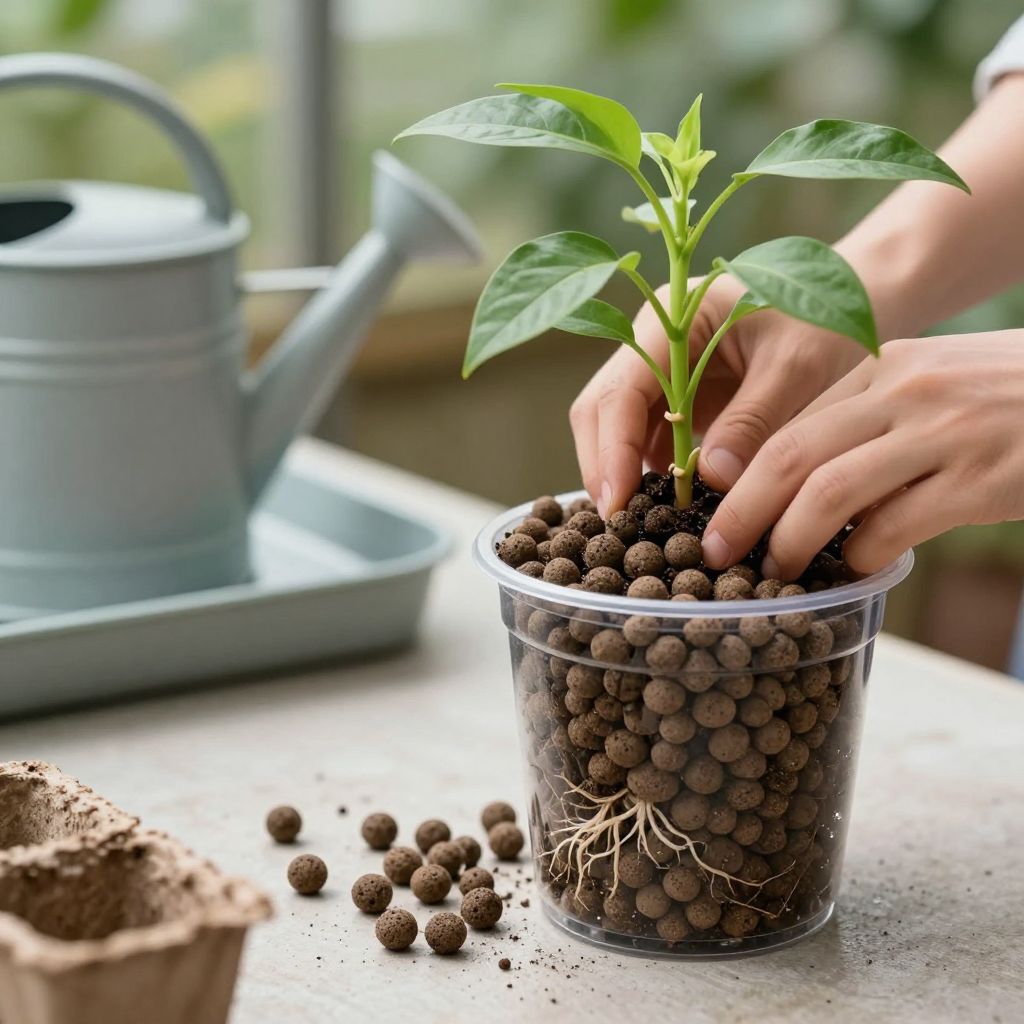
If you’ve seen small clay pebbles in plant pots and wondered, “What is Leca for plants?”, you’re looking at a lightweight growing medium used for drainage, semi-hydroponics, and root support. It can help reduce soggy soil problems, but it is not a fertilizer or a complete growing system on its own.
Used correctly, LECA can make watering more forgiving for some houseplants and propagation setups. Used carelessly, it can dry roots out too fast or leave plants sitting in stale water, so it helps to understand what it does before switching a plant over.
What is Leca for plants?
LECA stands for lightweight expanded clay aggregate. It is made by heating clay until it expands into hard, porous pellets. Gardeners use it as a drainage layer, a semi-hydroponic growing medium, or a soil amendment for certain indoor plants that prefer airy, fast-draining conditions.
How LECA works in plant care
LECA does not feed plants and it does not behave like potting soil. Instead, the pellets hold air in their pores while also wicking a small amount of moisture upward from a reservoir, which can help roots access water without sitting in dense, soggy compost.
This makes LECA especially useful for plants that dislike constantly wet roots. It can also make it easier to monitor moisture, because you can often see the water level in a cachepot or reservoir.
What LECA does well
- Improves aeration around roots
- Helps prevent waterlogging in containers
- Can support semi-hydroponic growing setups
- Reduces some soil-borne mess indoors
- Lets you track water more easily than in opaque potting mix
What LECA does not do
- It does not provide nutrients
- It does not replace regular plant care
- It does not suit every plant species
- It does not fix poor light conditions
- It does not eliminate the need to check roots and water quality
Which plants are good candidates for LECA?
LECA is often used for many common houseplants, especially those that like evenly moist but airy root conditions. It can work well for pothos, philodendron, monstera, hoya, some orchids, and other tropical foliage plants, provided you adjust watering and nutrients carefully.
It is usually less suitable for plants that need dry, gritty conditions, or for species that resent root disturbance. If you are unsure, test LECA on a cutting or a spare plant first rather than converting your best specimen immediately.
Plants that may adapt more easily
- Epipremnum aureum (pothos)
- Philodendron species
- Monstera species
- Hoya species
- Many aroids and some orchids
Plants that may struggle
- Plants that prefer to dry out fully between waterings
- Species with very fine, delicate roots that dislike handling
- Plants that need rich organic soil biology to thrive
- Outdoor plants exposed to heavy rain, frost, or temperature swings
How to prepare LECA before using it
New LECA is dusty and may float at first. Rinsing and soaking it before use helps remove dust, improves water absorption, and makes it easier to work with. This is one of the most important steps, because unprepared LECA can cloud water and behave inconsistently.
- Rinse the pellets thoroughly in a bucket or colander until the water runs clearer.
- Soak them in clean water for several hours or overnight.
- Drain before potting, or keep them damp if you are moving a plant into semi-hydroponics.
- Use clean containers and avoid mixing dirty old media into a new setup.
Tip: If your LECA keeps floating, soak it longer. Some pellets take time to become fully waterlogged.
How to use LECA in pots
There are two common ways to use LECA: as a full growing medium in semi-hydroponics, or mixed into potting soil to improve aeration. The right method depends on the plant, your watering habits, and whether you want a low-mess indoor setup or simply better drainage.
1. Using LECA in semi-hydroponics
This method replaces soil entirely. The plant sits in LECA, and a small water reservoir remains below the roots so moisture can wick upward without flooding the crown.
- Remove the plant from its pot and gently wash soil from the roots.
- Trim away rotten or damaged roots with clean scissors.
- Place a layer of damp LECA in the pot.
- Set the roots in position and fill around them with more LECA.
- Add water to a low reservoir, usually below the root crown.
- Monitor the plant closely during the first few weeks as roots adapt.
Expect some transition stress. A plant moved from soil to LECA may pause growth while it develops water roots suited to the new environment.
2. Mixing LECA into potting soil
Some gardeners add LECA to a regular houseplant mix to increase air space and drainage. This can be helpful in dense potting mixes or in containers that stay wet too long.
- Use it as a partial amendment, not a cure-all.
- Combine it with a quality potting mix suited to the plant.
- Do not assume more drainage is always better; moisture-loving plants may dry too quickly.
Watering plants grown in LECA
Watering is different in LECA than in soil. Instead of soaking the whole pot and waiting for excess to drain away, you usually maintain a small reservoir or water thoroughly and then allow the medium to move moisture upward as needed.
The safest approach is to learn how your specific plant responds. Some plants like a modest, consistent reservoir; others do better with periods of partial drying. Climate, pot size, light, and temperature all affect how fast LECA dries.
Common watering mistakes
- Keeping the reservoir too high and drowning the roots
- Letting the medium stay bone dry for too long
- Using hard or mineral-heavy water without monitoring buildup
- Assuming the top layer tells you everything about root moisture
Watch the roots, not just the surface. LECA can look dry on top while still holding moisture lower down.
Feeding plants in LECA
Because LECA contains no nutrients, plants grown in it need regular feeding with a complete fertilizer diluted according to the product label and the plant’s needs. In semi-hydroponic systems, nutrients are usually delivered through the water rather than through compost or potting mix.
Keep in mind that fertilizer needs vary with light, growth rate, season, and plant size. A plant in active growth under bright indoor light will usually need more feeding than one resting in low winter light.
Feeding basics to remember
- Use a balanced fertilizer appropriate for houseplants or hydroponics
- Follow label directions carefully
- Flush the medium periodically if salts build up
- Reduce feeding when growth slows
Light, temperature, and placement
LECA does not change a plant’s light needs. A plant that wants bright indirect light still needs bright indirect light, whether it is in soil or clay pebbles. Poor light can lead to weak growth, slow drying, and increased risk of root problems because the plant uses less water.
Indoors, keep LECA-grown plants where they receive the same light they would need in any other medium. Outdoors, container plants in LECA may dry faster in sun and wind, so they need closer monitoring than shade-grown plants.
Placement tips
- Use bright, indirect light for many tropical houseplants
- Protect plants from cold drafts near windows in winter
- Move containers if direct sun overheats the reservoir
- Check moisture more often during hot, bright weather
Common problems with LECA and how to fix them
Most LECA problems come from water management, not from the pellets themselves. If a plant declines after switching, look first at roots, moisture level, and fertilizer use before assuming the medium is at fault.
Yellowing leaves
This can happen during transition, from root damage, from too much water, or from nutrient imbalance. Check whether the roots are healthy and whether the reservoir is too high.
Soft or rotting roots
Usually caused by stagnant water, poor sanitation, or a reservoir that stays too deep. Remove damaged roots, rinse the LECA, and lower the water level.
Wrinkled or limp leaves
This often means the plant is not taking up enough water yet. The roots may still be adapting, or the medium may be too dry. Increase moisture gradually and watch for recovery.
White crust on pellets
Mineral buildup from fertilizer or hard water can coat the LECA. Flush the medium with clean water and consider switching to lower-mineral water if buildup keeps returning.
How to clean and reuse LECA
One advantage of LECA is that it can often be reused after proper cleaning. This makes it practical for repotting, propagation, and changing plant setups, provided you remove old roots, algae, and mineral deposits.
- Remove all plant debris and old roots.
- Rinse the pellets well.
- Soak them in clean water.
- If needed, sanitize according to safe horticultural practice for your setup.
- Rinse again before reuse.
Always start with clean material if you are dealing with root rot or pest issues. Reusing contaminated LECA without cleaning can spread problems to the next plant.
Is LECA better than soil?
Not universally. LECA is better for some plants, some growers, and some indoor conditions, but standard potting mix is still the best choice for many garden plants and houseplants. Soil is simpler, cheaper, and often more forgiving for beginners.
Choose LECA if you want cleaner indoor containers, better root aeration, or a semi-hydroponic approach. Choose soil if you want a more traditional setup, easier nutrient buffering, or a plant that strongly prefers organic media.
Practical beginner checklist
- Start with one plant, not your whole collection
- Rinse and soak the LECA before use
- Inspect roots before potting
- Keep the water reservoir modest
- Feed with a suitable fertilizer
- Watch for transition stress during the first few weeks
- Adjust care based on your home’s light, heat, and humidity
Conclusion
So, what is LECA for plants? It is a lightweight clay growing medium that can improve aeration, support semi-hydroponic growing, and help some houseplants avoid soggy roots. If you want to try it, start with one adaptable plant, prepare the pellets properly, and monitor water and nutrients closely.
If you want to expand your indoor plant care knowledge, look for more guidance on houseplant potting mixes and root health before making bigger changes to your collection.