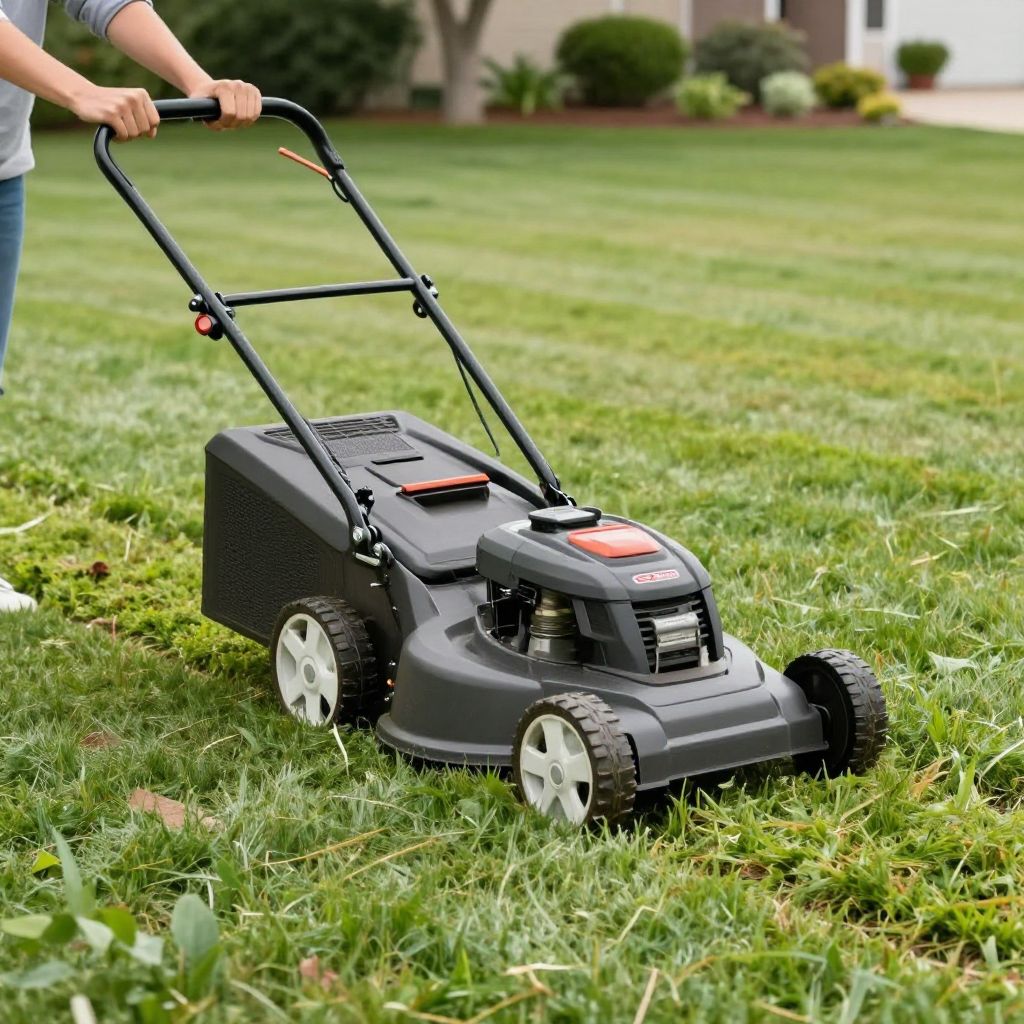
What is self propelled lawn mower, and is it the right mower for your yard? A self-propelled mower is a walk-behind mower with a drive system that helps move the machine forward, so you mainly guide it instead of pushing all of its weight.
It is especially useful on sloped lawns, larger yards, or thick grass where a standard push mower can feel tiring. Understanding how it works helps you choose the right model, use it safely, and keep your lawn cut evenly with less strain.
What is self propelled lawn mower?
A self-propelled lawn mower is a mower with powered wheels that pull the machine forward while the blade still does the cutting. You control the speed and direction, but the mower does much of the work for you, making it easier to mow hills, long grass, and medium-to-large lawns.
How a self-propelled mower works
The engine or battery powers two separate functions: the blade spins to cut grass, and the drive system turns the wheels to move the mower. Most models let you engage the drive with a bar, lever, or handle control, then release it when you want to stop.
Front-wheel drive vs. rear-wheel drive
- Front-wheel drive: Easier to maneuver and often helpful for flat lawns and frequent turning.
- Rear-wheel drive: Usually better for slopes and uneven ground because the back wheels provide more traction.
- All-wheel drive: Offers extra grip in challenging conditions, but may cost more and add weight.
Variable-speed and single-speed models
Some self-propelled mowers move at one fixed pace, while others let you adjust the speed to match your walking pace. Variable-speed models are often more comfortable if your lawn has tight corners, obstacles, or changes in terrain.
How to identify a self-propelled mower
If you are shopping for one, look for a drive control on the handle and wording such as “self-propelled,” “rear-wheel drive,” “front-wheel drive,” or “variable speed.” The mower may also feel heavier than a basic push model because it includes the drive mechanism.
Quick identification checklist
- A drive lever or bar on the handle
- Powered wheels that move the mower forward
- Speed settings or drive engagement controls
- Product labeling that mentions propulsion or drive assistance
Why gardeners choose a self-propelled mower
For many home gardeners, the main benefit is reduced physical effort. That matters if your lawn is large, your grass grows quickly, or your yard has slopes, borders, or uneven patches that make pushing a mower harder.
- Less strain on your back, shoulders, and arms
- Better control on hills and rough ground
- More consistent mowing when grass is dense or slightly overgrown
- Helpful for gardeners who want a middle ground between a push mower and a riding mower
When a self-propelled mower makes sense
This type of mower is often a smart choice if your lawn is more than a small, flat patch. It is also useful if you mow regularly during fast-growing seasons and want a tool that keeps the job manageable without switching to a larger machine.
Good fit for these lawns
- Sloped or uneven yards
- Medium to large residential lawns
- Lawns with thick turf or vigorous spring growth
- Yards with narrow passages where a riding mower is impractical
When a push mower may be enough
If your lawn is small, flat, and easy to maintain, a standard push mower may be lighter, simpler, and less expensive. You may not need the extra drive system if you prefer a very basic tool and do not mind the physical effort.
How to use a self-propelled mower correctly
Using the mower well is important for both safety and lawn quality. The drive system helps, but you still need to steer carefully, mow at the right height, and avoid forcing the machine through grass that is too tall or wet.
- Read the owner’s manual before the first use.
- Check the blade, wheels, fuel or battery, and grass bag before starting.
- Set the cutting height to suit your grass type and current conditions.
- Start the mower on level ground whenever possible.
- Engage the drive slowly and walk at a steady pace.
- Overlap each pass slightly for an even cut.
- Release the drive control before turning sharply or reversing direction.
Best mowing habits for healthy grass
Try to remove no more than one-third of the grass blade at a time. Cutting too much at once stresses the lawn, leaves a rough finish, and can encourage weeds or disease. If the grass is too tall, mow in stages over two sessions.
Common problems and practical fixes
Even a good self-propelled mower can give poor results if it is used at the wrong speed or maintained poorly. Most issues are easy to diagnose once you know what to look for.
Mower moves too fast
If the mower outpaces you, lower the speed setting if available. On variable-speed models, match the drive to your walking pace rather than forcing yourself to keep up.
Mower leaves uneven cuts
Uneven cutting can happen when the blade is dull, the deck is clogged, or the mowing height is too low for the grass condition. Clean the underside of the deck regularly and sharpen or replace the blade as needed.
Wheels slip on slopes
Rear-wheel drive or all-wheel drive usually handles slopes better than front-wheel drive. If traction is still poor, mow when the grass is dry and avoid steep angles that could make the mower unstable.
Hard starting or weak drive
For gas mowers, check fuel quality, air filter condition, and maintenance needs. For battery models, make sure the battery is charged and properly seated. If the wheels do not engage smoothly, the drive cable or mechanism may need service.
Maintenance tips to keep the mower working well
Regular maintenance helps the mower cut cleanly and keeps the self-propelled system reliable. A little care after each mowing session can prevent many common problems.
- Clean grass clippings from the deck and wheel area after use.
- Inspect the blade for dullness or damage.
- Check tires or wheels for wear and debris buildup.
- Follow the manufacturer’s guidance for oil, fuel, battery care, and storage.
- Store the mower in a dry place to reduce rust and corrosion.
Safety basics
- Wear sturdy shoes and eye protection.
- Keep children and pets away from the mowing area.
- Never clear clogs with your hands while the mower is running.
- Unplug, remove the battery, or disconnect the spark plug before cleaning or servicing.
Choosing the right self-propelled mower for your yard
Think about your lawn size, slope, and how often you mow. Also consider whether you want gas or battery power, how much storage space you have, and whether you prefer a lighter mower or one with more traction and power.
Questions to ask before buying
- Is my lawn flat, sloped, or uneven?
- Do I want front-wheel, rear-wheel, or all-wheel drive?
- How wide is the cutting deck, and will it fit my storage space?
- Do I need variable speed for comfort and control?
- Will I be mowing thick grass or only light weekly growth?
Conclusion: is a self-propelled mower worth it?
If you want easier mowing with less pushing, a self-propelled mower is often a practical upgrade, especially for slopes and medium-sized lawns. Choose the drive type that matches your terrain, keep the blade sharp, and mow at the right height for healthier grass and a cleaner finish.
If you are maintaining your mower, you may also want to read about what kind of oil a lawn mower takes so you can keep the engine running smoothly.