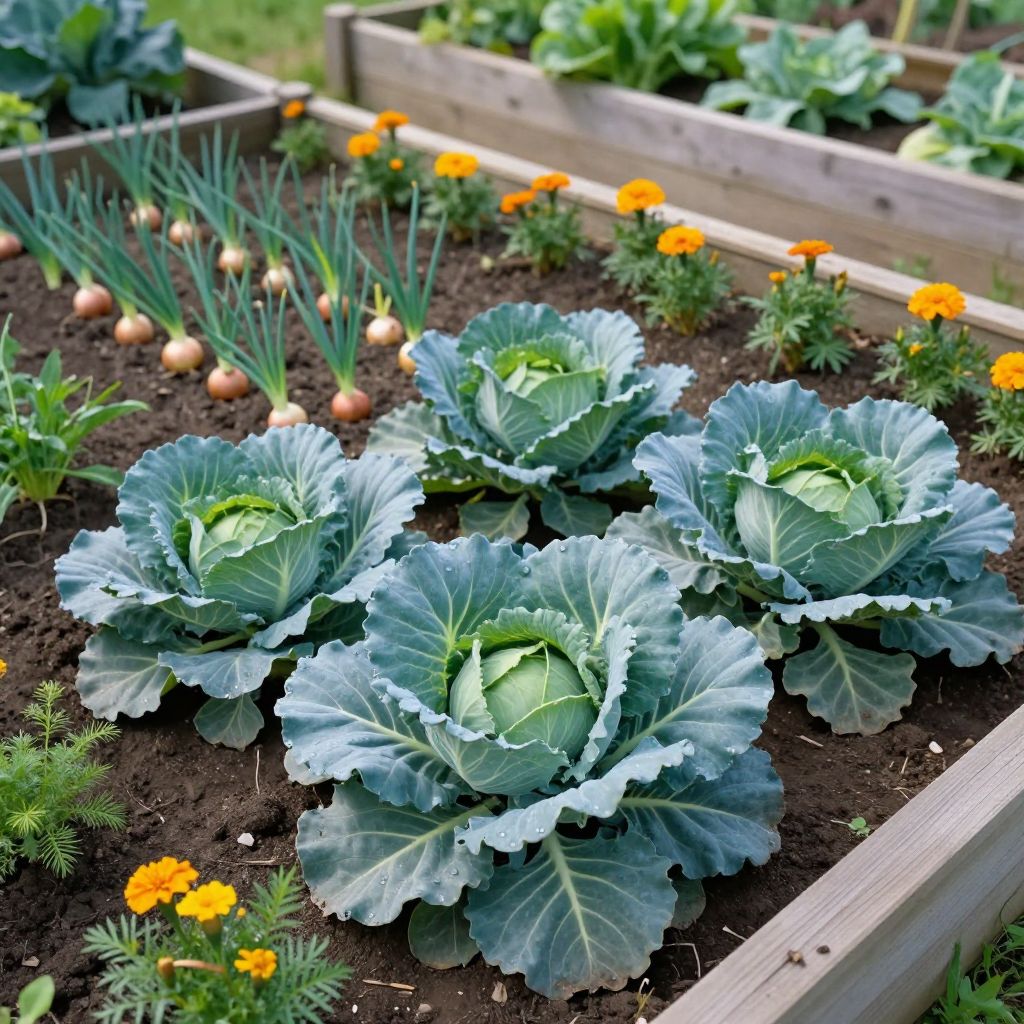
Wondering what to plant with cabbage so it grows well and stays healthier? Cabbage is a cool-season crop that benefits from smart companion planting, but it also has a few neighbors it does not like. The best companions can help shade soil, confuse pests, and make better use of space without crowding the bed.
Choose plants that match cabbage’s needs for full sun, steady moisture, and fertile soil, then avoid crops that compete too aggressively or attract the same pests. Good spacing and crop rotation matter just as much as the companion plants themselves.
What to plant with cabbage?
The best plants to grow with cabbage are shallow-rooted, quick-growing, or pest-deterring crops such as lettuce, spinach, onions, garlic, dill, celery, beets, and herbs like thyme and chamomile. These companions usually fit cabbage’s cool-season needs, use space efficiently, and can help reduce pest pressure without competing too heavily.
Best companion plants for cabbage
Leafy greens
Lettuce, spinach, arugula, and Swiss chard are excellent companions because they mature quickly and stay relatively low. You can tuck them between cabbage plants early in the season, then harvest them before the cabbage heads need more room.
- Lettuce helps cover soil and reduce moisture loss.
- Spinach grows well in the same cool weather as cabbage.
- Arugula can be harvested young before it gets crowded.
Alliums
Onions, garlic, leeks, and scallions are classic cabbage companions. Their strong scent may help confuse pests such as cabbage moths and aphids, and they do not usually compete much for space above ground.
Plant alliums around the edge of the bed or in alternating rows so they do not interfere with cabbage spacing. This is especially useful in small vegetable gardens where every square foot matters.
Root crops
Beets, radishes, and turnips can work well with cabbage if you give them enough room. Radishes are especially useful because they mature quickly and can be harvested before cabbage reaches full size.
Tip: Use fast crops as “fillers” between young cabbage transplants, then remove them before the cabbage canopy closes in.
Herbs and beneficial insect plants
Dill, chamomile, thyme, and cilantro can be helpful near cabbage. Their flowers and foliage may attract beneficial insects such as hoverflies and parasitic wasps, which can help reduce aphids and caterpillar pests.
Dill is one of the most useful cabbage companions, but it should be planted where it will not shade the cabbage as it grows taller. Chamomile and thyme stay smaller and are easier to manage in tight spaces.
Other good companions
Celery is often a good neighbor for cabbage because it has similar moisture needs and can fit into the same cool-season planting window. Nasturtiums are also worth considering near the bed edge, where they can act as a trap crop for aphids and caterpillars.
Use nasturtiums as a border or nearby decoy, not as a dense planting that crowds the cabbage. They are most useful when you can inspect them regularly and remove pest-heavy foliage if needed.
Plants to avoid near cabbage
Not every plant makes a good companion for cabbage. Some compete too strongly, share pests and diseases, or simply grow in ways that make cabbage harder to manage.
- Strawberries can compete for space and complicate bed management.
- Tomatoes and other warm-season crops usually prefer different conditions.
- Pole beans may become too vigorous and shade cabbage.
- Fennel is often a poor neighbor for many vegetables and is best kept separate.
- Other brassicas such as broccoli, cauliflower, kale, and Brussels sprouts can increase pest pressure when planted too densely together.
It is especially important to avoid overplanting the cabbage family in one bed year after year. Shared pests like cabbage worms, root maggots, and flea beetles can build up quickly if you do not rotate crops.
How to arrange cabbage companions in the garden
Use the edges and gaps wisely
Cabbage needs room to form heads, so place companions where they will not crowd the center of the bed. Low-growing greens, herbs, and root crops are best along the edges or in temporary spaces between transplants.
If you are planting cabbage in rows, leave enough room for mature plants and use the open soil between young plants for quick crops. Once the cabbage starts expanding, harvest the filler crops and let the cabbage finish growing.
Think in layers
A simple layered planting plan works well:
- Put taller or longer-season crops only where they will not shade cabbage.
- Use medium-height companions like celery or onions in nearby rows.
- Fill open soil with quick crops such as lettuce or radishes.
- Keep herbs and flowers at the bed edge for easy access and airflow.
Good airflow matters. Cabbage is less likely to develop fungal problems when leaves dry quickly after rain or watering.
Soil, sun, and water needs for healthy cabbage
Cabbage grows best in fertile, well-drained soil that holds moisture without becoming soggy. A generous amount of compost worked into the bed before planting usually improves both structure and nutrient availability.
Full sun is ideal in most gardens, though cabbage can tolerate a little light shade in warmer climates. In hot weather, some afternoon shade may help delay bolting and reduce stress, but too much shade can lead to loose heads.
Watering and mulch
Cabbage performs best with consistent moisture. Irregular watering can cause slow growth, split heads, or tough texture.
- Water deeply when the top few inches of soil begin to dry.
- Use mulch to help keep soil evenly moist and cooler.
- Avoid wetting foliage late in the day if disease is a concern.
Mulch also helps suppress weeds, which is useful because cabbage does not like root competition while it is establishing.
Common pests and how companion planting helps
Cabbage is a favorite target for pests, so companion planting works best as part of a broader prevention plan rather than a standalone fix. The most common problems include cabbage worms, aphids, flea beetles, and cabbage root maggots.
What companion plants can do
Companion plants do not eliminate pests, but they can make the bed less attractive to them and support beneficial insects.
- Alliums may help mask cabbage scent.
- Dill and chamomile can attract helpful insects.
- Nasturtiums may draw aphids away from cabbage.
- Mixed planting can make it harder for pests to find a large cabbage patch.
What still works best
For serious pest pressure, use row covers early in the season, inspect leaves often, and remove caterpillars by hand if needed. Companion plants are helpful, but they work best when combined with regular scouting and clean garden habits.
If you see holes in leaves or clusters of tiny eggs, check the undersides of foliage. Catching pests early is much easier than trying to fix damage after heads begin forming.
Diseases and spacing problems to watch for
Too much crowding is one of the fastest ways to invite trouble. Dense planting traps humidity, slows drying, and can encourage fungal disease and rot.
Give cabbage enough room for mature size, and do not let companion plants spill over into the center of the bed. If a filler crop starts shading or touching cabbage leaves, harvest it or thin it back.
Watch for these issues
- Yellowing lower leaves from poor airflow or nutrient stress.
- Loose heads from inconsistent moisture or too much shade.
- Splitting after sudden heavy rain or overwatering near maturity.
- Clubroot risk in poorly drained soil or repeated brassica planting.
Good drainage and crop rotation are especially important if you have had brassica problems before. Avoid planting cabbage or its close relatives in the same spot year after year.
Seasonal planting tips for cabbage companions
Cabbage is usually grown as a cool-season crop, so the best companions are also cool-season plants. In spring, you can use quick crops like radishes and lettuce before cabbage fills out. In fall, you can pair cabbage with spinach, onions, and herbs that tolerate cooler weather.
If your climate has a short spring, start with transplants and use fast companions to make the most of the bed. In warmer regions, fall planting often gives better results because cabbage grows more steadily in cooler temperatures.
For small gardens and raised beds
In a raised bed, companion planting is especially useful because space is limited. Choose compact crops, keep pathways clear, and avoid mixing cabbage with sprawling plants that will steal light and airflow.
Container growing is possible for smaller cabbage varieties, but the pot must be large enough to support steady moisture and root growth. Pair container cabbage with only the smallest companions, such as scallions or a few herbs at the edge.
Simple companion planting plan for cabbage
If you want a practical layout, try this simple approach in a garden bed:
- Plant cabbage transplants with enough space for mature heads.
- Set onions, garlic, or scallions around the outer rows.
- Fill temporary gaps with lettuce, spinach, or radishes.
- Plant dill or chamomile nearby, not directly crowding the cabbage.
- Use mulch and keep the bed evenly moist.
- Harvest quick crops before cabbage needs the extra space.
This layout keeps the bed productive while still giving cabbage the room and airflow it needs.
Conclusion
When deciding what to plant with cabbage, choose companions that stay compact, share similar cool-season needs, and do not crowd the bed. Lettuce, spinach, onions, garlic, dill, celery, and radishes are all strong choices when spaced well and managed with regular watering and pest checks.
Start by mapping your cabbage bed today, then add one or two companion crops that fit your climate and available space. If you want to plan the rest of your vegetable garden, you may also find it helpful to read about crop rotation and cool-season planting strategies.