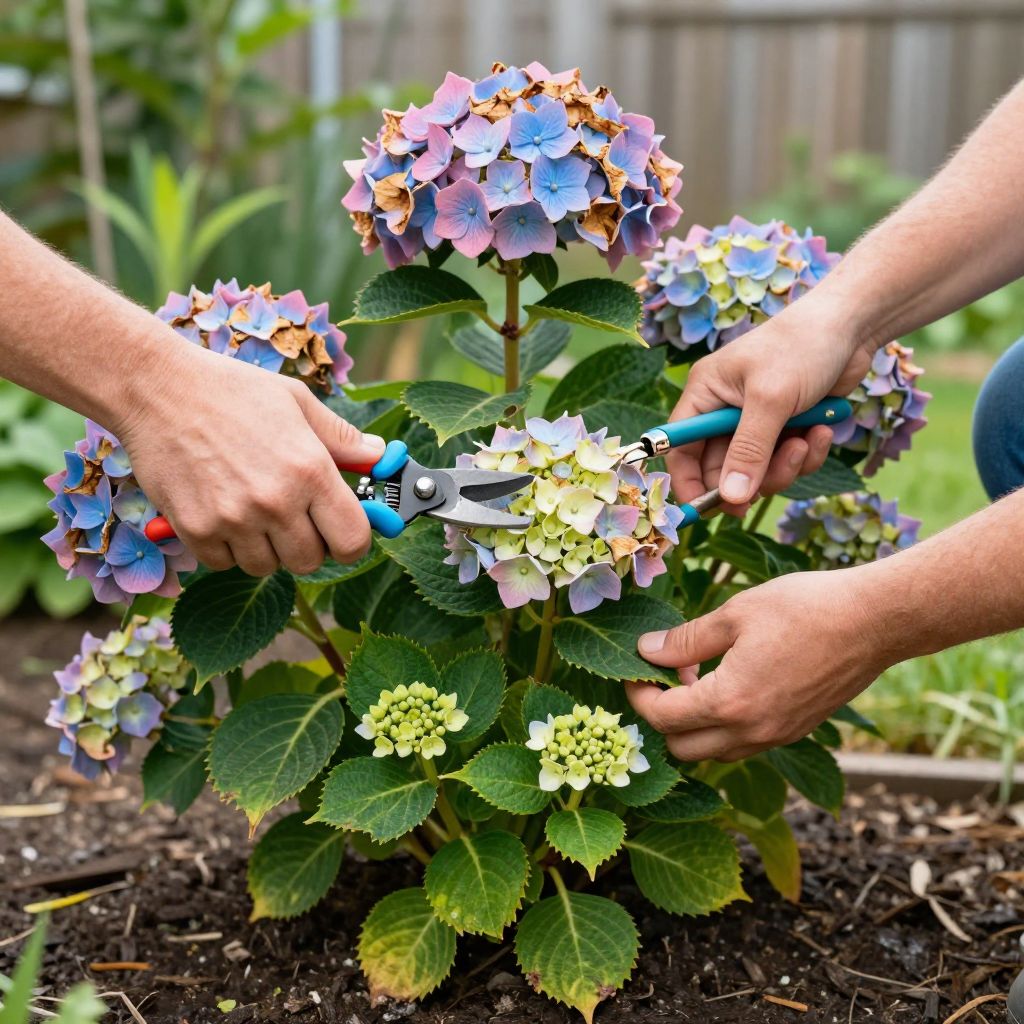
Wondering when to deadhead hydrangea so you don’t cut off next season’s flowers? The right timing depends on the type of hydrangea you grow and whether you’re removing spent blooms for appearance, plant health, or to encourage reblooming.
In many gardens, deadheading is simple and helpful, but with some hydrangeas, cutting too far back at the wrong time can remove next year’s flower buds. The key is learning your plant’s bloom habit first, then deadheading lightly and at the right point in the season.
When to deadhead hydrangea?
Deadhead hydrangea after the flowers fade and begin to dry, usually from mid-summer through early fall depending on the variety and climate. Remove only the spent flower head and a short stem section, stopping above the first healthy pair of leaves or buds. Avoid hard pruning unless you know your hydrangea blooms on new wood.
Why deadhead hydrangeas at all?
Deadheading is mostly about plant appearance and tidy growth, but it can also help direct energy away from seed production. On some reblooming hydrangeas, removing faded flowers can encourage more blooms later in the season.
That said, deadheading is not the same as pruning. A light snip is usually safe, while a heavy cut can reduce flowering next year on varieties that bloom on old wood.
Benefits of deadheading
- Improves the look of the plant by removing brown, papery blooms.
- May encourage repeat blooming on reblooming types.
- Can reduce the chance of weak, floppy stems carrying old flower heads.
- Helps you inspect the plant for pests, disease, or winter damage.
Know your hydrangea type before you cut
The most important part of learning when to deadhead hydrangea is knowing whether your plant blooms on old wood, new wood, or both. That determines how cautious you need to be.
Common bloom types
- Bigleaf hydrangea (Hydrangea macrophylla): often blooms on old wood, though some newer reblooming types flower on both old and new growth.
- Mountain hydrangea (Hydrangea serrata): similar to bigleaf, with many old-wood bloomers.
- Panicle hydrangea (Hydrangea paniculata): blooms on new wood, so it is more forgiving of pruning.
- Smooth hydrangea (Hydrangea arborescens): blooms on new wood and tolerates stronger pruning.
- Oakleaf hydrangea (Hydrangea quercifolia): blooms on old wood and should be deadheaded gently, if at all.
If you are unsure which type you have, look at when it flowers and whether buds are already forming on stems from the previous season. When in doubt, deadhead lightly and avoid cutting into healthy leafy stems late in the season.
Best seasonal timing for deadheading hydrangeas
Spring
Spring is usually not the best time to deadhead hydrangeas that bloom on old wood, because you may remove developing flower buds. If you left spent blooms on the plant for winter protection or interest, wait until you can clearly see whether buds are already forming below them.
Summer
Summer is often the ideal time to deadhead, especially after the first flush of blooms fades. Snip off spent flowers as soon as they turn papery or brown, but leave healthy stems and leaves in place.
For reblooming hydrangeas, timely deadheading can sometimes support another round of flowers later in the season. For once-blooming types, it mainly keeps the shrub neat.
Fall
In fall, deadheading is optional. Many gardeners leave the dried flower heads in place because they add winter interest and can help protect the buds below on old-wood bloomers. If your plant is in a windy or snow-heavy area, you may remove only damaged or broken blooms.
Winter
Winter is not the time for routine deadheading. Cold weather can make stems brittle, and it is easy to break healthy growth. If you prefer a tidy winter look, wait for late winter or early spring and then remove only clearly dead flower heads with care.
How to deadhead hydrangeas correctly
Use clean, sharp pruners or snips. Dull tools crush stems and leave ragged cuts that heal poorly.
- Find the spent flower head and trace the stem downward.
- Look for the first healthy pair of leaves or visible buds below the bloom.
- Cut just above that point, leaving the stem and foliage intact.
- Remove only the dead flower head unless you are intentionally shaping the plant.
- Disinfect tools if you are moving between plants with disease problems.
Do not cut back into old, leafless wood unless you know the plant blooms on new wood. That is the most common deadheading mistake and the easiest way to lose flowers.
How much stem should you remove?
Usually only 2 to 6 inches, depending on where the first strong leaf pair appears. On compact plants, that may be very little. On long stems with a spent bloom at the tip, you may remove more, but always stop at a healthy node.
Deadheading vs. pruning: what’s the difference?
Deadheading removes faded flowers. Pruning changes the shape or size of the shrub. Hydrangeas are especially sensitive to this distinction because their flower buds may already be set on the stems.
If you need to reduce size, do it according to the plant’s bloom type and the right season. For example, panicle and smooth hydrangeas can usually be pruned more freely in late winter or early spring, while bigleaf and oakleaf hydrangeas need a much lighter touch.
What to do after deadheading
After deadheading, keep the plant growing steadily rather than pushing it hard. Hydrangeas like consistent moisture, but they do not want soggy roots.
- Water deeply during dry spells, especially for newly planted shrubs.
- Mulch with 2 to 3 inches of organic material, keeping mulch away from the stems.
- Remove fallen petals or diseased debris from around the base.
- Check for sun scorch, wilting, or pest damage if blooms fade unusually fast.
If your hydrangea is in a hot, exposed site, afternoon shade can help blooms last longer and reduce stress after deadheading.
Common mistakes to avoid
Deadheading too late on old-wood bloomers
If buds have already formed for next year, cutting too far down can remove them. This is especially important for bigleaf, mountain, and oakleaf hydrangeas.
Shearing the whole shrub
Hydrangeas are not hedge plants. Shearing removes too much growth and often leaves you with fewer flowers and a misshapen shrub.
Ignoring the bloom habit
Not all hydrangeas respond the same way. A pruning method that works well for Hydrangea paniculata can be a mistake on Hydrangea macrophylla.
Deadheading diseased flowers without cleaning tools
If blooms or leaves show signs of fungal disease, clean your pruners before moving to another plant. This is a simple way to reduce spread.
Troubleshooting: when deadheading doesn’t seem to help
If your hydrangea is not reblooming after deadheading, the issue may be variety, weather, or pruning timing rather than your technique. A late frost can damage buds, too much shade can reduce flowering, and excessive nitrogen can produce leafy growth with fewer blooms.
If flowers are browning quickly, the plant may be stressed by heat, drought, or poor root conditions. Check drainage first. Hydrangeas prefer moist, well-drained soil rich in organic matter, not waterlogged ground.
When to leave spent flowers alone
Sometimes the best choice is not to deadhead at all. Leaving dried blooms on the plant can provide winter interest and a little protection for buds on old-wood types. In colder climates, many gardeners wait until late winter or early spring to clean up the plant.
Simple hydrangea care that supports better blooms
Deadheading works best when the plant is otherwise healthy. Good site conditions matter more than frequent cutting.
- Sunlight: Most hydrangeas do best with morning sun and afternoon shade, though panicle hydrangeas usually take more sun.
- Soil: Rich, well-drained soil with plenty of organic matter supports strong flowering.
- Water: Keep soil evenly moist, especially during establishment and hot weather.
- Mulch: Helps moderate soil moisture and temperature.
- Pruning: Match pruning to the species, not just the season.
Quick guide: when to deadhead by hydrangea type
- Bigleaf and mountain hydrangeas: Deadhead lightly after flowering; avoid late-season hard cuts.
- Panicle hydrangeas: Deadhead whenever blooms fade; pruning is more flexible.
- Smooth hydrangeas: Deadhead after bloom; stronger pruning is usually done in late winter or early spring.
- Oakleaf hydrangeas: Deadhead gently after flowering if needed; avoid removing next year’s buds.
Conclusion
If you are asking when to deadhead hydrangea, the safest answer is: once the blooms fade, but only as far back as the first healthy leaves or buds, and only after you know what type of hydrangea you have. Start with a light trim, then adjust your timing based on whether your plant blooms on old wood or new wood.
For more practical hydrangea care, you may also want to read about hydrangea pruning basics and choosing the best soil for hydrangeas.