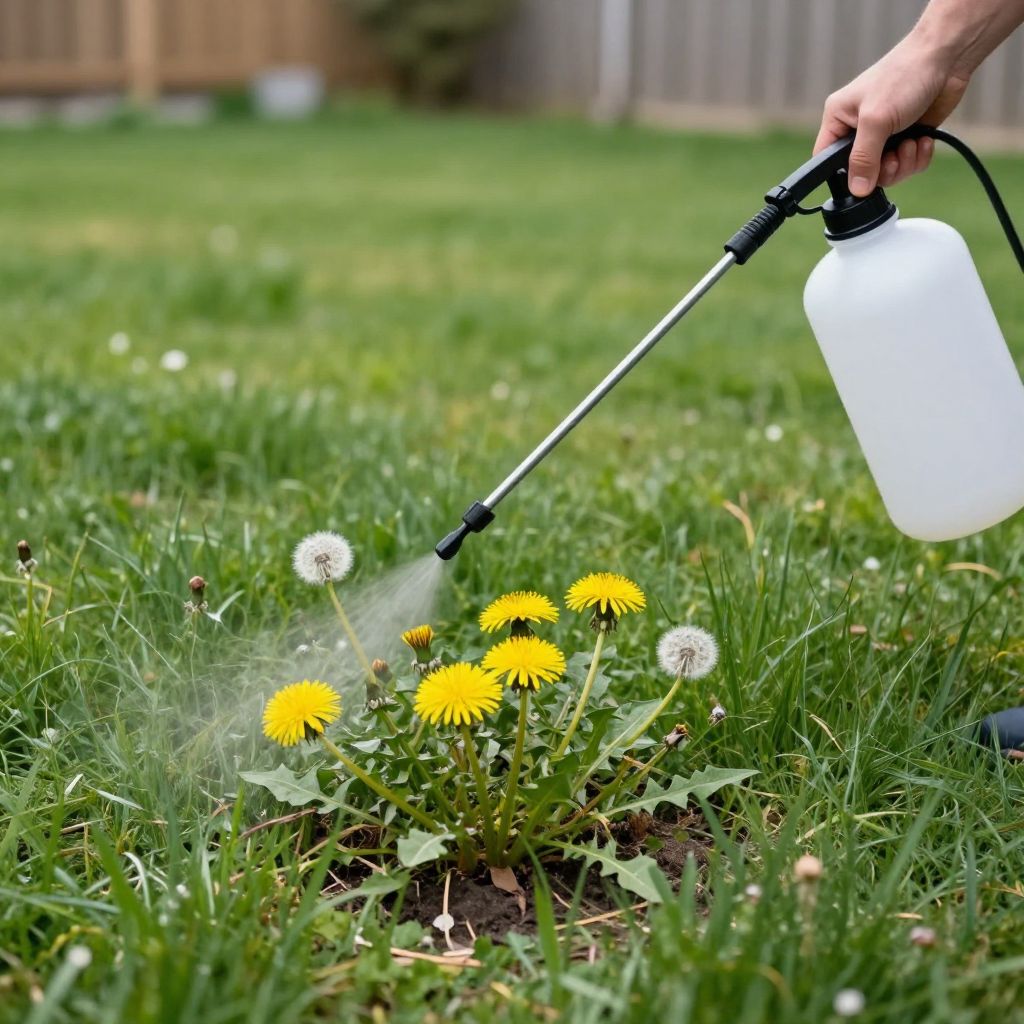
What kills dandelions? The most effective answers are usually repeated control, not a single quick fix. Dandelions are tough perennial weeds with a deep taproot, so the best results come from removing the root, weakening the plant over time, or using a targeted herbicide when appropriate.
If you want a lawn or bed free of dandelions, timing matters as much as the method. Young plants are easier to remove, while established ones often return unless you deal with the root and prevent new seedheads from spreading.
What kills dandelions?
Dandelions are killed most reliably by removing the entire taproot, smothering repeated regrowth, or applying a selective broadleaf herbicide to actively growing plants. For lawns, the best approach is usually a combination of hand removal, improving turf density, and preventing seed production before flowers turn to puffballs.
Why dandelions are so hard to kill
Dandelions (Taraxacum officinale) store energy in a long taproot, which lets them regrow after mowing or shallow pulling. They also produce many seeds, so even if you remove one plant, more can appear from nearby areas, windblown seed, or neglected edges.
The taproot problem
If the root breaks and part of it stays in the soil, the plant can often resprout. That is why casual pulling from the top usually fails, especially in dry or compacted soil where the root snaps easily.
Seed spread is constant
One flowering dandelion can send seed across a yard, garden bed, driveway cracks, or a neighboring property. Stopping flowering plants before they go to seed is a major part of long-term control.
Best ways to kill dandelions in lawns and beds
1. Dig out the entire root
This is the most chemical-free and permanent method when done correctly. Use a dandelion fork, weeding knife, or narrow trowel to loosen the soil and lift the whole taproot.
- Water the area lightly first if the soil is very dry.
- Insert the tool several inches from the crown.
- Loosen the soil all around the root.
- Pull slowly and steadily to avoid snapping the taproot.
- Check the hole for broken pieces and remove them.
Tip: The best time to dig is when the soil is moist and the plant is young, before it flowers.
2. Smother or shade out repeated regrowth
In garden beds, thick mulch can help suppress dandelions by blocking light to seedlings and weakening regrowth. Use a 2 to 4 inch layer of organic mulch around desirable plants, keeping it off stems and crowns.
For larger problem areas, sheet mulching with cardboard under mulch can help, but it works best on areas you are converting rather than mixed plantings. Dandelions may still push through if the covering is thin or disturbed.
3. Use a selective broadleaf herbicide in lawns
If you are managing dandelions in grass, a selective broadleaf herbicide can kill them without harming most turfgrasses when used as directed on the label. Look for products designed for lawn broadleaf weeds, and apply only when the dandelions are actively growing.
These products work best on young, healthy leaves and in mild weather. Avoid spraying during drought stress, extreme heat, or right before rain, because performance drops and drift risk increases.
4. Spot-treat with non-selective herbicide only where appropriate
Non-selective herbicides kill most green plants they contact, so they are suitable only for cracks, gravel, or areas where you want to clear everything. They are not a good choice in lawns or near ornamentals unless you can apply very carefully.
If you use any herbicide, follow the label exactly. The label is the law, and it gives the safest, most effective instructions for your product and site.
What does not work well on dandelions?
Some common shortcuts may scorch foliage but fail to kill the root, which means the dandelion returns. These methods can make the plant look damaged without solving the problem.
- Mowing alone: It removes flowers, but the plant often regrows from the crown and root.
- Pulling too quickly: This often breaks the taproot and leaves the plant alive.
- Light vinegar sprays: They may burn leaves but usually do not kill established roots.
- Salt on soil: It can damage soil structure and nearby plants, and it is not a good long-term solution.
- Boiling water near desirable plants: It can injure roots and soil life around the weed.
These methods may have a place in cracks or isolated spots, but they are not dependable for established dandelions in lawns or beds.
How to kill dandelions without harming your lawn
Improve turf competition
A dense, healthy lawn is one of the best defenses against dandelions. Thin turf gives weeds room to germinate, while thick grass shades the soil and makes it harder for seedlings to establish.
- Mow at the recommended height for your grass type.
- Water deeply when needed rather than giving frequent shallow sprinkles.
- Aerate compacted soil if your lawn is hard and thin.
- Overseed bare or weak areas so weeds do not move in.
Important: Dandelions often show up where grass is stressed, compacted, or patchy. Fixing the lawn conditions helps prevent new weeds after removal.
Remove flowers before they seed
If you cannot remove every plant at once, at least stop seed production. Pull or cut flower stems before the yellow blooms turn into seed heads. Bag and discard seedheads carefully so they do not scatter during cleanup.
Treat in the right season
Dandelions are easiest to control when they are actively growing and storing energy in the root. In many climates, that means spring and fall are the most effective treatment windows, but local weather matters more than the calendar.
Choose a day when temperatures are moderate and the plant is not drought-stressed. If your area is very hot, very dry, or recently mowed, wait until the weed has enough leaf area to absorb treatment properly.
How to kill dandelions in garden beds and pathways
In vegetable and flower beds
Hand removal is usually the safest option around desirable plants. Work carefully to avoid disturbing nearby roots, and mulch afterward to reduce new seedlings.
If the bed is heavily infested, consider clearing the area, improving the soil surface, and re-mulching. Dandelions thrive in disturbed soil, so leaving bare ground exposed invites more weeds.
In cracks, gravel, and edges
These spots are often easier to manage because you can use non-selective control more freely if no desirable plants are nearby. A combination of digging, spot treatment, and keeping the area covered or edged clean can reduce re-infestation.
Regularly inspect fence lines, driveway edges, and neglected corners. Dandelions often start there and then spread into the lawn or beds.
Common mistakes when trying to kill dandelions
- Waiting until they flower: You are already behind if seedheads are forming.
- Pulling in dry soil: The root snaps more easily and regrowth is common.
- Spraying the wrong product: A non-selective herbicide can damage lawn grass and ornamentals.
- Using too little control: One treatment often is not enough for established plants.
- Ignoring the cause: Thin turf, compacted soil, and bare patches invite more weeds.
Can you kill dandelions naturally?
Yes, but “natural” control usually means persistence rather than instant results. Digging out the root, mulching, improving lawn density, and repeated removal of flower stalks can reduce dandelions significantly over time.
For small infestations, this approach is often enough. For large, mature populations, you may need a combination of manual control and a carefully chosen herbicide to get ahead of them.
How to keep dandelions from coming back
- Remove plants before they seed.
- Keep lawns thick and healthy.
- Mulch bare soil in beds.
- Inspect edges, cracks, and thin spots regularly.
- Pull new seedlings early, before roots deepen.
Think of dandelion control as maintenance, not a one-time job. A few minutes of regular scouting saves a lot of digging later.
Conclusion
The best answer to what kills dandelions is simple: remove the taproot, stop seed production, and strengthen the area so weeds cannot return easily. Start with the most practical method for your space, then follow up before new plants mature.
If you want to improve your weed control strategy, look next at garden weed control basics and how to grow thicker, healthier lawn grass.