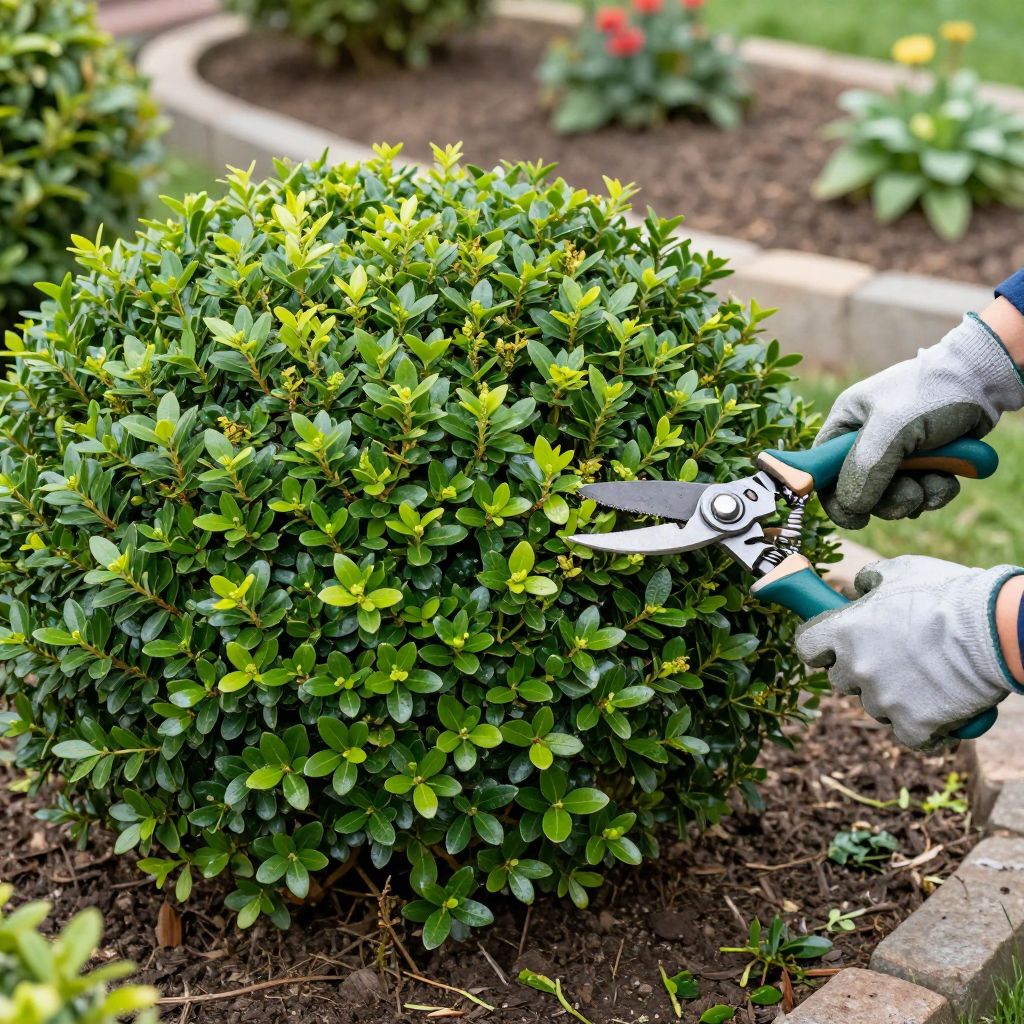
When should you prune boxwood? The short answer is that boxwood is best pruned in late spring to early summer, after the first flush of growth has finished, and then lightly again if needed before late summer. That timing helps you shape the plant without encouraging a tender flush of growth that can be damaged by heat, drought, or winter cold.
The exact best time depends on your climate, the age of the shrub, and how hard you want to cut it back. A little routine trimming is very different from rejuvenation pruning, so it helps to match the timing to the job.
When to prune boxwood?
Prune boxwood in late spring or early summer, once new growth has hardened slightly. For light shaping, you can trim again in mid-summer if needed, but avoid major pruning in late summer, fall, or during freezing weather. Heavy renovation is best done gradually over several seasons to reduce stress.
Why timing matters for boxwood
Boxwood (Buxus spp.) responds well to pruning, but timing affects how quickly it recovers and how tidy it looks afterward. If you prune too early, new growth may be hit by frost. If you prune too late, fresh growth may not harden before cold weather arrives.
Timing also matters for plant health. Dense boxwood can trap moisture and reduce airflow, which can contribute to disease problems if the shrub is already stressed. Good pruning opens the plant slightly and keeps the outer growth compact without overworking the shrub.
Best seasons for boxwood pruning
- Late spring to early summer: Best for most shaping and maintenance pruning.
- Mid-summer: Fine for a light touch-up if growth is still active and the weather is not extreme.
- Late winter to early spring: Use only for removing dead, damaged, or crossing branches, or for very light shaping in mild climates.
- Fall: Usually avoid major pruning, especially in colder regions.
How often should you prune boxwood?
Most boxwood shrubs need pruning once or twice a year, depending on the style you want. Formal hedges often need more frequent light trimming, while informal shrubs may only need one annual shaping. The goal is to keep the plant dense and balanced without removing too much at once.
A good rule is to prune only what is necessary to maintain the shape. If you are repeatedly cutting back large amounts, the shrub may be overgrown or planted in the wrong spot for its mature size.
How much to remove
- For routine shaping, remove just the soft new growth at the tips.
- For a fuller hedge, keep cuts shallow and even.
- Avoid cutting back into old bare wood unless you are doing a careful renovation and know the plant will respond.
How to prune boxwood correctly
Use clean, sharp hand pruners or hedge shears, depending on the size and style of the plant. Hand pruners give you more control for detail work, while shears are useful for smooth hedge surfaces. Always start by removing dead, broken, or diseased branches before shaping.
- Inspect the shrub first. Look for winter damage, dead tips, and branches rubbing against each other.
- Remove problem growth. Cut out dead or damaged stems back to healthy wood.
- Shape lightly. Trim the outer layer of new growth to maintain the desired outline.
- Keep the base wider than the top. This helps sunlight reach the lower branches.
- Step back often. Check the shape from several angles so you do not overcut one side.
Tools that make the job easier
- Bypass hand pruners for precise cuts
- Hedge shears for larger hedges
- Loppers for thicker stems
- Gloves to protect your hands from scratches
- Rubbing alcohol or disinfectant for cleaning blades between plants if disease is suspected
Pruning boxwood by plant type and purpose
Not every boxwood should be pruned the same way. A clipped formal hedge needs more frequent trimming than a foundation shrub or a specimen plant. Think about the job you want the shrub to do before you make the first cut.
Formal hedges
Formal boxwood hedges are usually trimmed to a clean outline once the spring flush has finished. Light, frequent trimming keeps the hedge dense and neat. Try to avoid cutting so hard that you expose old interior stems.
Informal shrubs
Informal boxwood plants can be shaped more gently. You may only need to remove a few inches of new growth to keep the plant tidy and natural-looking.
Overgrown boxwood
If your boxwood has become too large, do not try to reduce it dramatically in one season unless you are certain the shrub can handle it. Heavy cuts can leave bare patches and slow recovery. Instead, reduce its size gradually over two or three years.
When not to prune boxwood
There are a few times when pruning is more likely to cause problems than benefits. Avoid major pruning during heat waves, drought, or right before a hard frost. Stressed shrubs recover more slowly and may struggle to push new growth.
- During extreme heat: Fresh cuts can dry out and stress the plant.
- In late fall: New growth may not harden before winter.
- When the plant is drought-stressed: Pruning adds more stress.
- When disease is active: Remove affected parts carefully and sanitize tools.
Common mistakes to avoid
Boxwood is forgiving, but a few pruning mistakes can leave it thin, uneven, or unhealthy. The most common problem is cutting too deeply into old wood and expecting quick regrowth. Boxwood often buds from leafy stems, so bare interior wood may not refill evenly.
- Shearing too often: This can create a dense outer shell that blocks light inside the plant.
- Making the hedge too narrow at the base: Lower branches can decline from lack of light.
- Removing too much at once: Heavy cuts can shock the shrub.
- Using dull tools: Ragged cuts heal more slowly.
- Ignoring deadwood: Dead stems make the plant look sparse and can hide problems.
How to tell if your boxwood needs pruning now
Look at the plant’s shape, density, and new growth. If the shrub is pushing out soft shoots beyond the outline you want, it is probably ready for a light trim. If it is sparse, stressed, or recently planted, it may need only minimal cleanup.
Signs it is time
- New growth is extending beyond the desired shape
- The hedge looks uneven or shaggy
- Branches are crossing or rubbing
- Dead tips are visible after winter
- The plant is blocking a path, window, or border edge
Signs to wait
- The shrub is newly planted and still establishing roots
- Leaves are scorched, yellowing, or dropping from stress
- Weather is very hot, dry, or freezing
- The plant is recovering from a hard prune or disease issue
After-pruning care
Boxwood usually does not need complicated aftercare, but a little support helps it recover smoothly. Water deeply if the soil is dry, especially after a warm pruning period. Keep the root zone evenly moist, not soggy, and avoid piling mulch against the stems.
If the plant was pruned lightly, it may not need any extra feeding. If the shrub is in poor soil, a thin layer of compost around the root zone can help improve soil structure over time, but do not bury the crown or overfertilize stressed plants.
Watch for stress after pruning
- Leaf bronzing or scorch
- Patchy dieback inside the shrub
- Wilting during hot afternoons
- Slow or uneven regrowth
If you notice these issues, check watering, drainage, and sun exposure before pruning again. Sometimes the problem is not the cut itself, but the growing conditions around the plant.
Boxwood health, pests, and disease concerns
Healthy boxwood handles pruning better than a stressed one. Good airflow, proper spacing, and careful watering reduce the chance of leaf spot, root problems, and other issues that can be made worse by dense growth. If you suspect disease, remove affected material and clean your tools before moving to another plant.
Also watch for pest damage, such as chewing, stippling, or sudden thinning. Pruning will not solve a pest problem by itself, but it can help you see the plant structure more clearly and remove damaged sections.
Pruning boxwood in different climates
Your local climate should guide the exact timing. In colder regions, finish pruning earlier so new growth has time to harden before winter. In milder climates, the pruning window may be longer, but it is still wise to avoid major cuts during the hottest part of the year.
If you are unsure, use the plant’s growth cycle as your guide. Prune after the main spring flush, then stop major trimming well before your area’s first frost date. That simple rule works in many gardens.
Conclusion
For most gardeners, the best answer to when to prune boxwood is late spring to early summer, with only light touch-ups after that. Keep cuts shallow, avoid harsh pruning in stressful weather, and shape the shrub gradually if it has outgrown its space. If your boxwood needs attention now, inspect it, remove dead growth, and trim only what is necessary.
If you want to keep learning about shrub care and tidy landscape plants, you may also find this helpful: garden pruning basics and evergreen hedge maintenance.