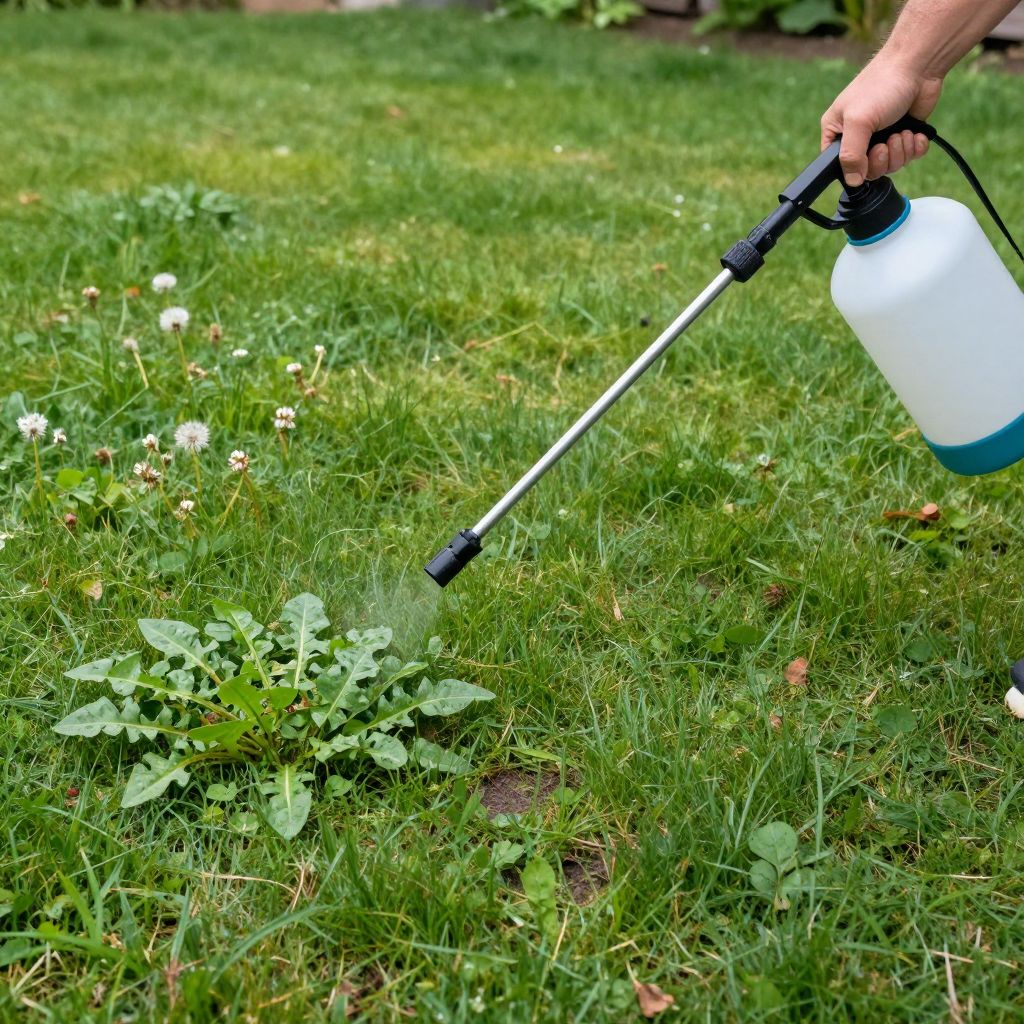
Does weed killer kill grass? It can, depending on the product and how it’s used. Some herbicides are designed to target broadleaf weeds and usually spare lawn grasses, while others are non-selective and will damage or kill any green plant they touch.
If your lawn has been sprayed by mistake, the outcome depends on the active ingredient, the amount applied, the grass type, and how quickly you act. The good news is that many lawn problems can be prevented or repaired with the right product choice and careful application.
Does weed killer kill grass?
Yes, weed killer can kill grass if it is a non-selective herbicide or if a selective product is misapplied. Broadleaf weed killers are often meant for lawns and usually leave turfgrass unharmed, but overspray, repeated applications, heat stress, or using the wrong product can still injure or kill grass.
How weed killers affect grass
Not all herbicides work the same way. The label, active ingredient, and application method determine whether the product is safe for turf or likely to damage it.
Selective herbicides
Selective herbicides are made to kill certain weeds without harming most grasses. These are the products commonly used for dandelions, clover, plantain, and other broadleaf weeds in lawns.
Even selective herbicides can cause problems if you apply too much, spray on a hot day, or treat grass that is already stressed by drought, disease, or recent mowing.
Non-selective herbicides
Non-selective herbicides kill most green plants they contact, including grass. These are useful for driveways, patios, fence lines, and site preparation, but they are not lawn-safe unless the label specifically says otherwise.
If a non-selective herbicide drifts onto turf, you may see yellowing, browning, stunting, or dead patches within days to weeks depending on the product and weather.
Pre-emergent herbicides
Pre-emergent herbicides are different from post-emergent weed killers. They are used to stop weed seeds from germinating and are generally applied to soil rather than actively growing weeds.
Used correctly, they should not kill established grass, but timing matters. Applying the wrong product at the wrong time can interfere with seeding or new turf establishment.
How to tell whether your grass was damaged
Herbicide injury often looks different from normal lawn stress. Look closely at the pattern, the timing, and whether only certain areas were affected.
- Uniform yellowing or browning in sprayed strips or spots often points to herbicide contact.
- Curled, twisted, or distorted blades can suggest herbicide drift or overapplication.
- Patchy damage near edges may happen where spray drifted beyond the target weeds.
- Slow decline over time can happen with systemic herbicides that move through the plant.
- Sudden dead spots are more common with contact herbicides or heavy spray exposure.
Other lawn problems can look similar, including drought, pet urine, mower scalping, fungal disease, and compaction. If only the sprayed area is affected and the pattern matches the application, herbicide injury is more likely.
What to do if weed killer hit your lawn
If you caught the spray right away, quick action may reduce damage. If the herbicide has already dried, your options are more limited, but you can still support recovery.
- Stop applying the product and keep the area off-limits if the label says so.
- Check the label for the active ingredient, re-entry guidance, and lawn safety notes.
- Rinse the grass with water only if the spray is still wet and the label does not prohibit it.
- Water the lawn normally afterward to reduce stress, but avoid overwatering.
- Wait and watch for new growth over the next 1–3 weeks, since some injury appears slowly.
- Remove dead tissue only after you know whether the grass is recovering.
Do not fertilize heavily right away unless your lawn is already due for feeding and the label allows it. Extra nitrogen can push weak growth when the grass is still stressed.
Can grass recover after weed killer damage?
Often, yes. Many lawns recover from light drift or a small amount of selective herbicide exposure, especially if the growing point was not badly affected. Recovery is less likely if the product was non-selective, heavily applied, or used during hot, dry weather.
Grass with healthy roots may send out new blades even after the top growth is damaged. If the crown and roots survive, you may only need patience, watering, and a little reseeding later.
Signs the lawn is likely to bounce back
- The damage is light and limited to leaf tips or a few patches.
- New green shoots appear from the base of the plant.
- The roots and crown are still firm, not mushy or completely brown.
- The lawn was otherwise healthy before the herbicide exposure.
Signs the grass may need repair
- Large areas are completely brown or bare.
- The same spots keep declining after several weeks.
- The product was labeled non-selective or “kills weeds and grass.”
- The lawn was already stressed by drought, shade, compaction, or disease.
How to prevent weed killer from killing grass
Prevention is mostly about choosing the right product and applying it carefully. A few minutes spent reading the label can save you from weeks of lawn damage.
Read the label every time
The label tells you whether the herbicide is safe for turfgrass, which grass types it can be used on, and what conditions to avoid. Never assume a product is lawn-safe because it says “weed killer” on the front.
Look for wording such as “safe for lawns,” “broadleaf weed control,” or specific turfgrass names. If the label mentions killing all vegetation, treat it as non-selective.
Match the product to your lawn
Some grasses tolerate certain herbicides better than others. Cool-season lawns and warm-season lawns may respond differently, and newly seeded areas are often more sensitive than established turf.
If you are not sure what grass you have, identify it before buying herbicide. That is especially important for mixed lawns, newly sodded areas, and lawns with patch repairs.
Avoid spraying under stress
Grass is more vulnerable when it is stressed by heat, drought, poor mowing, disease, or compaction. In those conditions, even a normally safe product can cause more injury than expected.
- Do not spray during extreme heat.
- Avoid treating drought-stressed turf.
- Wait until the lawn has recovered from recent scalping or heavy wear.
- Do not apply before a storm if runoff is likely.
Prevent drift and overspray
Wind, coarse droplets, and poor aiming can move herbicide onto grass you want to keep. Use a shielded sprayer or targeted application when treating weeds near lawn edges, flower beds, or vegetable areas.
Keep the nozzle low, spray on calm days, and avoid walking through wet product. Clean equipment after use so residue does not end up on the lawn later.
What to do when you need to kill weeds without harming grass
If your goal is weed control in the lawn, choose a selective herbicide labeled for turf and the specific weed type you are treating. For small infestations, spot treatment is usually safer than blanket spraying the entire lawn.
For many home lawns, the best long-term strategy is not just spraying. Healthy turf crowds out weeds better when you mow at the right height, water deeply but not constantly, and keep soil from becoming compacted.
Better lawn-care habits that reduce weeds
- Mow at the recommended height for your grass type.
- Leave clippings on the lawn unless disease is present.
- Water deeply when needed rather than giving frequent light sprinklings.
- Overseed thin areas when the season is right for your climate.
- Improve drainage and soil structure if the lawn stays wet or thin.
Common mistakes to avoid
Most herbicide problems come from a few predictable errors. Avoiding these can protect your grass and improve weed control.
- Using the wrong product for the job.
- Ignoring the label for turf safety and timing.
- Spraying on hot, windy, or drought-stressed days.
- Applying too much or overlapping passes.
- Treating newly seeded grass too soon.
- Assuming all weed killers are the same.
Repairing lawn areas after herbicide injury
If the grass does not recover, you may need to patch the area. The best repair method depends on how much turf was lost and what season it is in your area.
For small spots, rake out dead material, loosen the topsoil lightly, and reseed or patch with sod if the grass type and season allow it. Keep the area evenly moist during establishment, but do not keep it soggy.
For larger damaged areas, wait until you know the full extent of the injury before reseeding. Some herbicides leave residues that can affect new seedlings, so check the product label before starting repairs.
Conclusion
So, does weed killer kill grass? It can, but only if you use the wrong type, apply it too heavily, or spray under poor conditions. The safest approach is to identify your grass, read the herbicide label carefully, and spot-treat weeds whenever possible. If damage has already happened, give the lawn time to recover and repair bare spots only after you know the herbicide’s effect has passed.
For more practical lawn care guidance, you may also want to read about how to mow your lawn properly and when and how to overseed thin grass.