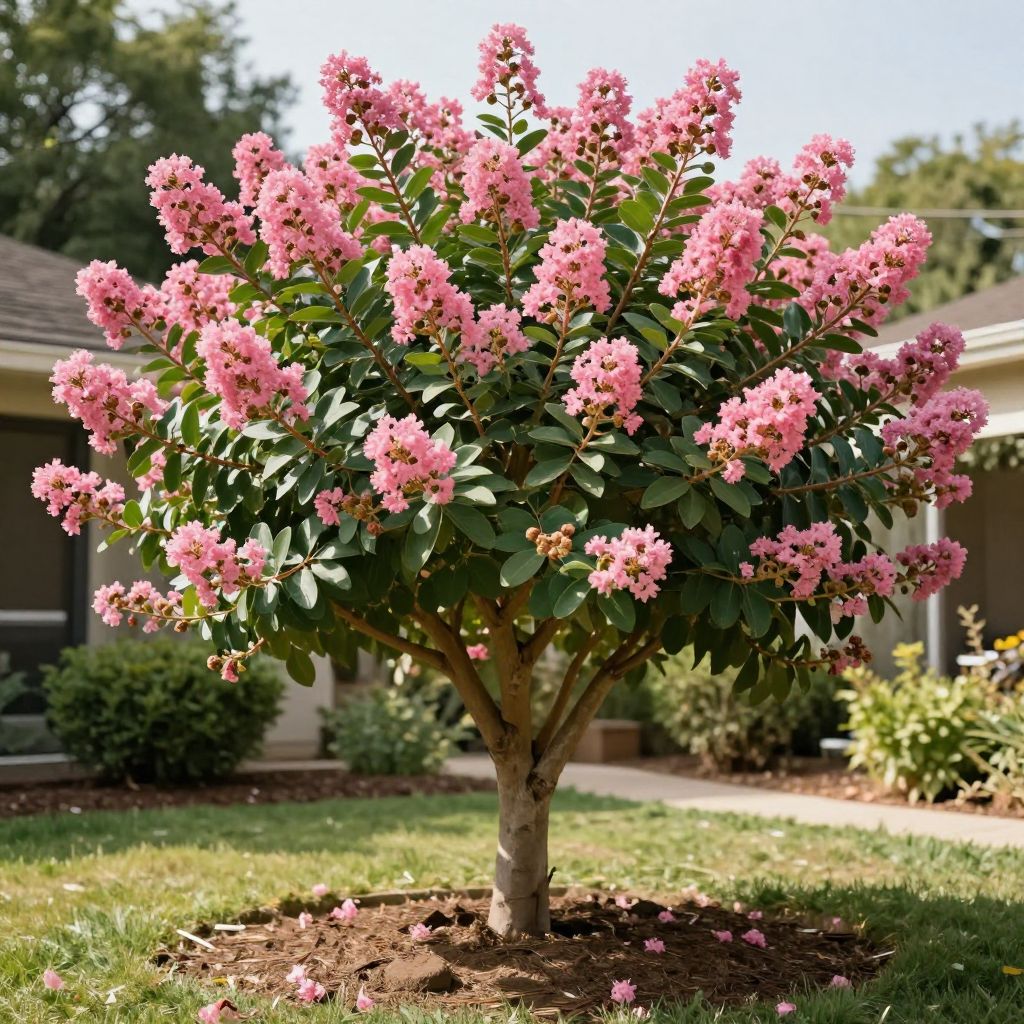
When do crepe myrtles bloom? In most gardens, crepe myrtles flower in summer, often beginning in late spring or early summer and continuing into early fall, depending on the variety and climate. Warm regions usually see earlier, longer bloom, while cooler areas may have a shorter season.
If your tree is not blooming well, the issue is often sunlight, pruning, age, or stress rather than a lack of care. With the right growing conditions, crepe myrtles can produce months of colorful flowers and attractive bark, making them one of the most dependable summer bloomers.
When do crepe myrtles bloom?
Crepe myrtles typically bloom from late spring through summer and into early fall. Exact timing depends on your climate, the cultivar, and how much sun the plant receives. In warm areas, flowering may start earlier and last longer; in cooler regions, bloom often begins later and may be shorter.
What affects bloom time?
Several factors influence when crepe myrtles bloom and how heavily they flower. The plant’s age, sunlight, pruning, weather, and overall health all matter. A healthy crepe myrtle in full sun will usually bloom more reliably than one growing in shade or recovering from stress.
Sunlight
Crepe myrtles need full sun for the best flowering. Aim for at least 6 hours of direct sun daily, and more is even better in many climates. Too much shade is one of the most common reasons a crepe myrtle grows leafy but blooms poorly.
Climate and region
In hot, long-season climates, crepe myrtles often bloom for a longer stretch. In areas with shorter summers, flowering may start later. A late frost can also delay new growth and push bloom time back.
Plant age and maturity
Young plants may spend their first season or two establishing roots before flowering heavily. Once established, they usually bloom much more freely. If a newly planted crepe myrtle is slow to bloom, that is often normal.
Pruning habits
Heavy pruning, especially the practice sometimes called “topping,” can reduce flowering and create weak, awkward growth. Crepe myrtles bloom on new growth, so light shaping is fine, but severe cutting often delays the best display.
Water and soil conditions
Moderate moisture and well-drained soil support steady growth and bloom. Prolonged drought, waterlogged soil, or poor drainage can stress the plant and reduce flowers. Crepe myrtles are fairly adaptable, but they do best when roots are not constantly stressed.
What does a healthy blooming crepe myrtle need?
A healthy crepe myrtle needs sun, drainage, and room to grow. Plant it in well-drained soil, water it deeply during establishment, and avoid overfeeding with nitrogen-rich fertilizer. Too much nitrogen encourages leaves at the expense of flowers.
Best growing conditions
- Sun: Full sun for best bloom
- Soil: Well-drained soil of average fertility
- Water: Regular moisture while establishing, then occasional deep watering in dry spells
- Airflow: Good spacing helps reduce disease pressure
- Mulch: A 2- to 3-inch layer helps conserve moisture
Planting tips
When planting, dig a hole as wide as the root ball but no deeper. Set the plant so the root flare sits at or slightly above soil level. Backfill with native soil unless your soil is extremely poor, then water thoroughly to settle it in.
Keep mulch a few inches away from the trunk to prevent rot and pest problems. A mulch ring can help young plants establish more evenly, especially in hot weather.
How to encourage more blooms
If your crepe myrtle is growing well but blooming lightly, focus on the basics before reaching for fertilizer or pruning tools. Most flowering problems come from too much shade, too much nitrogen, or improper pruning rather than a mysterious disease.
- Check sun exposure. If nearby trees or structures are shading the plant, bloom may be limited.
- Review pruning. Remove only crossing, damaged, or crowded branches, and avoid severe topping.
- Water deeply, not constantly. Young plants need regular watering to establish; mature plants prefer occasional deep soakings during dry periods.
- Skip high-nitrogen fertilizer. Rich lawn fertilizer near the root zone can push foliage growth instead of flowers.
- Watch for stress. Drought, root damage, compacted soil, and poor drainage can all reduce bloom.
Pruning the right way
Prune crepe myrtles in late winter or very early spring, before new growth starts, if pruning is needed at all. Remove dead wood, weak shoots, and branches that rub or cross. Keep cuts selective and natural-looking.
Avoid cutting back large trunks to stubs. That weakens the plant’s structure, encourages dense twiggy growth, and can reduce the quality of flowering over time.
Fertilizer: less is often more
If your soil is reasonably fertile, crepe myrtles may need little or no fertilizer. If growth is weak and a soil test suggests a deficiency, use a balanced approach based on your soil’s needs rather than guessing. Excess nitrogen can delay bloom and create lush, floppy growth.
Common reasons crepe myrtles fail to bloom
When a crepe myrtle does not bloom as expected, the cause is usually environmental or cultural. Before assuming the plant is unhealthy, look closely at its growing site and care routine.
- Too much shade: The most common cause of poor flowering
- Improper pruning: Severe cutting often leads to weak regrowth
- Too much fertilizer: Especially nitrogen-heavy lawn feeding
- Transplant shock: Newly planted shrubs and trees may bloom lightly at first
- Drought stress: Can reduce flower production and shorten bloom
- Waterlogged roots: Poor drainage can weaken the plant
What to do if your plant is leafy but not flowering
If your crepe myrtle has lots of leaves but few flowers, reduce fertilizer, improve sun exposure if possible, and stop heavy pruning. Give the plant time to settle if it was recently moved or planted. A healthy, established plant often improves once the growing conditions are corrected.
Pests and diseases that can affect blooming
Most crepe myrtles flower well when healthy, but pests and diseases can reduce vigor and bloom quality. Keep an eye out for issues that affect leaves, stems, and overall growth.
Common problems
- Aphids: May cause sticky honeydew and sooty mold on leaves and nearby surfaces
- Powdery mildew: A fungal issue that can affect foliage, especially in humid conditions or poor airflow
- Scale insects: Can weaken plants over time if severe
- Leaf spot: Usually cosmetic but may indicate crowded, humid growing conditions
Good sanitation, proper spacing, and avoiding overhead watering can help reduce disease pressure. If a plant is repeatedly stressed by poor site conditions, it may bloom less even if pests are not severe.
Can you grow crepe myrtles in containers?
Yes, smaller crepe myrtle varieties can be grown in large containers, though they may bloom less heavily than plants in the ground if the pot is too small or dries out too quickly. Container plants need excellent drainage and more frequent monitoring than landscape plants.
Container care basics
- Use a large pot with drainage holes
- Choose a well-draining potting mix
- Place the container in full sun
- Water when the top inch or two of mix feels dry
- Refresh or repot as roots fill the container
Because containers heat up and dry out faster, potted crepe myrtles may need more attention during summer bloom season. Still, they can be excellent patio plants when given enough sun and root space.
How to tell bloom season is starting
As bloom time approaches, you may notice new shoots elongating and small flower clusters forming at the tips of branches. Buds can appear on fresh growth once warm weather is settled in. In many gardens, the first signs show up after the plant has put on enough new growth for the season.
Do not rush to prune off these new shoots. Those branch tips are where the flowers will form, so cutting them back too late in the season can remove the coming bloom.
Seasonal care calendar for better flowering
Timing your care to the season can make a big difference in bloom quality. You do not need a complicated routine, just a few well-timed tasks.
- Late winter to early spring: Prune only if needed, before new growth begins
- Spring: Watch for new growth; water young plants as they wake up
- Summer: Enjoy bloom season; water during dry spells and avoid heavy feeding
- Fall: Let the plant slow naturally; avoid pushing tender new growth late in the season
Conclusion
So, when do crepe myrtles bloom? Usually in summer, with flowering that can begin in late spring and continue into early fall depending on your climate and care. For the best display, give your plant full sun, well-drained soil, light pruning, and avoid overfertilizing.
If you want to improve bloom next season, start by checking sunlight and pruning habits now. For more seasonal care ideas, you may also find it helpful to read about how to prune flowering shrubs correctly and choosing the best full-sun plants for your landscape.