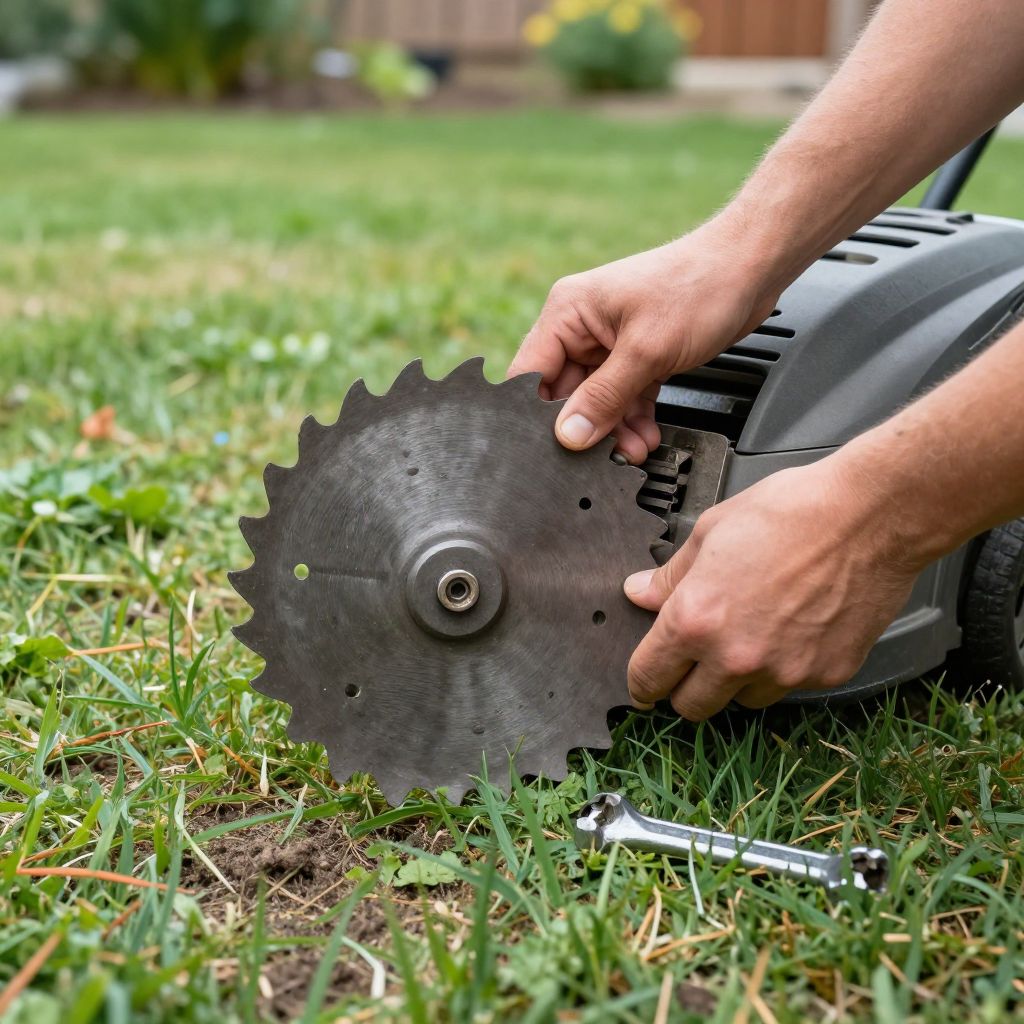
If you’re wondering which way do mower blades go on, the short answer is that the cutting edges must face the direction of blade rotation, and the blade must sit on the spindle exactly as the mower manufacturer designed it. Get that wrong, and you can get poor cutting, vibration, or a dangerous imbalance.
The good news is that most mower blades are straightforward once you know what to look for. With a few visual checks and basic safety steps, you can reinstall a blade correctly and avoid common maintenance mistakes.
Which way do mower blades go on?
Mower blades go on with the cutting edges facing the direction the blade spins, and the raised sail or wings usually point upward toward the mower deck. The center hole, washers, and any blade adapter must match the spindle exactly. If the blade is reversed, the mower may still run, but it will cut poorly and can become unsafe.
How to identify the correct blade orientation
Before you bolt anything back on, inspect the blade itself. Most lawn mower blades are not symmetrical, so the shape tells you a lot about how they should sit.
Look for these blade features
- Cutting edge: The sharpened edge should face the direction of rotation.
- Sail or lift wing: The curved, raised section usually faces upward to create airflow.
- Stamped markings: Some blades have “this side up,” part numbers, or directional arrows.
- Center hole shape: A star, round, or keyed hole must match the spindle or adapter.
If your blade has two cutting edges, it may be a mulching blade or a special high-lift design. Even then, the blade still has a top and bottom side, and the raised profile matters.
Check the mower deck and spindle
Look under the deck for the spindle shaft, blade adapter, and any washers or spacers. The blade should sit flat and centered, not wobble or hang at an angle.
If the blade seems to fit only one way, trust the fit but still confirm the cutting edge direction before tightening the bolt.
Step-by-step: how to reinstall a mower blade safely
Always work on a cool engine and disconnect the spark plug wire before reaching under the deck. For battery-powered mowers, remove the battery first.
- Secure the mower. Set it on a flat surface and tip it only as the manufacturer recommends.
- Disconnect power. Remove the spark plug wire or battery to prevent accidental starting.
- Remove the blade bolt. Use the correct wrench or socket, and hold the blade carefully with a block of wood if needed.
- Inspect the blade. Check for cracks, deep nicks, bends, or heavy rust. Replace damaged blades rather than reusing them.
- Find the top side. The sail or raised section usually faces up toward the deck.
- Align the blade. Match the center hole and any locating tabs or washers with the spindle.
- Install the bolt and tighten securely. Use the mower’s recommended tightening method and torque if available.
- Spin by hand. Make sure the blade rotates freely and does not strike the deck.
If the mower uses more than one blade, remove and reinstall them one at a time so you do not mix up their positions.
What happens if mower blades are installed backward?
A backward blade usually won’t cut grass cleanly. Instead of lifting and slicing, it may tear the turf, leave stragglers, and make the mower work harder.
Common signs of incorrect installation
- Uneven or ragged grass tips after mowing
- Excess vibration through the handle or deck
- Reduced airflow and poor bagging or mulching
- Unusual noise from the underside of the mower
- Grass clumping under the deck
Important: A blade installed upside down or with the wrong adapter can be unsafe. If the mower vibrates strongly, shut it off and recheck the installation before mowing again.
Different mower blade types and how they sit
Not every blade looks the same, but the same basic rule applies: the blade must be mounted so the cutting edge and lift design work with the mower’s rotation and deck shape.
Standard blades
These are common on many walk-behind mowers. One side is sharpened, and the raised sail usually points upward. The blade should sit level and centered on the spindle.
Mulching blades
Mulching blades often have more curves or extra cutting surfaces. They are designed to keep clippings circulating longer inside the deck. Install them exactly as marked, because the airflow pattern depends on correct orientation.
High-lift blades
High-lift blades move more air and are often used for bagging. The sail is usually more pronounced, so the top side is easier to identify. Mount them the same way the original blade was installed.
Riding mower blades
Riding mowers may use one, two, or three blades depending on deck size. The blade shape and spindle hardware can vary, so always compare the new blade to the old one before installation.
How to tell if your mower blade is on upside down
If you are unsure after installation, compare the blade position to the mower’s airflow and cutting performance. A correctly installed blade should help the mower lift grass upright before cutting it.
- The sail or curved section should usually face the deck.
- The sharp edge should lead into the grass as the blade spins.
- The blade should not rub the deck or sit crooked.
- The mower should cut evenly without excessive vibration.
If you still cannot tell, remove the blade and compare it with the owner’s manual or a photo of the original setup. That is safer than guessing.
Practical maintenance tips for better mowing results
Correct blade orientation is only part of good mower maintenance. A clean, sharp, properly balanced blade helps your lawn recover faster after mowing.
Keep the blade sharp
A dull blade tears grass instead of slicing it. Sharpen it when the cut starts looking frayed, but avoid removing too much metal, which can throw the blade off balance.
Balance the blade after sharpening
An unbalanced blade can cause vibration and wear on the mower. A simple blade balancer or even a nail in the wall can help you check whether one side is heavier.
Clean the underside of the deck
Built-up grass and debris can affect airflow and cutting quality. Scrape off packed clippings when the mower is cool and disconnected from power.
Replace worn hardware
If the bolt, washer, or adapter is damaged, replace it. A blade that is held loosely can shift, vibrate, or come off during use.
Common mistakes to avoid
- Installing the blade with the cutting edge facing the wrong way
- Using the wrong blade for your mower deck
- Reusing a bent, cracked, or heavily worn blade
- Forgetting to disconnect the spark plug wire or battery
- Overtightening or undertightening the blade bolt
- Mixing up spacers, washers, or blade adapters
One of the most common errors is assuming the shiny or sharper-looking side is the top. That is not always true, so rely on the blade shape, markings, and mower manual instead.
When to replace rather than reinstall
Sometimes the safest answer is not to reinstall the blade at all. Replace it if you see cracks, warping, deep gouges, or a blade that has been sharpened so many times that it is noticeably thin.
Also replace the blade if the mower keeps vibrating even after you reinstall it correctly and confirm the spindle is sound. A damaged spindle or adapter can mimic blade problems.
Final check before you mow
After installation, rotate the blade by hand, confirm that all hardware is secure, and make sure the spark plug wire or battery is reconnected only when you are ready to mow. Start the mower in a clear area and listen for unusual noise or vibration.
If you want to keep your mower running smoothly, it also helps to stay on top of routine maintenance like oil changes and blade care. You may also find it useful to read about what kind of oil a lawn mower takes so you can keep the engine in good condition while you maintain the cutting system.