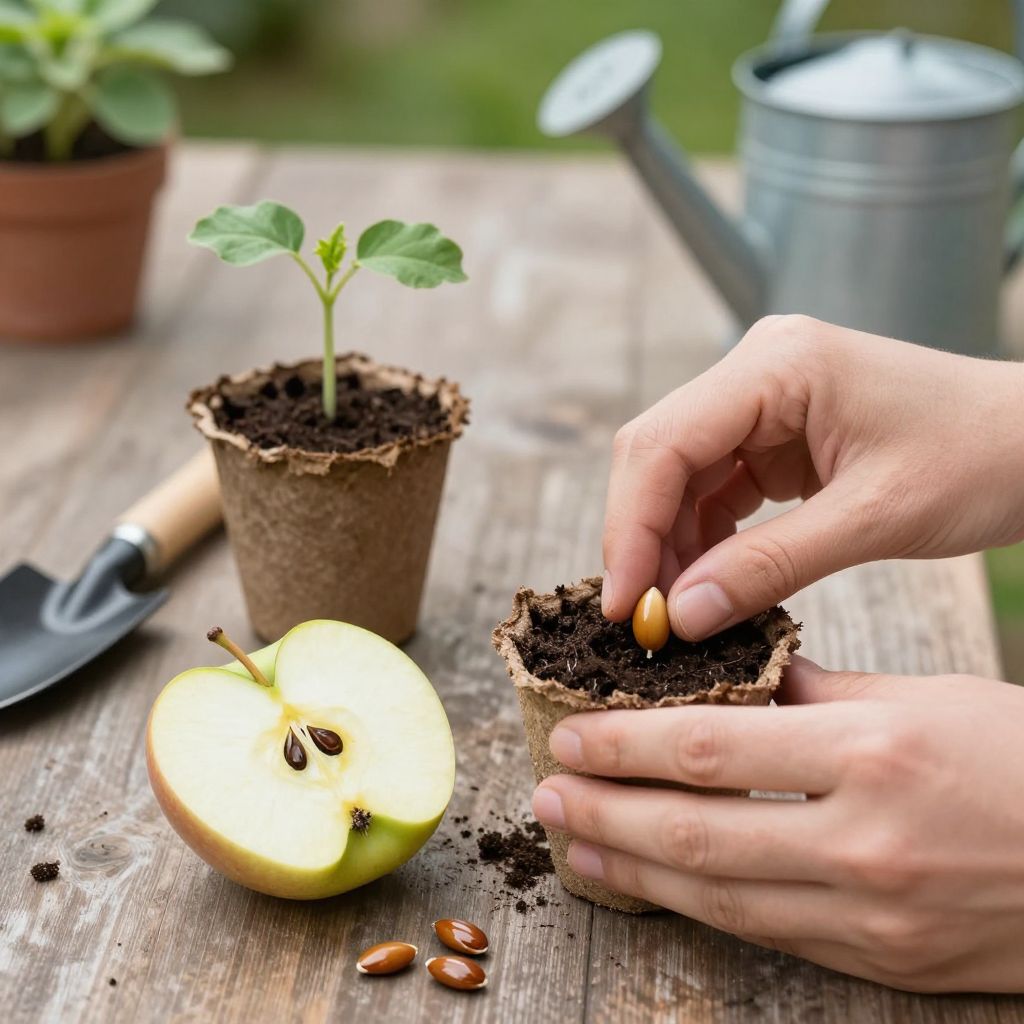
Can you grow an apple tree from an apple seed? Yes, you can germinate the seed and grow a young apple tree. But the tree you get will usually not be the same as the apple the seed came from, and it may take many years to fruit. For most home gardeners, growing from seed is a fun experiment rather than the best way to produce dependable apples.
If you want to try it, the process is straightforward: collect fresh seeds, cold-stratify them, sprout them in a moist medium, and grow the seedlings in strong light with careful watering. The real challenge is patience, because seed-grown apples are unpredictable and often need pollination help, pruning, and years of care before they bear fruit.
Can you grow an apple tree from an apple seed?
Yes, an apple seed can grow into an apple tree, but the seedling will be genetically unique. Apples do not grow true from seed, so the fruit may be smaller, tart, bland, or otherwise different from the parent apple. If your goal is reliable fruit, buy a grafted tree; if your goal is learning, seed-growing is a rewarding project.
Why apple seeds don’t produce the same apple
Most apples are the result of cross-pollination, which means the seed contains mixed genetics from two parent trees. That is why a seed from a sweet red apple may grow into a tree with very different fruit quality.
This is the biggest reason orchard trees are usually grafted. Grafting preserves a known variety, while seed-grown trees are unpredictable in flavor, size, harvest time, and disease resistance.
What to expect from a seed-grown apple tree
- Fruit quality varies and may be poor, average, or occasionally excellent.
- The tree may take many years to flower and fruit.
- Seedlings are useful for rootstock, breeding, or learning, not guaranteed harvests.
- Some seedlings grow vigorously, while others stay weak or show disease issues.
How to sprout apple seeds successfully
Apple seeds need a cold period before they will germinate well. In nature, winter provides that chill. Indoors, you can mimic it with refrigeration, which is the most reliable method for home gardeners.
Step 1: Collect and clean the seeds
- Remove seeds from a ripe apple.
- Rinse off all fruit residue.
- Let the seeds dry briefly on a paper towel.
- Choose plump, undamaged seeds for the best chance of sprouting.
Do not let the seeds dry out for long periods or sit in fruit pulp, which can encourage mold.
Step 2: Cold-stratify the seeds
Place the seeds in a slightly damp paper towel, peat-free seed-starting mix, or moist sand inside a sealed bag or container. Store them in the refrigerator, not the freezer, for several weeks. Check periodically for mold and keep the medium just barely moist.
Cold stratification is essential for many apple seeds. Without it, germination is often slow, uneven, or unsuccessful.
Step 3: Watch for germination
After the chilling period, some seeds will begin to crack and send out a small white root. As soon as you see a root, plant the seed carefully in a small pot filled with well-draining seed-starting mix.
- Plant the root downward if you can identify it.
- Cover lightly with mix; do not bury deeply.
- Keep the medium evenly moist, not soggy.
- Place the pot in bright light and warm indoor conditions.
Best growing conditions for apple seedlings
Apple seedlings need strong light, moderate moisture, and good drainage. They grow best in full sun once moved outdoors, but young seedlings should be protected from harsh weather, drying winds, and temperature swings.
Light
Indoors, give seedlings the brightest window you have or use a grow light. Weak light causes leggy, floppy growth. Outdoors, apples need full sun for the strongest growth and future flowering.
Soil and drainage
Use a loose, fertile, well-drained potting mix for seedlings. In the ground, apples prefer deep soil that drains well rather than heavy, waterlogged clay. If your soil stays wet after rain, improve drainage before planting.
Watering
Keep the root zone evenly moist while the seedling is young. Water when the top layer of mix begins to dry, but never leave the pot standing in water. Overwatering can rot the roots quickly.
Temperature
Seedlings prefer moderate temperatures and dislike sudden cold snaps. If you move them outdoors, harden them off gradually over 7 to 10 days so they adjust to sun and wind.
How to transplant an apple seedling outdoors
Once the seedling is sturdy and has several sets of true leaves, it can be moved to a larger container or planted in the ground. Choose a site where the tree has room to grow and where you can access it for pruning and future care.
- Pick a sunny location with well-drained soil.
- Loosen the soil and mix in compost if the ground is poor.
- Dig a hole slightly wider than the root ball.
- Set the seedling at the same depth it was growing in the pot.
- Backfill, water thoroughly, and mulch lightly.
Keep mulch a few inches away from the trunk so moisture does not collect against the bark. A 2- to 3-inch layer of mulch helps conserve moisture and reduce weeds.
How long does it take for a seed-grown apple tree to fruit?
It often takes several years before a seed-grown apple tree flowers, and sometimes much longer. Some seedlings never produce worthwhile fruit at all. The exact timeline depends on growing conditions, tree vigor, pruning, and genetics.
If your priority is apples sooner, buy a grafted tree from a reputable nursery. Grafted trees are selected for known fruit quality and earlier bearing, which makes them the practical choice for most home orchards.
Pollination and fruit set
Even if your seedling eventually flowers, it may need a compatible pollination partner to set fruit well. Many apple varieties are not fully self-fertile, and nearby apple trees often improve yields.
What to consider in a home garden
- Plant more than one apple tree if you want better pollination.
- Encourage pollinators by avoiding broad-spectrum insecticides during bloom.
- Check whether nearby ornamental crabapples may help with pollination.
Because seed-grown trees are unnamed and unpredictable, you cannot assume they will pollinate other apples well. That is another reason grafted varieties are easier for fruit production.
Pruning and training a young apple tree
Young apples benefit from light, regular pruning to build a strong framework. Early training helps create a sturdy tree that can support future fruit and resist breakage.
Basic pruning goals
- Remove dead, damaged, or crossing branches.
- Encourage a strong central leader or open structure, depending on your training style.
- Keep the canopy open to air and sunlight.
- Avoid heavy pruning on very young seedlings unless needed for structure.
Prune during dormancy in late winter or very early spring in many climates, but adjust timing to local weather. Avoid pruning during active growth if the tree is stressed.
Common problems when growing apple seeds
Seed-grown apples are not difficult to start, but a few problems come up often. Most are related to moisture, light, and impatience rather than the seed itself.
Mold during stratification
If the seeds mold in the refrigerator, the medium is too wet or the container has too little airflow. Start again with a barely damp medium and check more often.
Weak, stretchy seedlings
This usually means the plant is not getting enough light. Move it closer to a bright window or add a grow light.
Root rot
Heavy, soggy soil can kill seedlings quickly. Use a free-draining mix and make sure pots have drainage holes.
Leaf pests and disease
Young apple trees can attract aphids, caterpillars, and fungal leaf problems. Inspect leaves regularly, remove heavily affected growth, and keep the canopy open with pruning. Good spacing and airflow reduce many disease issues.
Should you grow from seed or buy a grafted tree?
That depends on your goal. If you want an exact apple variety with dependable fruit, buy a grafted tree. If you enjoy experimentation and do not mind waiting years for uncertain results, growing from seed can be a satisfying project.
- Choose seed for curiosity, learning, or breeding experiments.
- Choose grafted trees for reliable fruit, earlier harvests, and known tree size.
Simple care checklist for young apple trees
- Give full sun once established outdoors.
- Use well-drained soil enriched with compost if needed.
- Water deeply, then let the surface begin to dry before watering again.
- Mulch lightly, keeping mulch away from the trunk.
- Prune to build a strong structure.
- Watch for pests, disease, and poor light.
Conclusion
Yes, you can grow an apple tree from an apple seed, but the result is a surprise plant, not a copy of the apple you ate. If you want to try it, start with fresh seeds, cold-stratify them, and give the seedling bright light, good drainage, and patient care. For dependable apples, choose a grafted tree instead.
If you want to keep learning about fruit tree care, look for more guidance on apple tree pruning and fruit tree care basics.