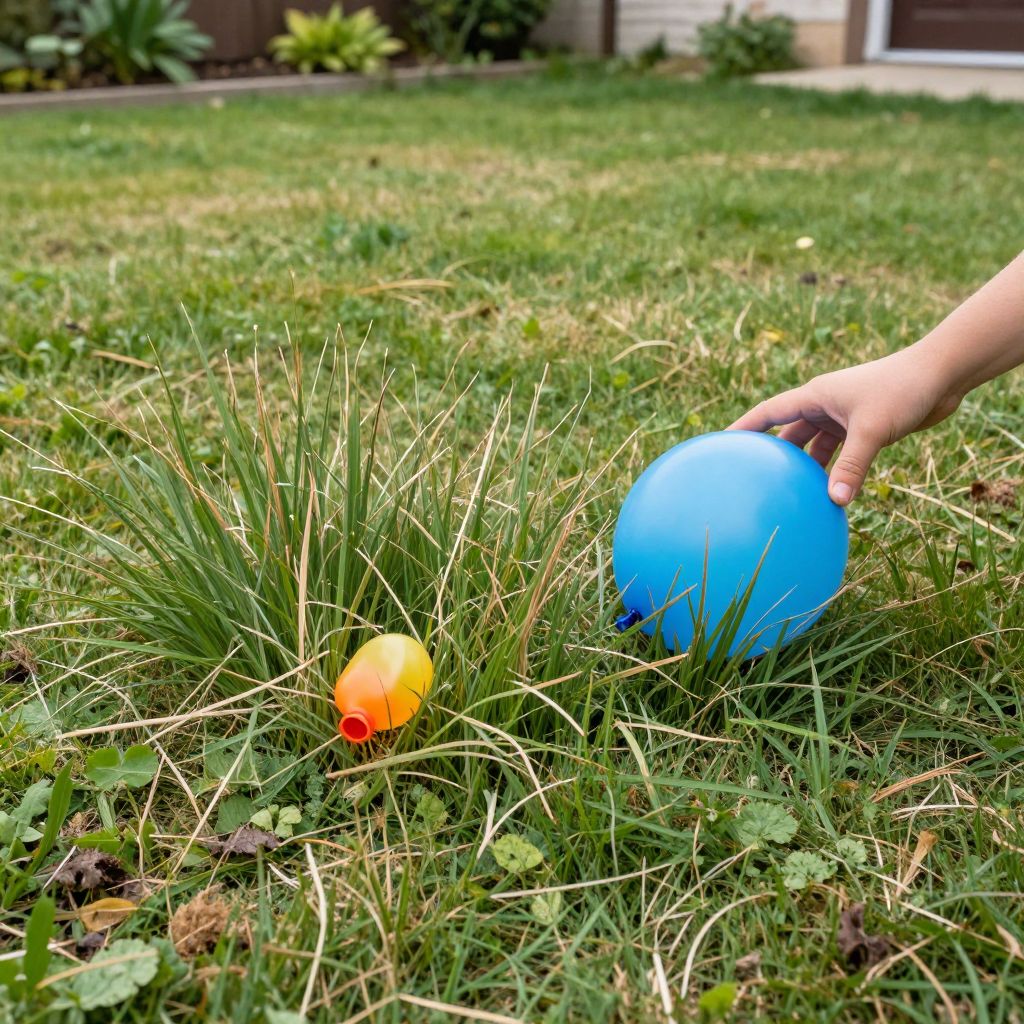
Why does grass pop balloons? In most gardens, it’s usually not the grass itself doing the popping. The problem is more often sharp seed heads, hidden stems, dry thatch, sticks, thorns, or rough lawn debris that puncture the balloon when it brushes across the turf.
If balloons keep bursting on your lawn, the fix is usually simple: improve lawn cleanup, mow at the right height, and check for rough patchy areas, weeds, or debris. Understanding what’s actually causing the puncture helps you prevent it without damaging the grass.
Why does grass pop balloons?
Grass usually pops balloons because the lawn contains something sharp or abrasive, such as dry seed heads, stiff weeds, twigs, thatch, stones, or uneven mown stems. Healthy grass blades are soft, but a rough lawn surface can easily puncture thin balloon latex when touched, dragged, or stepped on.
Common causes of balloon popping in grass
1. Sharp lawn debris
Small sticks, pine needles, broken stems, acorns, and gravel are some of the most common culprits. Even tiny debris can create a pinhole that makes a balloon burst later.
This is especially common after storms, windy weather, or heavy foot traffic. If your lawn borders trees, shrubs, or mulched beds, debris can collect quickly.
2. Dry thatch and dead grass
Thatch is the layer of dead and living plant material between the grass blades and the soil surface. A thin thatch layer is normal, but a thick, dry layer can feel scratchy and act like sandpaper against balloons.
Lawns with poor mowing habits, compacted soil, or excess fertilizer often build up more thatch than they should.
3. Weeds with stiff stems or seed heads
Some weeds are much rougher than turfgrass. Dandelion stems, crabgrass seed heads, foxtail, burweed, and other coarse weeds can puncture balloons if they’re tall or dried out.
If balloons pop in specific spots, inspect those areas for weed patches rather than assuming the grass itself is the problem.
4. Uneven mowing and scalping
When a mower cuts too low, it can leave sharp stubble, exposed stems, and rough patches. Scalped lawns are more likely to snag and burst balloons than a lawn cut at a healthy height.
Scalping also stresses the grass, which can lead to thin spots and more weeds over time.
5. Bare patches, compacted soil, or hard edges
Thin turf doesn’t cushion balloons well. Bare soil, compacted ground, edging stones, and exposed roots can all create rough contact points that make popping more likely.
In these areas, the balloon may burst from the hard surface rather than from the grass itself.
How to tell what is causing the problem
If you want to stop balloons from popping, start by identifying the roughest part of the lawn. A quick inspection usually reveals the cause.
- Walk the area slowly and look for sticks, stones, thorns, or broken stems.
- Run your hand lightly over the grass to feel for sharp seed heads or dry thatch.
- Check whether the lawn was recently mown too short.
- Inspect for weeds, especially coarse grasses and seed heads.
- Look for bare or compacted patches where the ground feels hard or uneven.
Tip: If balloons pop only in one section, the cause is usually local debris, a weed patch, or a rough edge rather than the entire lawn.
How to stop grass from popping balloons
Clean the lawn first
Before any event, playtime, or decoration setup, rake or hand-pick debris from the lawn. Remove twigs, seed pods, stones, and dead stems, especially in high-traffic areas.
If the lawn is large, use a leaf rake or flexible lawn rake to lift light debris without tearing healthy grass.
Mow at the proper height
Mow according to your grass type and season, but avoid cutting too short. A slightly taller lawn is usually softer underfoot and less likely to puncture balloons than a stressed, scalped lawn.
As a general rule, never remove more than one-third of the grass blade at one mowing. That keeps the turf healthier and reduces rough stubble.
Reduce thatch if it is thick
If your lawn has a spongy, dry surface layer thicker than about 1/2 inch, it may need dethatching or vigorous raking, depending on the grass type. Not every lawn needs dethatching, so check carefully before you start.
For cool-season lawns, light dethatching is often done when the grass is actively growing. For warm-season lawns, do it during active growth so the turf can recover more quickly.
Control weeds and coarse patches
Pull or spot-treat weeds before they set seed and dry out. Coarse weeds are more likely to create sharp, brittle stems that pop balloons.
If a patch is heavily weedy or patchy, overseed or repair it after removing the problem plants so the area becomes smoother and denser over time.
Level rough areas
Low spots, exposed roots, and uneven soil can create pressure points that burst balloons. Topdress shallow depressions with a thin layer of soil or compost, then reseed if needed.
For larger uneven areas, correct the grading gradually rather than burying the grass too deeply.
Best lawn care practices for a softer, safer surface
Keep turf dense
A thick lawn cushions contact better than a thin one. Dense turf also crowds out weeds, which means fewer sharp stems and seed heads over time.
To encourage density, mow regularly, water deeply when needed, and avoid overfertilizing, which can create weak, fast growth followed by rough dieback.
Water wisely
Dry, stressed grass can become brittle, especially in hot weather. Water deeply enough to support healthy growth, but let the soil dry slightly between waterings so the lawn does not stay soggy.
The best schedule depends on your climate, soil type, and grass species. Sandy soils dry faster; clay soils hold water longer.
Improve drainage if needed
Puddling and muddy patches can make balloons more likely to snag on hard crusts, exposed roots, or compacted soil. If water sits on the lawn after rain, improve drainage with aeration, topdressing, or soil correction where appropriate.
Good drainage also helps grass recover faster from foot traffic and mowing.
Aerate compacted soil
Compacted lawns often develop thin, rough turf with more weeds. Core aeration can help air, water, and roots move through the soil, which supports a smoother lawn surface over time.
Aeration is most useful where the soil is dense, the lawn gets heavy use, or the ground feels hard underfoot.
Seasonal considerations
Spring
Spring lawns often contain winter debris, dead stems, and uneven growth. This is a good time to rake lightly, remove twigs, and spot-seed bare areas.
Be gentle if the soil is still soft from rain, because working on wet ground can cause compaction.
Summer
In hot weather, stressed turf can become dry and rough. Mow higher, water as needed for your grass type, and avoid scalping during dry spells.
If balloons are used for outdoor events, choose the smoothest part of the lawn and inspect it beforehand.
Fall
Fall is a strong recovery season for many lawns. It’s a good time to overseed thin areas, control weeds, and reduce thatch before winter dormancy.
Cleaning up leaves and fallen twigs now can prevent rough debris from becoming a problem later.
Winter
Frozen grass and dormant turf are more brittle, and the ground may hide sharp debris under leaves or frost. Avoid heavy foot traffic on frozen lawns if possible.
If you use balloons outdoors in winter, check the surface carefully first.
What not to do
- Don’t assume the grass blades themselves are the only cause.
- Don’t mow too short to “make it smoother”; that often makes the lawn rougher and weaker.
- Don’t leave sticks, stones, or seed heads in place before setting up balloons.
- Don’t overwater just to soften the surface; soggy soil can create other lawn problems.
- Don’t ignore weeds with stiff stems, especially in thin or patchy turf.
Simple troubleshooting guide
If balloons keep popping, use this quick diagnosis:
- Pops in one spot: likely debris, a weed patch, or a hard edge.
- Pops after mowing: mower height may be too low, leaving sharp stubble.
- Pops in dry weather: the lawn may be brittle, rough, or full of dry thatch.
- Pops in thin areas: bare soil, roots, or compacted ground may be the issue.
- Pops after storms: windblown twigs, seed pods, and grit are likely causes.
Conclusion
Grass usually pops balloons because the lawn surface is rough, dry, or littered with sharp debris—not because healthy grass is naturally sharp. Clean the area, mow at a sensible height, remove weeds and thatch, and smooth thin spots for a softer surface. If you want the best results, inspect your lawn before setting up balloons and make the roughest areas your first repair target.
If you’re improving your lawn surface, you may also want to read more about how to overseed a thin lawn and how to dethatch grass safely.