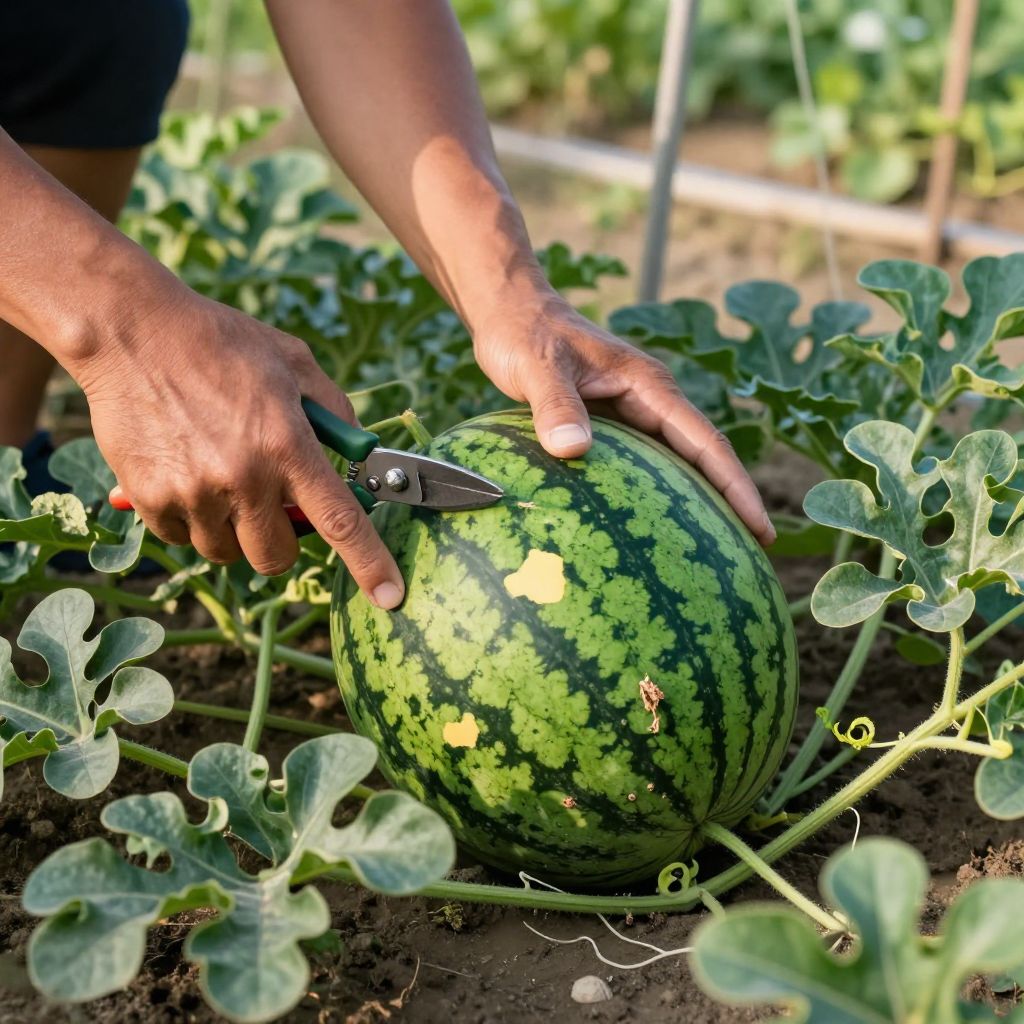
Wondering when to harvest watermelon so it’s sweet, crisp, and fully ripe? Picking too early gives you pale, bland flesh, while waiting too long can lead to overripe, mealy fruit. The good news is that watermelons give several reliable signs when they’re ready, and you can learn to read them with a little practice.
The best harvest time depends on the variety, weather, and how long the fruit has been growing. Instead of relying on size alone, use a combination of cues: days to maturity, tendril color, rind changes, and the ground spot underneath the melon.
When to harvest watermelon?
Harvest watermelon when the fruit has reached its expected maturity window and shows several ripeness signs at once: a dried tendril nearest the fruit, a creamy yellow field spot, a duller rind, and a firm, heavy feel. Most watermelons are ready about 70 to 100 days after planting, but local weather and variety can shift that timing.
How to tell a watermelon is ripe
1. Check the curly tendril near the fruit
Look at the small curly vine closest to the watermelon stem. When that tendril turns brown and dries up, the fruit is often close to harvest.
This is one of the most useful indicators, but it works best when combined with other signs. If the tendril is still green and flexible, the melon usually needs more time.
2. Inspect the field spot
The field spot is the patch where the watermelon rested on the soil. A ripe melon usually has a creamy yellow or buttery spot rather than a white or pale green one.
A deep yellow field spot is a strong sign of maturity. If the spot is still very light, the fruit may need several more days on the vine.
3. Look at the rind finish
As watermelons ripen, the rind often changes from shiny to more matte or dull. The stripes may also look less vivid than they did earlier in the season.
Glossy skin alone does not mean the fruit is unripe, but a dull rind is usually a better sign than a shiny one.
4. Tap and feel the fruit carefully
Many gardeners use a tapping test, but it is best treated as a supporting clue rather than the only test. A ripe watermelon may sound more deep or hollow than an immature one.
Also lift the fruit if you can. A ripe watermelon should feel heavy for its size, which suggests the flesh is well developed and juicy.
5. Watch the vine and nearby leaves
The vine near the fruit often starts to dry back as the melon finishes ripening. Yellowing leaves alone are not enough to judge maturity, because stress, disease, or nutrient issues can also cause decline.
Use vine decline as a clue, not a final answer. Healthy ripening fruit can still sit on a vine that is starting to age naturally.
How many days after planting should you harvest?
Seed packets and plant tags usually list a maturity range, often around 70 to 100 days from planting. That range is a starting point, not a guarantee.
Warm, sunny weather tends to speed ripening, while cool temperatures, cloudy conditions, poor pollination, or plant stress can slow it down. If you started from transplants, count from the date the plants went into the garden, but still confirm with ripeness signs.
Why days to maturity can be misleading
- Weather can speed up or delay fruit development.
- Different cultivars mature at different rates.
- One plant may ripen fruit unevenly if it set multiple melons.
- Stress from drought, pests, or disease can alter timing.
Best harvesting technique for watermelons
Use clean, sharp pruners or a knife to cut the stem, leaving about 1 to 2 inches attached to the fruit. Do not twist or yank the melon off the vine, because that can damage the stem and reduce storage life.
- Check several ripeness signs before cutting.
- Support the fruit with one hand if it is large.
- Cut the stem cleanly with pruners or a garden knife.
- Handle the melon gently to avoid bruising.
- Move it out of direct sun if you are not eating it right away.
Never pull a watermelon free by force. A clean cut is safer for the fruit and easier on the vine.
What if the watermelon looks ripe but isn’t sweet?
Sometimes a melon looks mature but tastes watery or bland. That usually means it was picked a little early, the plant did not get enough sun, or growing conditions were uneven during fruit development.
Watermelons do not become sweeter after harvest. If the fruit is under-ripe, storing it longer will not improve flavor the way it might with some other fruits.
Common reasons for poor flavor
- Harvested before full maturity
- Insufficient sunlight during growth
- Irregular watering, especially during fruit fill
- Too much shade from nearby plants
- Poor pollination or weak vine growth
How growing conditions affect harvest timing
Watermelons need full sun, warm temperatures, and steady growth to ripen well. In cooler climates or short seasons, fruit may need extra time and may never reach peak sweetness if autumn arrives too early.
Good soil drainage matters too. Watermelons dislike waterlogged roots, and soggy soil can slow growth or encourage disease. A loose, fertile bed with compost mixed in at planting time usually supports better fruit development than heavy, compacted soil.
Watering during the ripening stage
Keep watering consistent while the fruit is sizing up, then reduce excess moisture as harvest approaches if your soil tends to stay wet. Sudden swings from very dry to very wet can cause cracking or uneven ripening.
At the same time, do not let the plant wilt repeatedly. Severe drought stress can reduce fruit quality and cause blossoms or young fruit to drop earlier in the season.
Common mistakes when deciding harvest time
- Relying on size alone: Large fruit can still be unripe, especially on vigorous vines.
- Picking at the first yellowing leaf: Leaf decline can happen for many reasons unrelated to ripeness.
- Ignoring the field spot: This is one of the easiest and most reliable signs.
- Using only the tap test: Sound can be subjective and varies by variety.
- Waiting too long after full ripeness: Overripe melons can become soft, mealy, or split.
How to store harvested watermelon
After harvest, keep whole watermelons in a cool, shaded place. If you plan to eat them within a few days, room temperature is usually fine as long as the area is not hot.
For longer storage, move them to a cool spot with good air circulation. Once cut, refrigerate the pieces promptly in a covered container.
Signs the fruit was harvested at the right time
- The flesh is crisp and juicy, not grainy or watery.
- The flavor is sweet and full.
- The seeds are mature if the variety is seeded.
- The melon feels heavy and solid.
Quick harvest checklist
If you want a simple way to decide when to pick, use this checklist before cutting the fruit:
- The maturity window on the seed packet or plant tag has been reached.
- The nearest tendril is brown and dry.
- The field spot is creamy yellow.
- The rind looks dull rather than glossy.
- The melon feels heavy for its size.
If most of these signs match, the watermelon is likely ready.
Final tip for better harvests next season
Keep notes on the variety, planting date, first fruit set, and harvest date. Over time, this helps you learn how your local climate affects ripening and makes it much easier to judge when to harvest watermelon the next season.
If you want to improve future harvests, it also helps to review basic care such as full sun, consistent watering, and healthy soil before planting. For more practical growing guidance, you may also find related gardening reading on watering vegetables in hot weather and how to improve garden soil with compost.