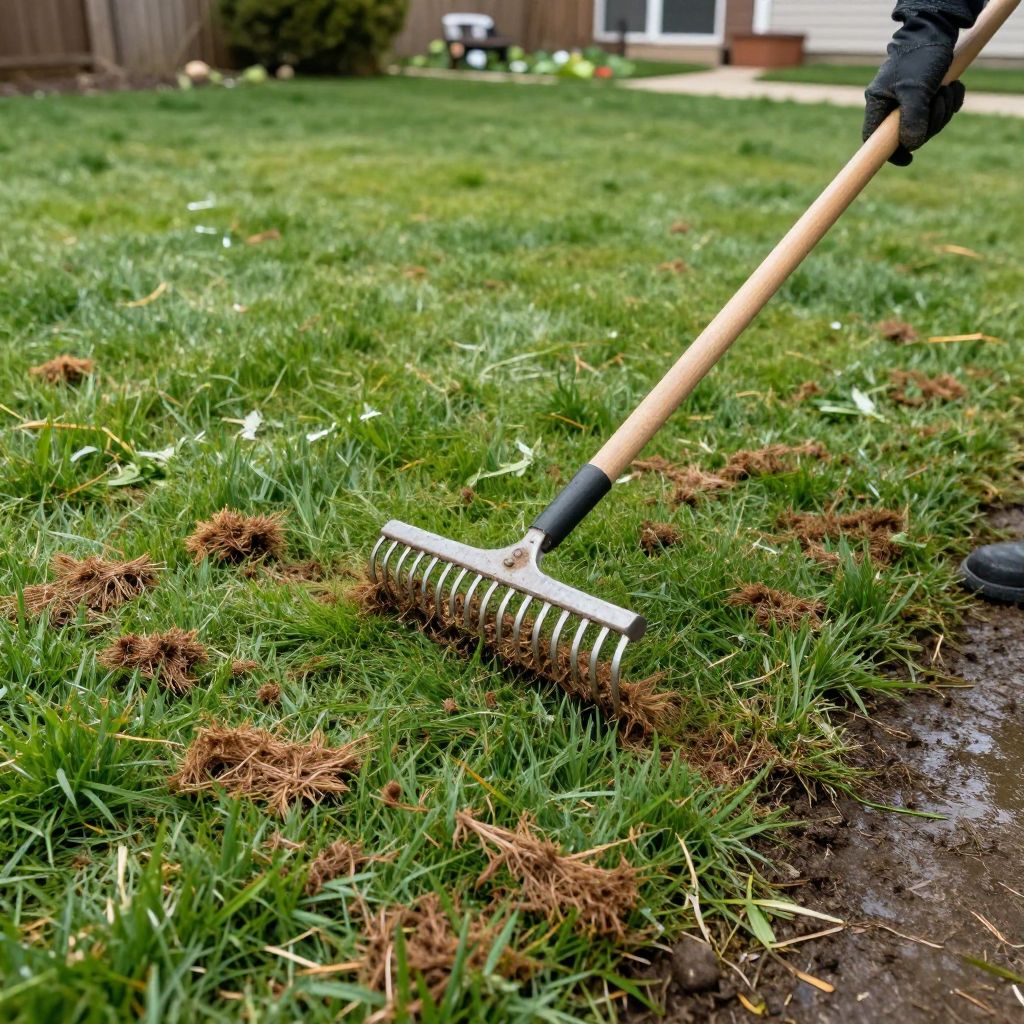
When should I dethatch my lawn? The best time is usually when the grass is actively growing and can recover quickly, not during heat, drought, or dormancy. For many lawns, that means early spring or early fall, depending on the grass type and your climate.
Dethatching is useful only when the thatch layer has become too thick. A thin layer is normal and even helpful, but a heavy mat can block water, air, and nutrients from reaching the soil. The key is knowing if your lawn needs it, then timing the job so the grass bounces back fast.
When should I dethatch my lawn?
Dethatch when your lawn is in its main growth period and the weather is mild. Cool-season grasses are usually dethatched in early fall or early spring, while warm-season grasses are often dethatched in late spring or early summer. Avoid dethatching during drought, extreme heat, or when the lawn is stressed.
What is thatch, and when is it a problem?
Thatch is a layer of dead and living stems, roots, and runners that builds up between the grass blades and the soil surface. A small amount, usually less than about 1/2 inch, is normal. It becomes a problem when it gets thicker and starts preventing water, fertilizer, and oxygen from reaching the roots.
Signs your lawn may need dethatching
- The lawn feels spongy or bouncy underfoot.
- Water beads up or runs off instead of soaking in.
- The grass looks thin even with regular care.
- You can see a dense brown layer at the soil surface.
- A screwdriver or trowel is hard to push into the turf because of the mat.
If you are unsure, cut out a small wedge of turf and look at the layer between the grass and the soil. If that layer is thicker than about 1/2 inch, dethatching may help. If it is thin, the lawn may need aeration, better mowing habits, or improved soil care instead.
Best timing by grass type
Cool-season grasses
Cool-season grasses such as tall fescue, Kentucky bluegrass, perennial ryegrass, and fine fescues usually recover best in early fall. Spring can also work if the lawn has a full season ahead to regrow before summer heat arrives. Fall is often the safest choice because temperatures are cooler and weeds are less aggressive.
Warm-season grasses
Warm-season grasses such as bermudagrass, zoysiagrass, centipedegrass, and St. Augustinegrass are typically dethatched in late spring through early summer, once they are growing strongly. Do not dethatch them too early in the season, because slow recovery can leave the lawn thin and vulnerable.
Why timing matters
Dethatching is stressful. If you do it when the grass is already struggling, you can create more damage than benefit. The goal is to schedule the work when the lawn can quickly fill in bare spots and outgrow the stress.
When not to dethatch
- During a heat wave or drought
- When the lawn is dormant or nearly dormant
- Right after seeding a new lawn
- On a lawn that is already thin, diseased, or insect-damaged
- When the soil is very wet and soft
It is also a mistake to dethatch every year just because it is part of a routine. Many lawns never need it, and repeated aggressive dethatching can weaken turf and encourage weeds.
How to dethatch a lawn the right way
Step 1: Check the thickness of the thatch
Use a trowel, knife, or spade to lift a small section of turf. Measure the brown layer above the soil. If it is under 1/2 inch, skip dethatching and focus on mowing, watering, and soil improvement. If it is thicker, dethatching may be worthwhile.
Step 2: Mow at the correct height
Mow the lawn slightly lower than usual, but do not scalp it. Remove the clippings so the dethatching tool can reach the mat more easily. If the lawn is already stressed, avoid cutting it too short before the job.
Step 3: Use the right tool
- Manual thatch rake for small areas or light thatch
- Power dethatcher or vertical mower for larger lawns or thicker buildup
- Core aerator if compaction is also part of the problem
A thatch rake is gentler but labor-intensive. A power dethatcher is faster, but it can be too aggressive if set too deep. Read the machine instructions carefully and start with a shallow setting.
Step 4: Work in two directions
Run the dethatcher over the lawn in one direction, then make a second pass at a right angle if needed. This helps lift more debris evenly. Stop if you see excessive tearing, bare soil, or large amounts of healthy grass being pulled up.
Step 5: Rake up debris
Collect the loosened thatch and remove it from the lawn. Leaving it in place can smother the grass and undo the work you just did. A lawn mower bag, leaf rake, or tarp can make cleanup easier.
Step 6: Help the lawn recover
- Water deeply after dethatching if rainfall is lacking.
- Overseed thin areas only if the season and grass type are suitable.
- Topdress lightly with compost if your soil needs improvement.
- Avoid heavy foot traffic for a week or two.
Recovery care matters as much as the dethatching itself. A lawn that is dethatched and then neglected may thin out further instead of improving.
Should you dethatch, aerate, or both?
Dethatching removes the mat on top of the soil. Aeration relieves soil compaction by pulling out plugs or creating openings in the ground. They solve different problems, though a lawn can need both. If the soil is hard and compacted, aeration may be more helpful than dethatching alone.
How to tell the difference
- Thatch problem: soft, spongy surface layer; roots may be shallow in the mat
- Compaction problem: hard soil; poor drainage; roots struggle to penetrate
- Both: thick mat plus firm, tight soil beneath it
If both issues are present, aerate first or combine the tasks only when your grass type and season allow it. For stressed lawns, spacing the jobs apart can reduce shock.
Common mistakes to avoid
Detaching too aggressively
Removing too much thatch at once can tear up healthy turf. If the buildup is severe, it may be better to make a lighter pass, then reassess later in the season.
Doing it at the wrong time
Dethatching in midsummer or during drought is one of the fastest ways to damage a lawn. The grass needs active growth and adequate moisture to recover.
Confusing thatch with dead grass
Dead grass on top of the lawn may simply be leftover clippings, winter debris, or disease damage. Thatch is a distinct layer between the green blades and the soil. Check before you start cutting into the turf.
Ignoring the cause
Thatch often builds up because of shallow watering, excessive nitrogen, frequent light fertilizing, or grass species that spread by runners. If you do not address the cause, the problem can return.
How to reduce thatch buildup over time
- Mow at the recommended height for your grass type.
- Keep mower blades sharp so cuts are clean.
- Water deeply and less often, when appropriate for your soil and climate.
- Avoid overfertilizing, especially with quick-release nitrogen.
- Remove heavy clippings only if they are clumping; otherwise, mulching can be fine.
- Improve soil health with compost or aeration when needed.
Healthy turf management usually reduces thatch more effectively than repeated dethatching. A lawn that grows steadily, roots deeply, and is mowed correctly is less likely to develop a thick mat.
What to expect after dethatching
Your lawn may look rough for a short time. That is normal. You may see brown patches, exposed soil, and a lot of debris, but a healthy lawn should begin to fill back in within a few weeks if conditions are favorable.
If the lawn does not recover, the issue may be more than thatch. Poor soil, compaction, shade, pests, disease, or the wrong grass for the site can all limit recovery. In that case, a soil test and a closer look at site conditions are worth the effort.
Quick answer: the best time in one sentence
Dethatch when your grass is actively growing, the weather is mild, and the lawn has time to recover before stress from heat, cold, or drought returns. That simple rule will help you choose the right window in almost any climate.
If you want to keep improving your lawn care routine, it also helps to read about mowing height, aeration, and soil improvement so you can prevent thatch from building up again.