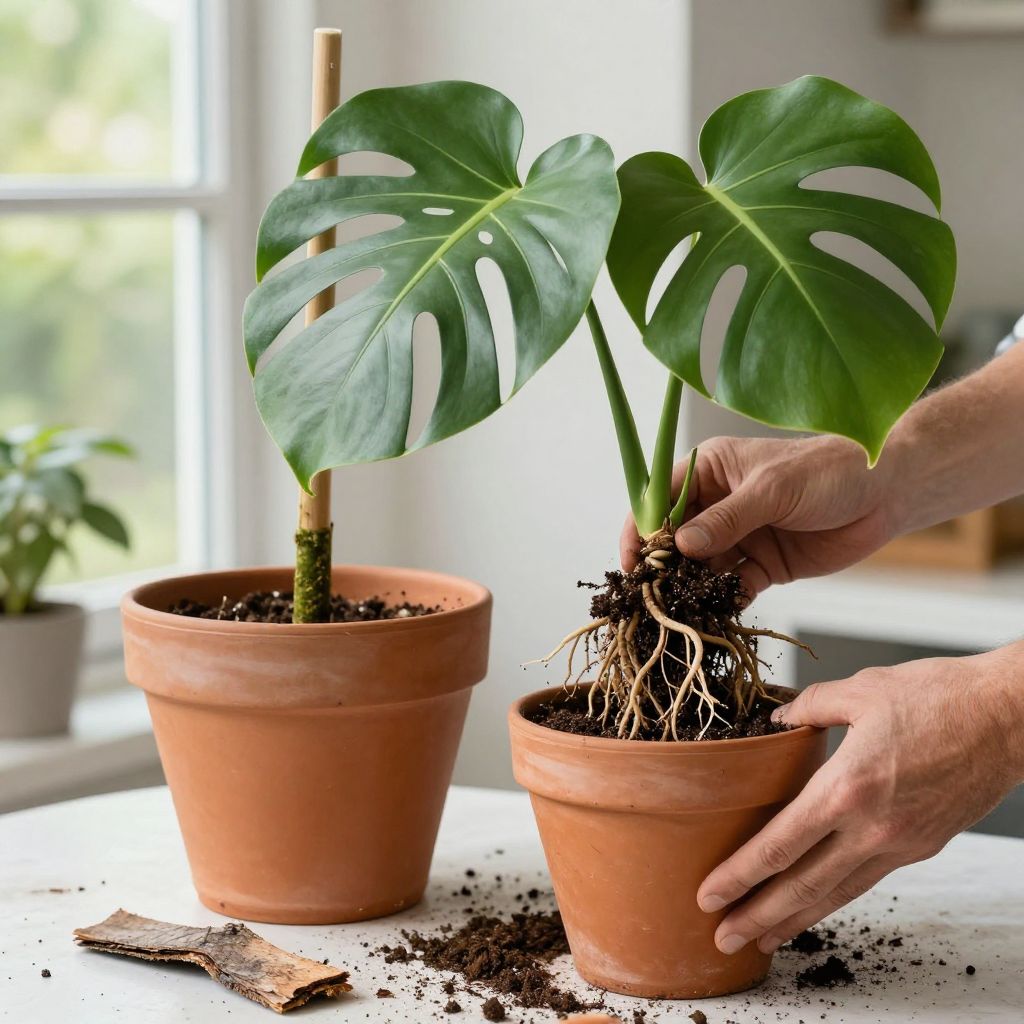
Wondering when to repot monstera without stressing the plant? The best time is usually in spring or early summer, when growth is active and the plant can recover quickly. That said, a monstera should be repotted whenever roots are circling tightly, water runs straight through the pot, or the plant is becoming top-heavy and unstable.
Timing matters, but so does reading the plant. A healthy monstera can often wait a little longer than a stressed one, while an overgrown plant in a cramped pot may need attention sooner, even outside the ideal season.
When to repot monstera?
Repot monstera in spring or early summer if possible, when daylight is increasing and the plant is actively growing. Repot sooner if roots are crowded, the pot dries out very fast, the plant leans, or the soil has broken down. Avoid repotting during cold, low-light months unless the plant is clearly outgrowing its container or suffering from root problems.
How to tell it’s time to repot
Monstera deliciosa and related monstera plants usually give clear signals before they become severely rootbound. Look for a combination of symptoms rather than relying on one sign alone.
- Roots are visible through drainage holes or pushing the plant upward out of the pot.
- The pot feels light soon after watering because the root mass fills most of the container.
- Water runs through the pot quickly instead of soaking into the mix.
- Growth slows noticeably during the active season.
- Leaves are smaller than usual, or the plant looks unstable and top-heavy.
- The pot is bulging, cracking, or difficult to remove from its cachepot.
If you gently slide the plant out and see a dense mat of roots circling the inside, it is likely time to move up a pot size. A few roots at the bottom are normal; a solid, tangled root ball is not.
Best season for repotting monstera
Spring is usually ideal
Spring is the safest, easiest time to repot monstera because the plant is waking up and can quickly produce new roots. Longer days and warmer indoor temperatures help it settle into fresh soil with less shock.
Early summer can also work well
If you missed spring, early summer is still a good window. The plant is typically growing strongly, and damaged roots can recover faster in bright, warm conditions.
When to avoid repotting
Try to avoid repotting in late fall and winter if your home is cool or low-light. Monstera growth slows then, so disturbed roots may sit in wet soil longer and become more vulnerable to rot.
If you must repot in a less-than-ideal season, be extra careful with watering and light. Keep the plant in a warm spot with bright, indirect light and avoid overwatering while it re-establishes.
How often monstera needs repotting
Most monstera plants need repotting every 1 to 2 years, but that varies with pot size, light, temperature, and how fast the plant grows. Fast-growing plants in bright indoor conditions may outgrow their pots sooner, while slower plants can stay put longer.
Rather than repotting on a strict schedule, check the roots and soil condition once or twice a year. A plant can stay in the same pot if it still has room to grow and the mix drains well.
Choosing the right pot and soil
Pick a pot with drainage
Choose a container with drainage holes every time. A pot that is only 1 to 2 inches wider than the current one is usually enough. Going too large can leave excess wet soil around the roots and increase the risk of rot.
Use an airy, fast-draining mix
Monstera prefers a chunky, well-aerated potting mix rather than heavy garden soil. A good mix should hold some moisture but still drain freely.
- Quality indoor potting mix
- Orchid bark or coco chips
- Perlite or pumice
- A small amount of compost, if desired, for added organic matter
A common approach is to use a houseplant mix amended with bark and perlite. The goal is a loose structure that lets roots breathe while still retaining enough moisture between waterings.
Step-by-step: how to repot monstera
- Water the plant lightly the day before, if the soil is very dry. This makes the root ball easier to remove.
- Prepare the new pot with fresh mix, leaving enough room so the plant sits at the same depth as before.
- Gently remove the monstera from its old pot. Tap the sides if needed rather than pulling hard on the stem.
- Loosen only the outer roots if they are tightly circling. Do not aggressively tear apart a healthy root ball.
- Place the plant in the new pot and fill around the sides with fresh mix, firming lightly to remove large air pockets.
- Keep the crown at the same planting depth. Do not bury the stem deeper than before.
- Water thoroughly until excess drains out, then empty the saucer.
If your monstera is very large, you may find it easier to repot with a helper. Tall plants can be awkward and the stems can bend or snap if handled carelessly.
What to do after repotting
After repotting, give the plant a stable environment. Bright, indirect light and steady warmth help it recover. Avoid moving it from room to room while it is adjusting.
- Keep the soil lightly moist, not soggy, for the first few weeks.
- Do not fertilize immediately after repotting; wait until you see new growth.
- Watch for drooping, yellowing, or limp leaves, which can happen briefly after transplanting.
- Rotate the pot occasionally so the plant grows evenly toward the light.
It is normal for a monstera to pause growth for a short time after repotting. What you want to avoid is persistent wet soil, which can lead to root rot before the plant has a chance to recover.
Common repotting mistakes to avoid
Using a pot that is too large
A much bigger pot may seem helpful, but it often creates a wet zone around the roots. Monstera prefers a modest size increase, not a dramatic jump.
Choosing heavy, compact soil
Dense soil holds too much water and can suffocate roots. If the mix feels muddy or compacted, amend it with bark and perlite for better airflow.
Repotting too often
Frequent disturbance can slow growth. Repot only when the plant needs it, not just because you want a larger pot.
Ignoring root rot signs
If roots are black, mushy, or smell sour, repotting should include trimming damaged roots and replacing the old mix. In that case, the issue is not just size; it is soil health and drainage.
Special cases: young plants, mature plants, and aerial roots
Young monstera
Smaller plants may need potting up more often because they fill containers quickly. Watch for roots at the drainage holes and rapid drying between waterings.
Mature monstera
Large plants may be repotted less often, but they can become unstable as they grow upward. Sometimes the solution is a larger pot plus a moss pole or stake rather than a huge container.
Aerial roots are normal
Do not mistake aerial roots for a sign of trouble. They are part of the plant’s natural growth habit. You can guide them into the pot, attach them to support, or leave them as they are.
Should you repot or just refresh the soil?
If the plant is healthy but the soil has compacted, you may not need a full repot. In some cases, top-dressing with fresh mix or gently replacing the top few inches of old soil is enough.
Choose a full repot when the roots are crowded, the plant is unstable, or drainage has become poor. Choose a lighter refresh when the pot is still the right size but the mix is tired.
Troubleshooting after repotting
Some temporary stress is normal, but certain symptoms need attention.
- Yellowing lower leaves: Often caused by overwatering after repotting or by normal adjustment if only one or two leaves are affected.
- Drooping leaves: Can happen for a few days after transplanting, especially if roots were disturbed.
- No new growth: The plant may be focusing on roots first. Check that light and warmth are adequate.
- Mushy stems or sour-smelling soil: Suggests excess moisture and possible root rot.
If the plant seems worse rather than better after a couple of weeks, inspect the root zone. The most common issue is too much water, not too little, especially in a larger pot.
Conclusion: the best timing is the one that matches the plant
For most indoor gardeners, the answer to when to repot monstera is spring, with early summer as the next best option. But the plant’s roots, pot size, and soil condition matter just as much as the calendar. Check your monstera now, and if it is rootbound or drying out too fast, plan a careful repot into a slightly larger pot with airy, well-draining mix.
For more practical houseplant care, you may also want to read related guidance on choosing the right potting mix for houseplants and how to support a monstera as it grows.