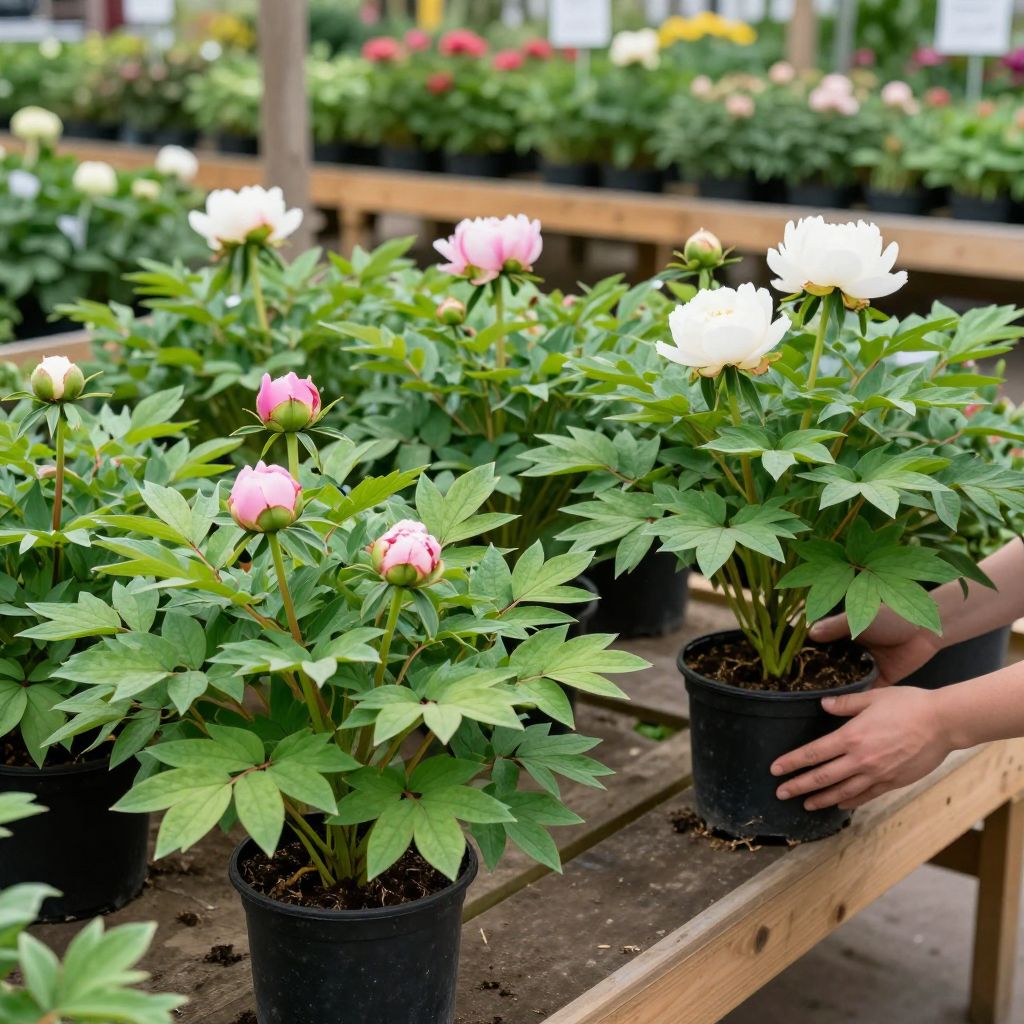
Where to buy peonies near me is a common question when you want a long-lived, low-maintenance perennial with big spring flowers. The best place to buy depends on whether you want bare-root plants, potted nursery stock, or a specific cultivar that local stores may not carry.
You can usually find peonies at independent garden centers, local nurseries, spring plant sales, and reputable online perennial growers. For the healthiest plants, look for firm roots, visible buds, and good drainage where you plan to plant them.
Where to buy peonies near me?
The best places to buy peonies near you are local garden centers, independent nurseries, botanical garden sales, and trusted online specialty growers that ship bare-root plants in season. Choose plants with healthy roots or sturdy stems, and buy from sellers who label the peony type, bloom form, and mature size clearly.
Best local places to find peonies
Independent garden centers and nurseries
These are often the best first stop if you want to see the plant before buying. You can inspect the roots, ask about local growing conditions, and choose varieties that perform well in your climate.
Look for peonies in spring or fall, depending on your region and the nursery’s stock. Some stores carry potted herbaceous peonies, while others sell bare-root divisions for planting when dormant.
Farmers markets, plant sales, and garden club events
Local plant sales can be excellent sources for peonies, especially divisions from established gardens. These plants are often adapted to local weather and may be less expensive than retail nursery stock.
Ask when the plant was divided and whether it has bloomed before. A well-established division with several healthy buds is usually a better buy than a tiny, weak piece of root.
Botanical gardens and public garden sales
Many public gardens host seasonal plant sales or fundraising events. These can be good places to find reliable peony varieties and practical advice from experienced growers.
If the sale staff can tell you the flower color, bloom time, and plant height, that information helps you choose a peony that fits your landscape.
Online specialty nurseries
If local stores have limited stock, specialty online growers often offer the widest selection. This is especially useful if you want tree peonies, intersectional peonies, or a particular flower color or form.
Buy from sellers that ship bare-root plants during the correct planting window for your area. Check reviews, plant size descriptions, and shipping policies before ordering.
How to choose a healthy peony plant
What to look for at the nursery
- Firm roots or crowns with no mushy, black, or foul-smelling sections.
- Visible buds or “eyes” on herbaceous peonies, usually at the crown.
- Sturdy stems on potted plants, without yellowing or wilting.
- Clear labeling for flower color, mature height, and type.
- No obvious pests such as aphids, scale, or distorted new growth.
For bare-root peonies, a larger crown with multiple eyes is usually a better choice than a tiny root division. For potted plants, make sure the root ball is not circling tightly in the container or sitting in soggy mix.
Types you may see for sale
- Herbaceous peonies (Paeonia lactiflora and hybrids): die back in winter and return from the crown each spring.
- Tree peonies (Paeonia suffruticosa types): woody shrubs that keep above-ground stems.
- Intersectional peonies or Itoh peonies: hybrids with large flowers and strong stems.
Choosing the right type matters because each one has different space needs, pruning habits, and winter behavior. If you are unsure, ask the seller which type is best for your site.
When to buy and plant peonies
Timing matters because peonies establish best when they are not actively growing. In many climates, bare-root peonies are planted in fall, while potted plants can sometimes be planted in spring or fall if the soil is workable and not waterlogged.
If you live in a warmer region, local planting timing may differ from colder areas. Use your nursery’s local guidance and avoid planting during extreme heat or frozen ground.
Why fall is often ideal
Fall planting gives peonies time to settle in before winter dormancy. That usually means less stress and better root development before the next growing season.
Spring-planted peonies can still do well, but they may spend more energy on root growth before flowering. In some cases, they may not bloom heavily the first year.
How to plant peonies successfully
Site selection
Peonies need a spot with plenty of sun and good air movement. In most gardens, 6 or more hours of direct sun is a good target for strong flowering.
They also need soil that drains well. Heavy, soggy soil can cause crown rot and poor growth.
Soil preparation
Work in compost if your soil is lean or compacted, but do not overdo it. Peonies prefer fertile soil that drains well rather than rich, wet soil that stays muddy.
If your garden has clay, improve drainage by planting in a raised bed or on a slight mound. Avoid low spots where water collects after rain.
Planting depth
Planting depth is one of the most common mistakes with peonies. The buds on herbaceous peonies should usually sit only a few inches below the soil surface, not deeply buried.
If planted too deep, peonies may grow leaves but fail to bloom well. If planted too shallowly in a harsh climate, they may be exposed to winter damage, so follow local nursery advice when in doubt.
Basic planting steps
- Dig a wide hole and loosen the surrounding soil.
- Mix in compost if needed, but keep the planting area well drained.
- Set the crown or root so the buds are at the proper depth.
- Backfill gently and water to settle the soil.
- Mulch lightly, keeping mulch away from the crown.
Peony care after planting
Watering
Water newly planted peonies deeply after planting and during dry spells while they establish. After that, they usually need less frequent watering than many perennials.
Rather than watering on a fixed schedule, check the soil. Water when the top few inches are dry, especially during hot or windy weather.
Mulching
A light mulch can help conserve moisture and suppress weeds, but keep it a few inches away from the crown. Thick mulch piled against the plant can trap moisture and encourage rot.
Feeding
Peonies usually do not need heavy feeding. If your soil is poor, a light top-dressing of compost in spring is often enough.
Avoid excessive nitrogen, which can produce lush foliage with fewer flowers and weaker stems.
Support for large blooms
Some peonies produce heavy flowers that may flop in rain. Simple peony rings or stakes can help keep stems upright, especially for double-flowered varieties.
Install supports early, before the plant gets tall, so you do not damage the stems later.
Common problems when buying or growing peonies
No blooms after planting
This is often caused by planting too deeply, too little sun, or a young plant that is still establishing. Patience matters with peonies; some need a season or two to settle in before blooming well.
Poor drainage and crown rot
Yellowing, collapsing stems, or a soft crown can signal rot. If the planting site stays wet, improve drainage or move the plant to a better location.
Ants on buds
Ants are commonly seen on peony buds, but they are usually not a problem. They are attracted to the sweet bud secretions and do not normally harm the plant.
Botrytis blight and leaf spots
Cool, wet weather can encourage fungal issues. Remove affected foliage, clean up fallen leaves, and make sure plants have enough space for air circulation.
Good sanitation helps a lot. Cut back dead foliage in the fall and dispose of diseased material rather than composting it if disease has been severe.
Pruning, dividing, and long-term maintenance
Seasonal cleanup
Herbaceous peonies are usually cut back after frost when the foliage dies down. Remove stems close to the ground and clear away debris to reduce disease pressure.
Dividing established plants
Peonies do not like frequent division, so only divide them when necessary, such as when a mature clump has outgrown its space or needs moving. The best time is usually during dormancy.
Each division should have several healthy buds and enough root to support new growth. Small divisions may take longer to flower.
Tree peony care
Tree peonies are pruned differently from herbaceous types. Remove dead wood and weak growth, but avoid cutting them back to the ground like herbaceous peonies.
If you are unsure which type you bought, check the plant label or ask the nursery before pruning.
How to compare local and online peony sellers
- Local nursery: best for seeing the plant and getting region-specific advice.
- Plant sale or garden club: good value and locally adapted divisions.
- Online specialty seller: best selection, especially for uncommon cultivars.
- Big-box store: convenient, but quality and labeling may vary more widely.
If you are buying online, read the plant size description carefully. A bare-root peony with one or two eyes may be cheaper, but a larger division may establish faster and bloom sooner.
What to ask before you buy
- Is this a herbaceous, tree, or intersectional peony?
- Is it bare-root or container-grown?
- How much sun does it need in my climate?
- What mature height and spread should I expect?
- When is the best time to plant it locally?
- Has it been divided recently?
These questions help you avoid buying the wrong plant for your site. They also make it easier to compare prices fairly, because a larger, healthier division is often worth more than a tiny root piece.
Conclusion
If you are wondering where to buy peonies near me, start with a local nursery or garden center, then compare plant sales and trusted specialty growers for better selection. Choose a healthy root or potted plant, give it sun and drainage, and plant it at the right depth for your type.
For more practical plant selection and care advice, you may also want to read about how to choose the right perennial for your garden and soil preparation tips for healthy flowering plants.