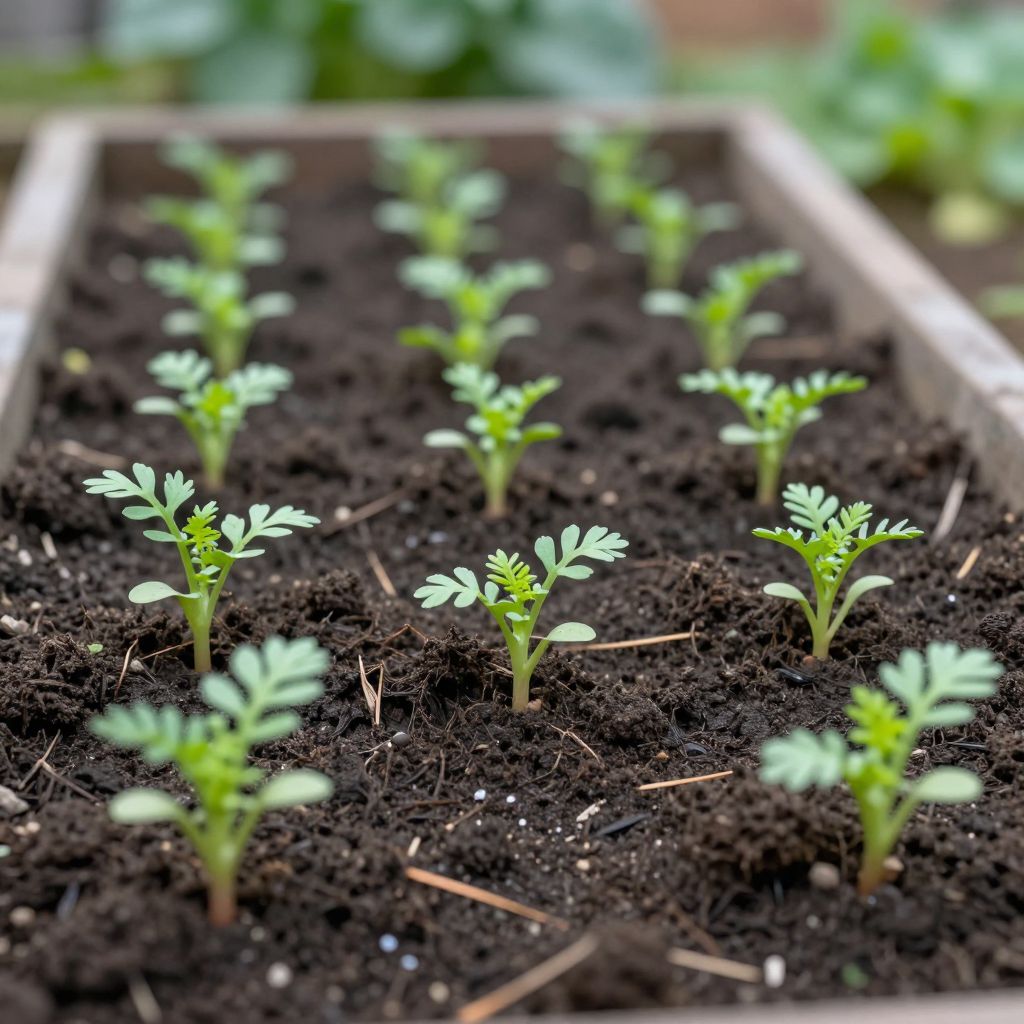
Wondering what do carrots look like when they sprout? Carrot seedlings are tiny, delicate, and easy to miss at first. They do not look like miniature carrots; instead, they emerge as thin green threads with a pair of small seed leaves, then slowly develop feathery true leaves.
Because carrots germinate slowly and unevenly, many gardeners worry they have failed when the bed looks empty. Knowing the early stages helps you spot healthy seedlings, thin them at the right time, and avoid disturbing the roots before they start forming properly.
What do carrots look like when they sprout?
Carrot sprouts first appear as very fine green stems with two narrow seed leaves, often called cotyledons. They look like tiny grass blades or threads at first, then develop soft, fern-like true leaves. Early carrot seedlings are small, pale to medium green, and easy to overlook in the soil.
How to identify carrot seedlings at each stage
Stage 1: The first emergence
When carrots germinate, the first thing you usually see is a tiny loop or hook pushing through the soil. Within a day or two, it straightens and opens into two very narrow seed leaves.
These first leaves are smooth and simple. They do not have the feathery shape most people associate with carrots later on.
Stage 2: The seed leaves
The seed leaves are the easiest sign that your carrots have sprouted. They are slender, upright, and usually about a few millimeters long at first.
- Shape: thin, narrow, and simple
- Color: light to medium green
- Texture: smooth, not feathery
- Growth habit: small and upright, often in little clusters where seeds were sown
Stage 3: True leaves begin
After the seed leaves, carrot seedlings produce true leaves that look more like the mature plant. These leaves are finely divided and feathery, with a soft, lacy appearance.
This is the stage when the seedlings become easier to recognize as carrots rather than random weeds or grass-like sprouts.
How long do carrot seeds take to sprout?
Carrot seeds often take longer than many gardeners expect. In cool soil, they may take around 10 to 21 days to germinate, and sometimes longer if conditions are less than ideal. Warm, evenly moist soil helps, but very hot or dry conditions can slow or prevent sprouting.
Because germination is slow, keep the seedbed consistently moist and avoid digging around to check too often. Disturbing the soil can damage tiny emerging roots.
What healthy carrot sprouts should look like
Healthy carrot seedlings are thin but upright, with fresh green color and no obvious damage. They should look delicate, not robust, and they usually appear in a fairly even line if the seeds were sown evenly.
- Good signs: upright stems, fresh green color, even emergence, no holes or chewing
- Normal at first: very small size, slow growth, a few gaps in the row
- Watch for trouble: collapse at the soil line, yellowing, or missing seedlings
It is normal for carrot sprouts to look weak compared with other vegetables. They are building roots below the soil first, so top growth stays modest early on.
Common mistakes when looking for carrot sprouts
Confusing carrots with weeds
Many weeds can mimic the first stage of carrot growth. If you are unsure, wait until true leaves appear before pulling anything near the row. Carrot seedlings become much easier to identify once the feathery foliage develops.
Thinking nothing has germinated too soon
One of the most common mistakes is giving up too early. Carrots are slow to sprout, especially in cool soil or if the seedbed dries out. Patience matters more with carrots than with many other vegetables.
Letting the surface dry out
Dry soil can stop sprouting or kill new seedlings before they establish. The top layer should stay lightly moist, not soaked, until most of the seeds have germinated.
How to help carrot seeds sprout evenly
If you want healthier, more visible sprouts, focus on the seedbed before and after sowing. Carrots prefer loose, stone-free soil that allows straight root growth and steady moisture.
- Prepare a fine, crumbly seedbed with no clods or stones.
- Sow seeds shallowly, then cover lightly with fine soil or compost.
- Water gently so the seeds are not washed away.
- Keep the surface evenly moist until germination.
- Protect the row from crusting, drying wind, or heavy rain.
A light mulch like fine compost or a thin layer of vermiculite can help hold moisture, but keep it thin enough for the seedlings to emerge easily.
Best growing conditions for sprouting
- Soil: loose, well-drained, and free of large particles
- Moisture: consistently moist during germination
- Light: full sun is best once seedlings are up
- Spacing: thin seedlings after emergence to reduce crowding
What to do after carrots sprout
Once you can clearly see carrot seedlings, the next job is to protect them and give them room. Crowded seedlings compete for light, moisture, and nutrients, and they can form small or misshapen roots if left too close together.
Thin seedlings carefully
Thin carrots when they are large enough to handle but still small. Pulling too early can disturb nearby roots, while waiting too long makes thinning harder.
Snip extras at soil level with small scissors rather than yanking them out. This reduces root disturbance to the seedlings you want to keep.
Keep weeds under control
Carrot seedlings are easy to overrun by weeds because they grow slowly at first. Remove weeds gently and often, especially in the first few weeks after germination.
Use shallow cultivation only. Deep hoeing can damage the carrot roots just below the surface.
Water thoughtfully
After sprouting, carrots still need even moisture, but avoid waterlogging. Irregular watering can lead to stunted growth or cracked roots later on.
Water deeply enough to moisten the root zone, then let the top layer begin to dry slightly before watering again. Local weather, soil type, and container size all affect how often you need to water.
Problems that can make carrot sprouts look wrong
Uneven germination
If only some seeds sprout, the cause is often uneven moisture, old seed, or soil that crusted over. Carrot seed loses vigor over time, so fresh seed usually performs better.
Seedlings disappearing
If sprouts vanish or look clipped off, pests such as slugs, birds, or small insects may be involved. Check the bed early in the morning and look for slime trails, chewed leaves, or disturbed soil.
Weak, pale seedlings
Pale growth can happen if seedlings are crowded, shaded, or growing in poor soil. Make sure they get enough sun once they emerge and thin them promptly.
Rotting at the base
If seedlings collapse at the soil line, damping-off disease may be the problem, especially in wet, poorly drained soil. Improve airflow, avoid overwatering, and start again in cleaner, better-drained soil if needed.
Indoor vs. outdoor carrot sprouts
Carrots are usually best sown directly outdoors because they dislike root disturbance. If you start them indoors, transplanting can easily deform the roots, so direct sowing is the more reliable method for most gardeners.
In containers outdoors, sprouts may appear a little faster if the mix stays warmer, but the same rules apply: loose soil, steady moisture, and careful thinning.
Practical tips for recognizing carrot seedlings in mixed beds
- Look for two narrow seed leaves first, not feathery foliage.
- Mark the row when you sow so you do not mistake seedlings for weeds.
- Wait for true leaves if you are unsure about identification.
- Check the bed in good light, since carrot sprouts are easy to miss.
- Keep the soil surface moist until germination is complete.
If you are growing other umbelliferous herbs or vegetables nearby, such as parsley or dill, be extra careful. Their young seedlings can look similar at first glance.
When to harvest after sprouting
Sprouting is only the beginning. Carrots are usually harvested much later, once the roots have sized up according to the variety and your growing conditions. Check the shoulder of the root near the soil surface if you want to judge size, but avoid pulling them too soon unless you are harvesting baby carrots.
For the best flavor and shape, let the roots develop steadily in loose soil with consistent moisture. A healthy sprout stage sets the foundation for a straight, well-formed harvest later.
Conclusion: what to do next
If you are asking what do carrots look like when they sprout, remember this simple pattern: first a tiny green thread, then two narrow seed leaves, then feathery true leaves. Keep the bed moist, thin carefully, and be patient while the seedlings establish. If you are unsure, wait a few days and compare the growth before pulling anything.
For more practical garden advice, you may also want to read about