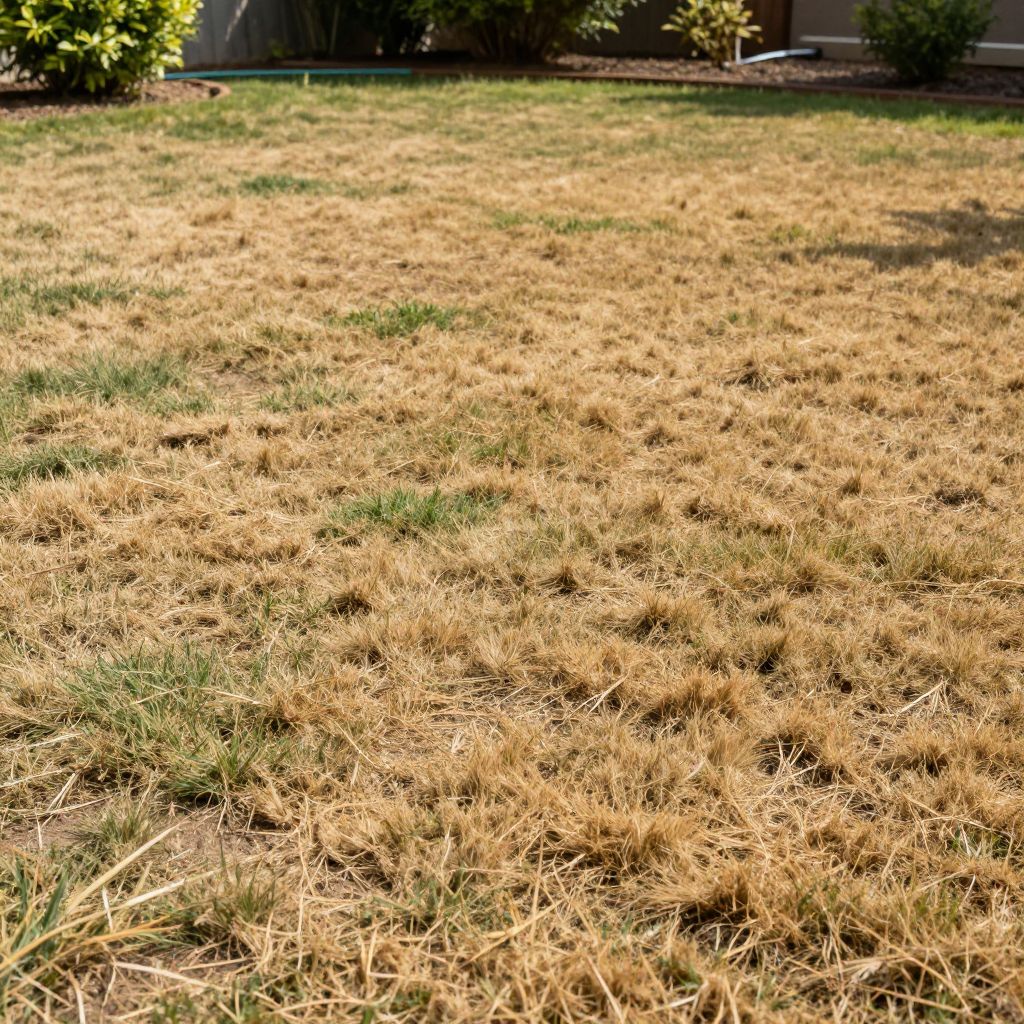
Why is my grass turning brown? In most lawns, brown patches are a sign of stress rather than a death sentence. The cause could be too little water, too much water, heat, compacted soil, pests, disease, pet urine, or a mowing mistake.
The good news is that many brown lawns can recover once you identify the real problem. The key is to inspect the grass closely, check soil and watering conditions, and make one change at a time so you can see what helps.
Why is my grass turning brown?
Grass usually turns brown because it is under stress from water problems, heat, poor mowing, compacted soil, pests, disease, or damage from pets and chemicals. Some browning is temporary and reversible, while dead turf will not green up again and may need reseeding, patching, or sod replacement.
Common causes of brown grass and how to tell the difference
1. Not enough water
Dry soil is one of the most common reasons for brown grass. In hot or windy weather, lawns can dry out quickly, especially on slopes, sandy soil, or areas near pavement.
Signs of drought stress include:
- Grass blades folding, curling, or looking dull gray-green before turning brown
- Footprints staying visible after you walk across the lawn
- Dry soil several inches below the surface
- Brown areas in the sunniest spots first
To check, push a screwdriver or soil probe into the ground. If it is hard to insert and the top few inches are dry, the lawn likely needs water.
2. Too much water or poor drainage
Brown grass can also come from overwatering or waterlogged soil. Roots need oxygen, and saturated soil can suffocate them, weaken the turf, and invite disease.
Look for:
- Soft, spongy ground
- Moss, algae, or standing water
- Yellowing before browning
- Brown patches in low spots or compacted areas
If the lawn stays wet for long periods after rain or irrigation, drainage is likely part of the problem.
3. Heat stress and seasonal dormancy
In hot, dry weather, some grasses slow down or go dormant to survive. This is common in cool-season lawns during summer heat and drought. The grass may turn straw-brown but still be alive at the crown and roots.
Do not assume every brown lawn is dead. If you water lightly and the grass does not respond, check whether the grass type is simply resting for the season. Dormant grass often greens up again when temperatures cool and moisture improves.
4. Mowing too short
Scalping a lawn removes too much leaf tissue at once and exposes the soil to heat and drying. Repeated close mowing weakens grass, encourages weeds, and can leave the lawn looking brown and thin.
Common mowing mistakes include:
- Cutting more than one-third of the blade height at a time
- Using dull mower blades that tear rather than cut
- Mowing when the grass is stressed by heat or drought
- Leaving the mower deck set too low for the grass type
A higher mowing height usually helps turf shade the soil and retain moisture better.
5. Compacted soil
When soil is packed tightly, roots cannot spread, water runs off instead of soaking in, and grass may brown in patches. Compaction is common in high-traffic areas, along paths, or where heavy equipment has been used.
You may notice thin turf, puddling after rain, and hard soil that resists digging. Aeration can help if compaction is the issue.
6. Pests feeding on roots or blades
Insect damage can make grass brown quickly, sometimes in irregular patches. The exact pest depends on your region and lawn type, but common culprits include grubs, chinch bugs, sod webworms, and billbugs.
Watch for these clues:
- Brown areas that spread despite watering
- Grass that lifts easily like a loose carpet, which may signal root-feeding grubs
- Small insects near the soil surface or in thatch
- Birds, raccoons, or skunks digging in the lawn
Pull up a small section of turf and inspect the roots and soil beneath. Healthy roots should hold the turf in place; damaged roots may be sparse, chewed, or missing.
7. Lawn disease
Fungal diseases can cause brown patches, rings, or spots, especially during humid weather, extended leaf wetness, or when the lawn is overfertilized with nitrogen. Disease symptoms vary, but many start as yellowing or tan lesions before the turf turns brown.
Look for:
- Distinct circles, rings, or irregular patches
- Leaf spots, fuzzy growth, or dark margins on blades
- Rapid spread during warm, humid periods
- Brown areas that do not improve with normal watering
Good airflow, proper mowing, and avoiding evening watering can reduce disease pressure.
8. Pet urine, spills, or salt injury
Dog urine often causes small, sharply defined brown spots with a greener ring around the edge. De-icing salt, fertilizer spills, and chemical overspray can also burn grass and leave dead patches.
These injuries are usually localized and may have crisp edges. If the damage matches a walkway, driveway, or pet path, that clue matters.
How to diagnose brown patches step by step
If you want to know why is my grass turning brown, start with a simple inspection. A careful check usually reveals whether the problem is water, mowing, pests, disease, or soil conditions.
- Look at the pattern. Is the browning in patches, strips, spots, or the whole lawn?
- Check the soil moisture. Dig 2 to 4 inches down in a few places.
- Inspect the blades. Look for spots, chewing, or a uniform straw color.
- Pull on the turf. If it lifts easily, roots may be damaged.
- Review recent care. Think about mowing height, fertilizer, irrigation, foot traffic, and weather.
- Compare sunny and shady areas. Different conditions often point to different causes.
If you are unsure, take photos over a few days. Changes in size, color, and shape can help you narrow down the cause.
What to do about brown grass
Fix watering the right way
When drought is the issue, water deeply and less often rather than giving the lawn a light sprinkle every day. Deep watering encourages roots to grow downward.
General guidance:
- Water early in the morning when possible
- Apply enough water to moisten the root zone, not just the surface
- Aim to water when the lawn starts to show early stress, not after it is severely wilted
- Adjust for rainfall, soil type, shade, and local climate
In sandy soil, water may need to be split into shorter sessions to avoid runoff. In clay soil, water more slowly so it can soak in.
Raise your mowing height
Set the mower higher if your lawn is browning from heat or stress. Taller grass shades the soil, reduces evaporation, and protects the crown of the plant.
Also keep mower blades sharp. Clean cuts heal faster and reduce stress compared with ragged tears.
Improve drainage and relieve compaction
If water sits on the lawn or the soil feels hard, aeration can help. Core aeration removes small plugs of soil and creates channels for air, water, and roots.
For chronic drainage problems, consider:
- Redirecting downspouts away from low spots
- Leveling shallow depressions with topdressing over time
- Reducing foot traffic on wet turf
- Adding organic matter to improve soil structure gradually
Severe drainage issues may need grading or a drainage installation.
Address pests and disease carefully
If you suspect insects or disease, confirm the problem before treating. Many lawn symptoms look similar, and unnecessary products can make things worse.
Good first steps include:
- Inspecting roots, stems, and the soil surface
- Checking for active larvae or visible insects
- Removing excess thatch if it is thick and spongy
- Improving airflow and avoiding late-day watering
If damage is spreading quickly, local extension guidance or a garden center with turf expertise can help identify the issue more accurately.
Repair dead patches
Some brown grass is dead and will not recover. If the blades and crowns are dry and brittle and the turf does not regrow after a reasonable recovery period, you may need to patch the area.
For small spots, you can:
- Rake out dead material
- Loosen the topsoil lightly
- Topdress with a thin layer of compost if appropriate for your soil
- Reseed or patch with sod that matches your lawn
Keep the area evenly moist during establishment, but avoid making the soil soggy.
How to prevent brown grass from coming back
Healthy lawns are built on consistent, sensible care rather than quick fixes. Prevention is especially important during hot summers, drought, and periods of heavy use.
- Mow at the right height for your grass type and season.
- Water deeply and adaptively based on rainfall, soil, and weather.
- Aerate compacted areas when the lawn is actively growing.
- Feed only when needed and avoid overfertilizing stressed turf.
- Keep traffic off weak areas until the grass recovers.
- Watch for early signs of pests, disease, or drainage problems.
If your lawn is mixed with different grass types, remember that some parts may brown sooner than others. Shade, slope, irrigation coverage, and soil texture can all change how the turf responds.
When brown grass is normal
Not every brown lawn is a problem. In some climates, cool-season grasses naturally slow down in summer, and warm-season grasses may brown in cool weather or after frost. Dormancy is a survival response, not always a failure.
The difference is that dormant grass usually has living crowns and roots and can recover when conditions improve. Dead grass stays brittle, pulls up easily, and does not green up again.
Conclusion
If you are asking why is my grass turning brown, start by checking water, mowing height, soil compaction, pests, disease, and pet or chemical damage. Once you identify the pattern, you can correct the cause and decide whether the lawn needs recovery care or patching. Take a close look at one affected area today, then make one change and monitor the result.
For more practical lawn care help, you may also want to read about how to aerate a lawn and how to mow a lawn properly.