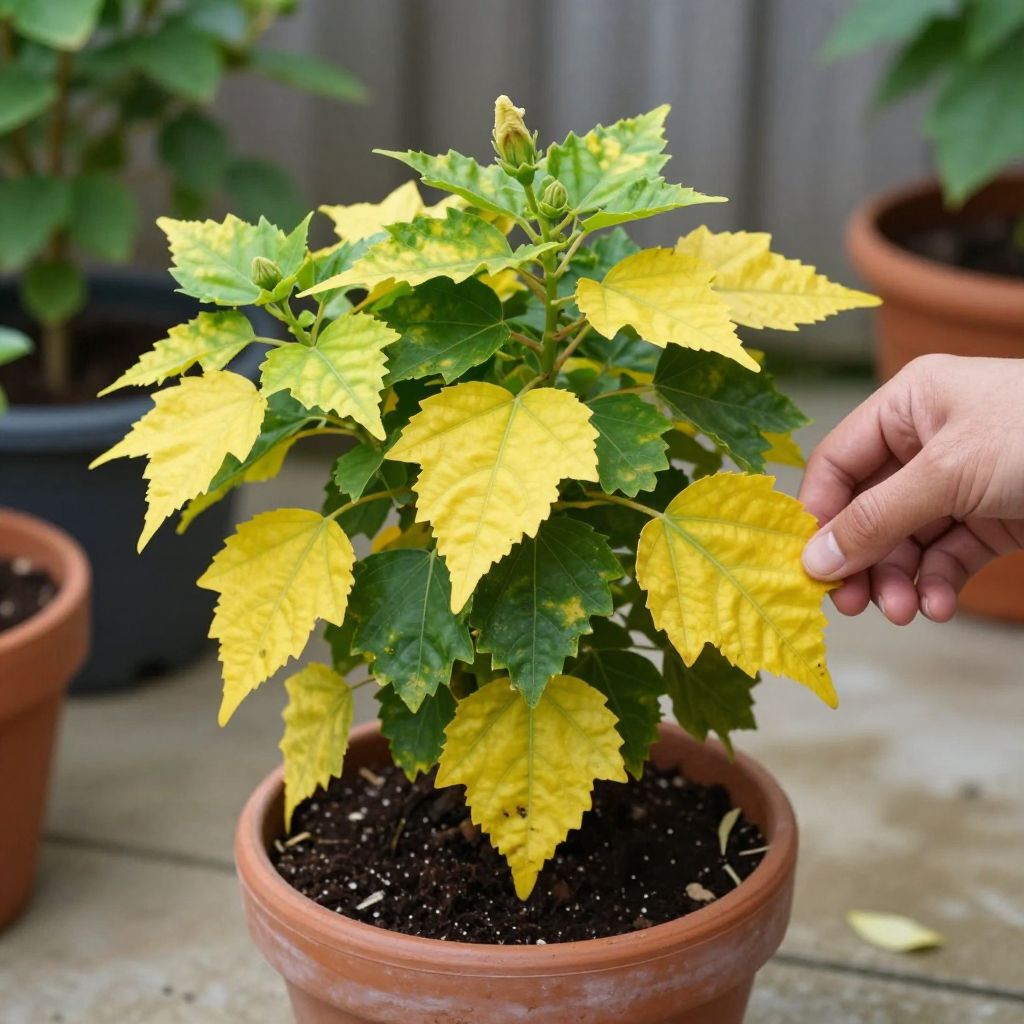
Why is my hibiscus leaves turning yellow? In most cases, yellow hibiscus leaves are a sign of stress from watering problems, poor drainage, low light, nutrient imbalance, cold weather, or pests. The good news is that hibiscus usually tells you what it needs if you look closely at where the yellowing starts and how fast it spreads.
Once you narrow down the cause, you can often correct it quickly and help the plant push out healthy green growth again. The key is to check the soil, light, temperature, and leaf symptoms together instead of treating yellow leaves as one single problem.
Why is my hibiscus leaves turning yellow?
Hibiscus leaves usually turn yellow because the plant is under stress, most often from overwatering, underwatering, poor drainage, insufficient sunlight, nutrient issues, or pests such as aphids, spider mites, or whiteflies. The pattern of yellowing matters: uniform yellowing, yellow leaves with green veins, or yellowing with leaf drop each point to different causes.
Start with the most common causes
1. Overwatering and poor drainage
Hibiscus roots need moisture, but they also need air. If the soil stays soggy, roots can struggle to function, and leaves often turn yellow before dropping.
This is especially common in containers, where water can collect at the bottom of the pot, or in heavy garden soil that drains slowly after rain.
- Check the soil 2 to 3 inches below the surface.
- If it feels wet or muddy for days, cut back watering.
- Make sure pots have drainage holes.
- Empty saucers after watering so roots are not sitting in water.
Important: Yellow leaves caused by overwatering often look soft and limp, not dry and crispy.
2. Underwatering or irregular watering
Too little water can also cause yellow leaves, especially during hot weather or windy conditions. Hibiscus may respond by dropping older leaves first.
If the soil dries out completely and then gets soaked repeatedly, the plant may become stressed and yellow anyway. Consistent moisture is better than a cycle of drought and flooding.
- Water deeply when the top inch or two of soil feels dry.
- In containers, water until excess runs from the drainage holes.
- In beds, water slowly so moisture reaches the root zone.
3. Not enough sunlight
Hibiscus grows best in bright light. If it is in too much shade, it may produce fewer flowers and develop pale or yellow leaves.
Outdoor hibiscus usually needs several hours of direct sun, though intense afternoon sun in very hot climates can be stressful. Indoor hibiscus needs the brightest window you have, often south- or west-facing, with as much light as possible.
- Move potted plants gradually to brighter light to avoid sun scorch.
- Rotate indoor plants every week or two for even growth.
- If a nearby tree or structure has shaded the plant, consider pruning or relocating it.
4. Nutrient deficiencies
Yellowing can signal a lack of nutrients, especially nitrogen, iron, or magnesium. The pattern helps you tell them apart.
- Nitrogen deficiency: older leaves yellow first, often evenly.
- Iron deficiency: new leaves turn yellow while veins stay greener.
- Magnesium deficiency: older leaves may yellow between veins.
Container-grown hibiscus is more likely to need feeding because nutrients wash out of potting mix over time. In the ground, poor soil or very alkaline soil can also limit nutrient uptake.
Use a balanced fertilizer made for flowering plants according to the label, and avoid overfeeding. Too much fertilizer can damage roots and create more leaf yellowing.
5. Cold stress or sudden temperature swings
Hibiscus dislikes cold snaps, chilly drafts, and sudden changes in temperature. When exposed to cold, leaves may yellow and drop even if the plant was otherwise healthy.
This is common when bringing tropical hibiscus indoors for winter or placing an indoor plant near a drafty door, window, or air conditioner vent.
- Keep the plant away from cold drafts and heating vents.
- Bring outdoor hibiscus indoors before temperatures fall too low for your type of plant.
- Expect some adjustment and leaf drop after moving the plant indoors.
How to diagnose yellow hibiscus leaves step by step
Instead of guessing, inspect the plant in a logical order. A few minutes of observation can prevent unnecessary watering, feeding, or spraying.
- Check the soil. Is it wet, dry, or staying soggy?
- Look at the light. Is the plant getting enough sun?
- Inspect the leaves. Are they yellowing evenly, from the edges, or between veins?
- Examine the undersides. Look for insects, webbing, sticky residue, or speckling.
- Review recent changes. Repotting, moving the plant, cold weather, or fertilizer changes can trigger yellowing.
What the leaf pattern can tell you
- Older leaves yellow first: often watering stress or nitrogen deficiency.
- New leaves yellow first: often iron deficiency or root problems.
- Yellowing with spots: may indicate disease or pest damage.
- Yellowing followed by leaf drop: often stress from temperature, watering, or relocation.
Pests that can make hibiscus leaves yellow
Small pests can weaken hibiscus by feeding on sap. The damage may show up as yellow leaves, curling, stippling, or sticky residue before you notice the insects themselves.
Common pests to look for
- Aphids: clusters on new growth and buds; may leave sticky honeydew.
- Spider mites: tiny pests that cause fine yellow speckling and sometimes webbing.
- Whiteflies: small white insects that flutter when the plant is disturbed.
- Scale insects: small bumps on stems or leaf undersides.
What to do
- Rinse the plant with a strong spray of water, especially leaf undersides.
- Remove heavily infested leaves if needed.
- Use insecticidal soap or horticultural oil if the label says it is suitable for hibiscus.
- Repeat as directed, since one treatment rarely solves an active infestation.
Always test sprays on a small section first if the plant is already stressed, and avoid applying them in hot sun unless the product label allows it.
Diseases and root problems
Fungal leaf spots and root rot can also lead to yellowing. These problems are more likely when air circulation is poor, the plant is crowded, or the soil stays wet for long periods.
Signs to watch for
- Brown or black spots with yellow halos
- Wilting despite moist soil
- Soft stems or a sour smell from the potting mix
- Rapid yellowing and dropping of leaves
If you suspect root rot, reduce watering immediately and check whether the pot drains well. In severe cases, you may need to repot into fresh, well-draining mix and trim away damaged roots.
For leaf spot problems, remove badly affected leaves, water at the base rather than overhead, and improve airflow around the plant.
How to fix yellow hibiscus leaves
For potted hibiscus
- Confirm the pot has drainage holes.
- Let the top layer of soil dry slightly before watering again.
- Move the plant to brighter light if it is too shaded.
- Feed lightly with a balanced fertilizer if the plant has not been fed recently.
- Check for pests on new growth and leaf undersides.
- Repot only if the mix is compacted, sour, or waterlogged.
For in-ground hibiscus
- Test drainage after rain or watering.
- Mulch lightly to help steady soil moisture, but keep mulch a few inches away from the stem.
- Water deeply during dry spells rather than giving frequent shallow sprinklings.
- Improve poor soil with compost if needed, but avoid burying the crown too deeply.
- Prune lightly to open the canopy if the plant is crowded and shaded.
Practical mistakes to avoid
- Do not water on a fixed schedule without checking soil moisture first.
- Do not overfertilize a stressed plant.
- Do not move a plant from low light to intense sun all at once.
- Do not assume yellow leaves always mean the plant needs more water.
- Do not leave a pot standing in runoff water.
When yellow leaves are normal
Not every yellow leaf means a serious problem. It is normal for hibiscus to shed an older leaf now and then, especially after transplanting, seasonal changes, or moving the plant indoors.
If the plant is producing new green growth, flowering, and otherwise looks healthy, a few yellow leaves may simply be part of normal turnover. Focus on whether the yellowing is spreading or affecting the whole plant.
How to help hibiscus recover
Recovery depends on the cause, but healthy care habits make a big difference. Keep conditions as steady as possible while the plant rebounds.
- Provide bright light.
- Water when the soil starts to dry, not when it is already soggy.
- Use a well-draining potting mix for containers.
- Feed only as needed during active growth.
- Watch for pests weekly, especially on new growth.
If the yellowing stops and new leaves emerge green, you are on the right track. Damaged leaves usually do not turn green again, so judge recovery by new growth rather than old foliage.
Conclusion
If you are asking, “Why is my hibiscus leaves turning yellow,” start by checking moisture, drainage, light, temperature, and pests. Correct the most likely stress first, then give the plant time to respond. If you want to dig deeper into hibiscus care, related reading on watering, container drainage, and pest control can help you keep the plant healthy long term.