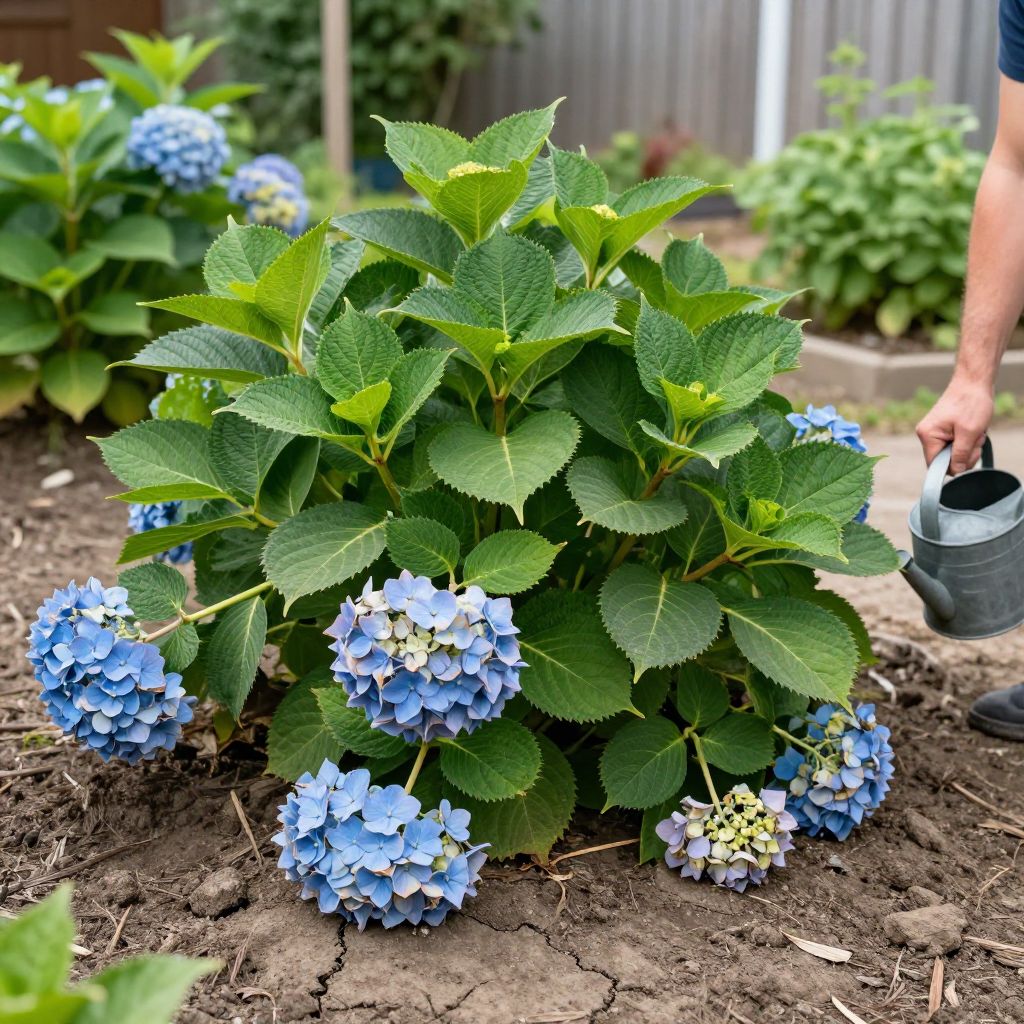
Why is my hydrangea wilting? In many cases, the plant is telling you it’s under water stress, but wilting can also come from heat, poor drainage, root damage, transplant shock, pests, or disease. The key is to look at the whole plant and its growing conditions before you water again or start pruning.
Most hydrangeas recover well once the cause is corrected, but the wrong fix can make the problem worse. Use the signs below to narrow down what’s happening and take the right next step.
Why is my hydrangea wilting?
Hydrangeas wilt when they cannot move enough water from the roots to the leaves. The most common reasons are dry soil, intense sun and heat, soggy or compacted roots, recent transplanting, root injury, or a pest or disease problem. Check soil moisture first, then inspect stems, leaves, and drainage.
Check the soil first
The fastest way to diagnose a wilting hydrangea is to feel the soil 2 to 4 inches below the surface. If it is dry, the plant likely needs a deep watering. If it is wet, heavy, or smells sour, the roots may be struggling from too much moisture or poor drainage.
If the soil is dry
Dry soil is one of the most common reasons hydrangeas droop, especially during hot weather or in containers. Hydrangeas have relatively shallow roots, so they can wilt quickly when the top layer dries out.
- Water slowly at the base of the plant so moisture reaches the root zone.
- Apply enough water to moisten the soil deeply, not just the surface.
- Use mulch, such as shredded bark or leaf mold, to help the soil hold moisture.
- Check containers more often, since pots dry out faster than garden beds.
Tip: A hydrangea that perks up by evening after watering was likely thirsty. If it stays limp despite moist soil, look for another cause.
If the soil is wet or compacted
Hydrangeas do not like to sit in waterlogged soil. Poor drainage can suffocate roots, causing leaves to droop even though the soil looks wet.
- Stop watering until the top few inches begin to dry.
- Check whether the planting area drains slowly after rain.
- Look for soil that is dense, sticky, or packed hard around the roots.
- Consider improving drainage with organic matter over time, or transplanting to a better site if the area stays wet.
Do not assume a wilted plant always needs more water. Overwatering can create the same symptom as drought.
Is heat or sun causing the wilting?
Hydrangeas often droop in the afternoon during hot, bright weather, especially if they are in full sun or reflected heat from walls, pavement, or fences. Some recovery in the evening is normal, but repeated wilting means the plant is under too much stress.
Signs of heat stress
- Leaves wilt mainly during the hottest part of the day.
- Edges may scorch, crisp, or turn brown.
- The plant looks better in the morning.
- The soil may dry out very quickly.
What to do
- Provide afternoon shade if possible, especially in hot climates.
- Use mulch to reduce evaporation and keep roots cooler.
- Water deeply in the morning so the plant is hydrated before peak heat.
- If the hydrangea is in a container, move it out of direct afternoon sun.
Bigleaf hydrangeas, often grown for their large flower heads, are especially prone to wilting in strong sun and heat. Panicle hydrangeas generally tolerate more sun, but even they can droop if the soil is too dry.
Could transplant shock be the cause?
Recently planted or moved hydrangeas often wilt while their roots re-establish. This is common after planting, dividing, or transplanting, and it can last for days or even a few weeks depending on weather and root disturbance.
How to help a newly planted hydrangea
- Water deeply right after planting.
- Keep the root ball evenly moist, not saturated.
- Avoid fertilizing until the plant shows new growth and is settling in.
- Mulch around the base, but keep mulch a few inches away from the stems.
- Do not prune heavily just because the plant is wilting.
If the plant was container-grown, make sure the root ball was loosened if it was pot-bound. Roots circling tightly in the pot can slow establishment and make wilting more likely.
Look for root problems
When a hydrangea stays wilted even though the soil is moist, the roots may be damaged or unhealthy. Root problems can come from standing water, compacted soil, digging injury, or severe drought that has dried and damaged fine roots.
What root trouble looks like
- Persistent wilting despite regular watering
- Pale or yellowing leaves
- Slow growth or sudden decline
- Soft, dark, or smelly roots if you inspect the root zone
If you suspect root rot, improve drainage immediately and reduce watering. In severe cases, the plant may need to be moved to a better-drained location. Healthy hydrangea roots should be firm and light-colored, not mushy.
Can pests or disease make hydrangeas wilt?
Yes. While water issues are more common, certain pests and diseases can interfere with water movement in the plant and cause wilting. These problems are more likely if the plant is already stressed by heat, drought, or poor soil.
Common pest issues
Insects rarely cause dramatic wilting overnight, but sap-feeding pests can weaken the plant over time. Check for aphids, scale, or spider mites, especially on new growth and leaf undersides.
- Aphids: small soft-bodied insects clustered on tender stems and buds.
- Spider mites: fine stippling, webbing, and a dusty look on leaves in hot, dry conditions.
- Scale: small bumps on stems that may be overlooked at first.
Wash off light infestations with a strong spray of water and remove badly affected growth if needed. Keep the plant well watered and unstressed so it can recover.
Diseases that can cause wilting
Fungal and bacterial problems can also lead to drooping or sudden collapse. Leaf spots, stem dieback, or blackened tissue are clues that disease may be involved.
- Remove dead or badly diseased stems with clean pruners.
- Do not compost diseased material unless you know it is safe to do so.
- Water at the soil level to keep foliage drier.
- Improve air circulation by spacing plants properly.
If a stem wilts suddenly while the rest of the plant looks fine, inspect that stem closely for damage, cankers, or chewing insects.
How to tell if your hydrangea is overwatered or underwatered
Both can look similar at first, which is why checking the soil matters so much. The difference is usually in the feel of the soil, the look of the leaves, and whether the plant improves after watering or after drying out a bit.
| Problem | Typical signs | Best response |
|---|---|---|
| Underwatered | Dry soil, limp leaves, droop in heat, plant perks up after watering | Deep watering and mulch |
| Overwatered | Wet soil, yellowing leaves, persistent wilt, poor growth, sour smell | Pause watering and improve drainage |
If you are unsure, wait and observe before making repeated changes. Hydrangeas usually respond better to one careful correction than to frequent watering guesses.
Pruning and maintenance mistakes that worsen wilting
Heavy pruning, especially at the wrong time, can stress hydrangeas and reduce their ability to handle heat or drought. Cutting back too much foliage also exposes stems and soil to more sun, which can increase water loss.
Common mistakes to avoid
- Pruning hard just because the plant looks droopy.
- Fertilizing a stressed plant, which can push weak growth.
- Letting mulch pile against the stems.
- Watering lightly every day instead of watering deeply when needed.
- Planting in a site that is too sunny or too wet for the species.
If pruning is needed, remove only dead, broken, or diseased stems unless you know the hydrangea type and the correct pruning season for it.
What to do right now
When you notice wilting, take a simple step-by-step approach instead of reacting too quickly. This helps you avoid overcorrecting and gives the plant the best chance to recover.
- Check the soil 2 to 4 inches down.
- Water deeply if the soil is dry.
- Pause watering if the soil is already wet.
- Inspect leaves and stems for pests, scorch, or disease.
- Evaluate sun exposure, especially afternoon heat.
- Improve mulch, drainage, or shade as needed.
For container hydrangeas, make sure the pot has drainage holes and that excess water can escape freely. For in-ground plants, make sure the root zone is not sitting in runoff from sprinklers, downspouts, or low spots in the yard.
How to prevent future wilting
Healthy hydrangeas are much less likely to wilt when they are planted in the right place and cared for consistently. Prevention is mostly about matching the plant to the site and keeping root conditions stable.
- Choose a location with morning sun and afternoon shade in hotter climates.
- Plant in soil that drains well but holds some moisture.
- Mulch to conserve water and moderate soil temperature.
- Water deeply during dry spells rather than giving frequent shallow sprinkles.
- Monitor container plants closely during heat waves.
Once you understand whether your hydrangea is thirsty, overheated, waterlogged, or stressed for another reason, the fix becomes much clearer. Start with the soil, then adjust water, shade, and drainage as needed. If you want to keep improving your hydrangea care, a good next read is how to care for hydrangeas in pots and tips for pruning hydrangeas the right way.