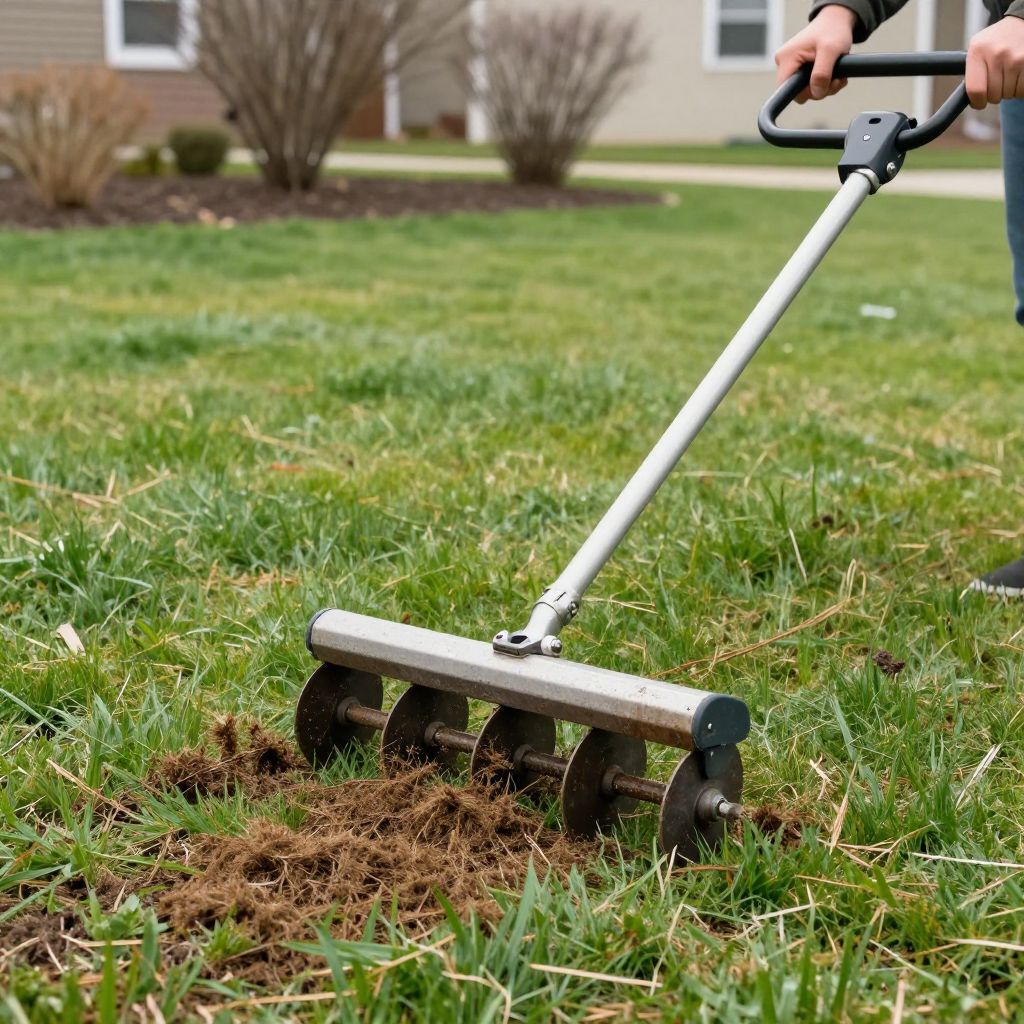
Are you wondering, “What is a power rake, and do I need one for my lawn?” A power rake is a lawn-care machine used to remove thatch, loosen surface debris, and sometimes lightly groom the turf. It can help a lawn breathe and recover, but it is not the right tool for every yard or every season.
Used correctly, a power rake can improve seed-to-soil contact, reduce smothering buildup, and prepare a lawn for overseeding or renovation. Used too aggressively, it can tear healthy grass and leave the turf stressed, so it helps to know exactly what it does before you rent or buy one.
What is a power rake?
A power rake is a motorized lawn tool with spinning tines or blades that comb through the turf surface to lift out thatch, dead grass, and debris. It is most often used on established lawns before overseeding or renovation, and it should be used carefully because too much aggressive raking can damage living grass.
How a power rake works
A power rake works by running rotating tines close to the soil surface. Those tines pull up dead material without cutting deeply into the root zone when the machine is set correctly.
Some people use the term “power rake” loosely, but in lawn care it usually means a machine designed for dethatching or surface grooming. It is different from a simple leaf rake and different from a core aerator.
Power rake vs. dethatcher vs. scarifier
- Power rake: A motorized tool that lifts thatch and debris from the lawn surface.
- Dethatcher: Often used interchangeably with power rake, though some machines are gentler and more lawn-friendly than others.
- Scarifier: A more aggressive machine that cuts deeper into the turf and is better for renovation than routine maintenance.
- Core aerator: Removes plugs of soil to improve compaction and drainage; it does not primarily remove thatch.
When should you use a power rake?
Use a power rake when thatch has built up enough to block water, air, and nutrients from reaching the soil. A thin layer of thatch is normal, but a thick, spongy mat can cause shallow rooting and patchy growth.
It is most useful when you are preparing a lawn for overseeding, repairing neglected turf, or cleaning up after a season of heavy buildup. If your lawn is already thin, drought-stressed, or freshly seeded, a power rake may do more harm than good.
Signs your lawn may need dethatching
- The turf feels spongy when you walk on it.
- Water runs off instead of soaking in.
- You can see a layer of brown, matted material between the green grass and the soil.
- The lawn looks dull or thin even with regular care.
- A screwdriver or soil probe meets a fibrous mat before reaching soil.
How to use a power rake safely
Before you start, mow the lawn to a normal maintenance height and remove sticks, stones, and other debris. Set the machine shallow at first and make one test pass so you can see how much material it lifts.
- Mow the lawn slightly shorter than usual, but not scalped.
- Water the lawn lightly a day or two ahead if the soil is very dry and hard.
- Adjust the tines so they just reach the thatch layer, not deep into the soil.
- Run the machine in straight, even passes.
- Collect loosened debris with a mower bag, rake, or lawn sweeper.
- Inspect the turf and repeat only if needed, using a lighter setting if possible.
Do not use a power rake on a lawn that is already stressed by heat, drought, disease, or recent herbicide injury. The turf needs enough energy to recover after disturbance.
Best growing conditions for recovery after power raking
After power raking, the lawn recovers best when temperatures are mild, moisture is available, and the grass is actively growing. Cool-season grasses usually recover most strongly during cool spring or early fall weather, while warm-season grasses recover during warm active growth periods.
Because climate varies, time the work to your local growing season rather than following a fixed calendar date. If you are unsure, choose a period when your grass is growing vigorously and nighttime extremes are less severe.
What to do after power raking
Once the thatch is removed, the lawn will often look rough for a short time. That is normal, and it gives you a good opportunity to improve the stand.
Post-raking lawn care checklist
- Remove all loosened debris from the surface.
- Inspect for bare spots, compaction, or exposed roots.
- Topdress lightly with compost if your soil is poor and the lawn can tolerate it.
- Overseed if needed, using seed suited to your climate and sun exposure.
- Water gently and consistently to support regrowth and germination.
- Avoid heavy foot traffic until the turf thickens again.
If you overseed after power raking, keep the seedbed evenly moist, not soggy. Drying out during germination is a common reason new grass fails.
Common mistakes to avoid
Many lawn problems after power raking come from using the machine too aggressively or at the wrong time. A careful pass can help the lawn, but an overdone pass can strip away too much healthy growth.
- Raking too deeply: This can tear roots and crowns instead of just removing thatch.
- Working a weak lawn: Sick, drought-stressed, or newly seeded turf may not recover well.
- Skipping cleanup: Leftover debris can smother the grass again.
- Ignoring soil compaction: Thatch removal does not fix compacted soil; aeration may also be needed.
- Using the wrong season: Raking during extreme heat or cold slows recovery.
Do you always need a power rake?
No. Many lawns never need aggressive dethatching, especially if mowing height, watering, and soil health are managed well. If the thatch layer is thin, a regular rake or light cleanup may be enough.
Lawns with compacted soil may benefit more from core aeration than from power raking. In some cases, the best fix is not more raking but better mowing habits, proper irrigation, and improved soil structure over time.
When another tool may be better
- Use a leaf rake for light debris or shallow surface cleanup.
- Use a core aerator if the main issue is hard, compacted soil.
- Use a scarifier only for severe renovation work and only when you are prepared for significant turf disturbance.
How to tell if your lawn is recovering well
After power raking, healthy recovery usually shows up as fresh green growth, better water penetration, and a less spongy feel underfoot. Bare areas should begin to fill in if you overseeded and kept the surface evenly moist.
If the lawn turns brown, stays patchy, or develops new dead spots, check for problems such as poor watering, compacted soil, disease, or excessive machine depth. A few weeks of observation often tells you whether the treatment helped or whether the lawn needs a gentler approach.
Quick identification guide
If you are trying to identify a power rake at a rental center or in a neighbor’s shed, look for a walk-behind machine with a rotating drum or tines designed to comb the lawn surface. It may resemble a small mower, but its job is to lift thatch rather than cut grass.
- Walk-behind frame with handlebars
- Adjustable tine depth
- Front or middle rotating drum
- Designed for lawn surface grooming, not mowing
Bottom line
A power rake is a useful lawn tool for removing thatch and preparing turf for renovation, but it should be used only when the lawn truly needs it. Start shallow, work carefully, and support recovery with proper cleanup, watering, and overseeding if needed.
If you want to improve your lawn further, consider reading more about core aeration and overseeding a lawn to decide which maintenance step fits your yard best.