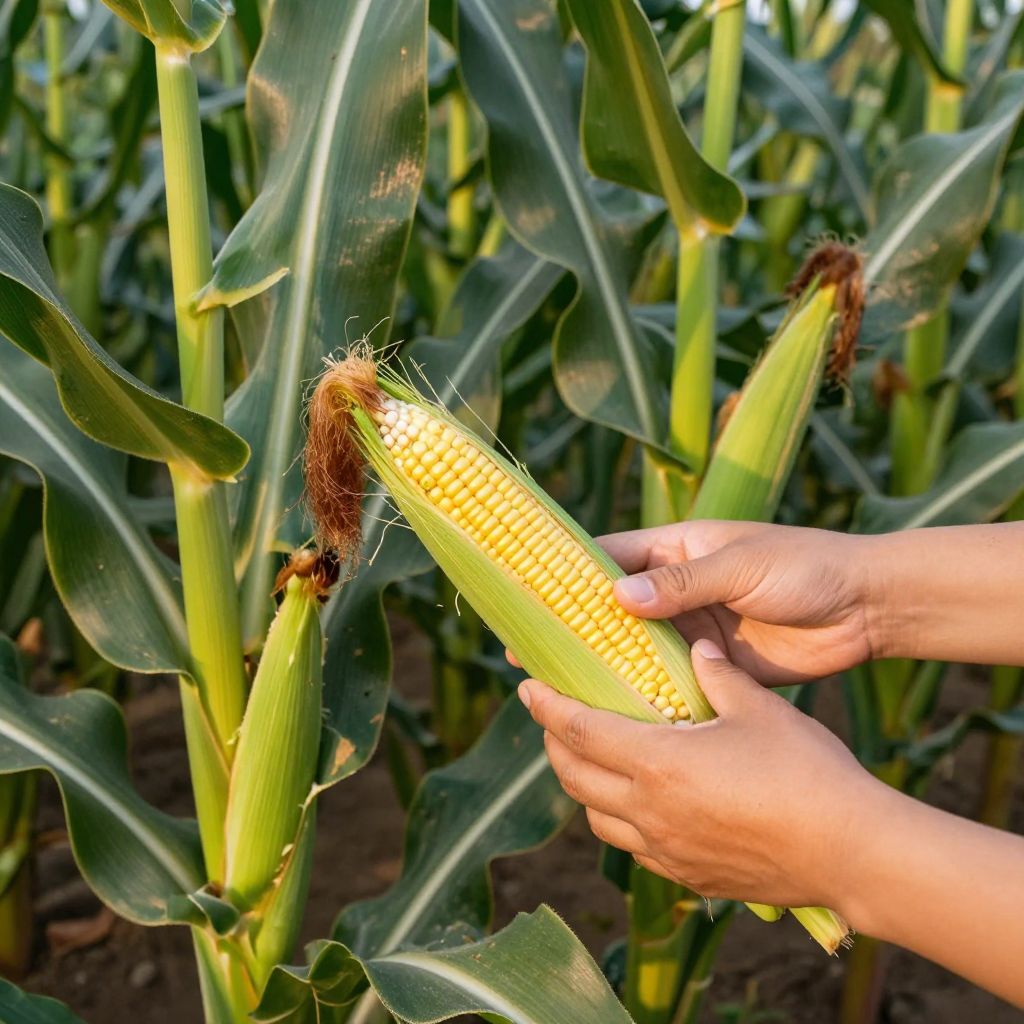
Wondering when is corn ready to pick? Sweet corn can look full-grown long before the ears are actually at peak eating quality, so timing matters. Pick it too early and the kernels may be underdeveloped; wait too long and the sugars start turning to starch.
The good news is that corn gives you several reliable signs. With a little practice, you can harvest ears at the perfect stage for sweet, juicy flavor.
When is corn ready to pick?
Corn is ready to pick when the ears feel full, the husks are still green, the silk has turned brown and dry, and a kernel test shows plump, milky kernels. For most sweet corn, this is usually about 18 to 24 days after silks appear, but weather, variety, and growing conditions can shift that timing.
How to tell if corn is ready to harvest
Use several signs together rather than relying on just one. Corn matures quickly, and a difference of only a few days can change the eating quality.
1. Check the silks
Fresh silks are usually pale and moist when pollination is recent. As the ear matures, the silks dry out and turn brown, tan, or dark gold.
Important: dried silks are a good sign, but they do not guarantee readiness by themselves. Some ears dry faster than others, especially in hot weather.
2. Feel the ear through the husk
A ripe ear should feel firm and filled out from tip to base. The ear should not feel skinny or have a noticeably loose, empty tip.
If the ear feels soft or uneven, give it more time. If the husk is tightly wrapped and the ear feels fully formed, it may be close.
3. Look at the husk color and condition
Healthy husks stay green while the ear is maturing. As harvest time approaches, the outer husks may begin to fade slightly, but they should not be completely dry and papery.
Very dry, tan husks often mean the corn is past its best sweet stage.
4. Do the kernel test
This is the most reliable check. Peel back a small section of husk near the top of the ear and press a kernel with your thumbnail.
- Clear liquid usually means the ear is too young.
- Milky liquid means the corn is at peak sweetness.
- Pasty or doughy kernels mean it is getting old and starchier.
If you are growing sweet corn, the milk stage is the target. For popcorn or field corn, the harvest stage is different, so check the variety type before judging readiness.
Seasonal timing for sweet corn harvest
Most sweet corn reaches harvest in mid to late summer, but the exact timing depends on your planting date and local temperatures. Warm weather speeds maturity, while cool spells can slow it down.
Instead of counting the calendar alone, watch the plants closely once tassels and silks appear. After silking, ears often move toward harvest quickly, sometimes in less than a month.
Why timing varies so much
Corn matures faster in hot weather and slower in cool weather. Soil fertility, watering, and sunlight also affect how evenly the ears fill out.
Plants under stress may produce ears that mature unevenly or dry out early. That is why a visual check is more dependable than a fixed harvest date.
What sweet corn should look like at harvest
At the right stage, sweet corn ears are usually well filled, with kernels arranged in neat rows that extend close to the tip. The kernels should look plump, not shriveled.
The husks should still be mostly green, and the silks should be brown and dry. If you open the husk slightly, the kernels should look glossy and feel tender when pressed.
Signs you waited too long
- Kernels feel hard or starchy
- Silks and husks are very dry
- Kernels look dented or wrinkled
- Flavor is less sweet and more mealy
Once sweet corn passes its prime, the sugars begin converting to starch. That is why harvesting promptly matters so much.
How to harvest corn correctly
Harvest corn in the morning if possible, when ears are cool and sugars are highest. Use both hands and twist the ear downward and away from the stalk in one firm motion.
- Grip the ear near the base.
- Support the stalk with your other hand if needed.
- Twist the ear downward until it snaps free.
- Check the ear, then harvest the rest that are ready.
A sharp knife or pruners are usually not necessary for sweet corn, but they can help if the stalk is tough or you want a cleaner cut. Be careful not to damage nearby ears or bend the plant excessively.
How often to check for ripe ears
During peak season, check your patch every day or two. Corn can go from perfect to overmature quickly, especially in warm weather.
If you planted several rows or staggered sowings, harvest may happen over a short window rather than all at once. Keep checking each ear individually.
Growing conditions that affect harvest quality
Healthy corn plants are more likely to produce full, sweet ears at the right time. Good growing conditions also help the ears fill evenly and reduce stress-related problems.
Sunlight
Corn needs full sun for strong growth and good ear development. Aim for at least 6 to 8 hours of direct sunlight daily, more if your climate is mild.
Shaded plants often produce smaller ears or ears that fill poorly, which can make harvest timing harder to judge.
Soil and compost
Corn grows best in fertile, well-drained soil with plenty of organic matter. Before planting, mix in compost to improve soil structure and moisture retention.
Good soil helps plants develop strong roots and supports even ear fill. Poor, compacted, or waterlogged soil can delay maturity and reduce quality.
Watering
Corn needs steady moisture, especially during tasseling, silking, and ear fill. Uneven watering can cause incomplete kernels or ears that mature unevenly.
Water deeply when the top layer of soil begins to dry, but avoid keeping the soil soggy. A mulch layer can help hold moisture and reduce stress during hot spells.
Common problems that affect readiness
Sometimes corn looks ready but the ears are not fully developed. Other times the plants mature unevenly, making harvest confusing. Several common issues can cause that.
Poor pollination
If kernels are missing near the tip or in patches, pollination may have been incomplete. This can happen when plants are spaced too far apart, wind is weak, or weather is very hot and dry during silking.
To reduce the risk, plant corn in blocks rather than a single long row when possible. That improves pollen transfer and helps ears fill more evenly.
Heat stress
High heat can shorten the sweet stage and cause kernels to mature faster than expected. It can also reduce kernel fill if the plants are stressed during pollination.
In hot climates, watch the patch closely once silks appear. Do not assume the ears will stay edible for many extra days.
Pests and disease
Birds, raccoons, and insects can damage ears before harvest. Corn earworms may feed near the tip, while fungal problems can affect husks or kernels in wet conditions.
Inspect ears regularly and remove damaged ones promptly. If wildlife is a problem, physical barriers and prompt harvesting are often the most practical solutions for home gardeners.
Sweet corn versus other corn types
When people ask when corn is ready to pick, they usually mean sweet corn. That is the type eaten fresh, and it has the short harvest window described above.
Other corn types are harvested differently:
- Sweet corn: pick at the milk stage for best flavor.
- Popcorn: leave ears on the plant until husks dry and kernels harden.
- Field corn: usually grown for grain, feed, or drying, not fresh eating.
Always check the seed packet or plant label so you know which harvest stage to aim for.
What to avoid when picking corn
A few common mistakes can reduce flavor quickly. Avoid these if you want the best harvest.
- Waiting for the husks to become fully dry on sweet corn
- Relying only on calendar days after planting
- Checking just one ear and assuming the whole patch is ready
- Letting harvested ears sit in the sun
- Pulling ears too hard and damaging the stalk
Freshly picked sweet corn tastes best right away, so plan to harvest when you can use or chill it soon after picking.
After harvest: keeping corn sweet
Sweet corn loses sweetness gradually after picking, especially in warm temperatures. If you cannot cook it immediately, move the ears to shade or refrigerate them as soon as possible.
For the best flavor, handle the ears gently and keep them cool. Even a short time in heat can reduce sweetness noticeably.
Final harvest check
If you want a simple answer to when is corn ready to pick, look for brown silks, firm filled-out ears, green husks, and milky kernels. That combination tells you the corn is at its sweetest and most tender.
Check your patch often once the ears start filling, harvest promptly, and enjoy them while they are at peak flavor. If you want to improve next season’s crop, review your planting spacing, watering, and soil fertility after harvest.
For more practical growing advice, you may also find it helpful to read about how to grow sweet corn and corn planting and care tips.