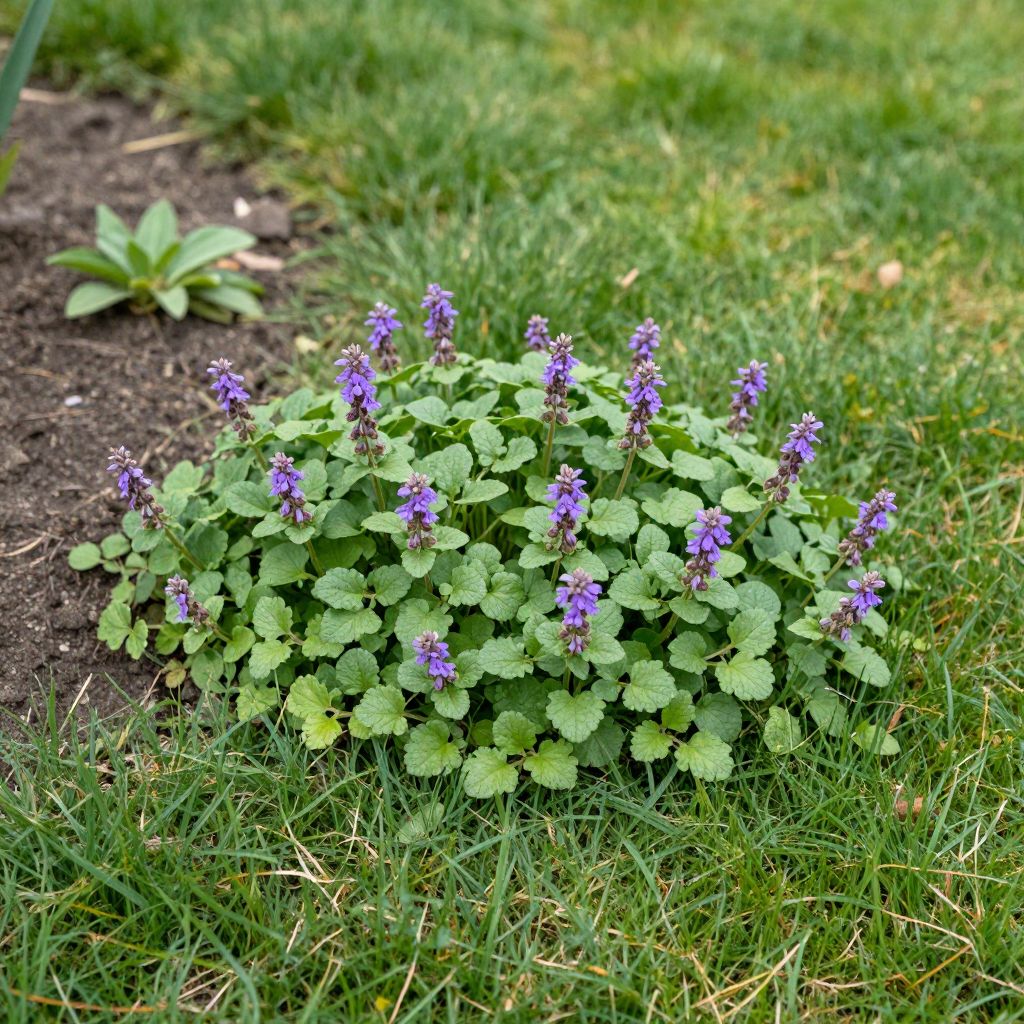
Seeing purple-flowered “weeds” pop up in your lawn, beds, or pots can be confusing. Some are harmless wildflowers, while others spread quickly and crowd out the plants you want. The first step is figuring out which purple-flowering weed you have, because identification tells you whether to pull, dig, mow, or simply manage it.
In many gardens, the most common purple-flowered weeds are henbit, purple deadnettle, ground ivy, self-heal, and sometimes thistles or vetch. Their growth habit, leaf shape, and season of bloom are the best clues for telling them apart and choosing the right control method.
What are the weeds with purple flowers called?
Weeds with purple flowers are not one single plant. They are usually a group of common lawn and garden weeds such as henbit (Lamium amplexicaule), purple deadnettle (Lamium purpureum), ground ivy (Glechoma hederacea), self-heal (Prunella vulgaris), creeping Charlie, thistles, and some vetches. The exact name depends on leaf shape, stem form, and when the flowers appear.
How to identify the most common purple-flowered weeds
Henbit
Henbit is a cool-season annual with square stems and rounded, scalloped leaves that often clasp the stem. It makes small pinkish-purple tubular flowers, usually in late winter through spring.
- Leaves: Rounded, scalloped, and opposite on the stem
- Flowers: Small, purple-pink, clustered along the upper stems
- Growth habit: Low, spreading, often found in thin turf or disturbed soil
Purple deadnettle
Purple deadnettle looks similar to henbit, but its upper leaves are often more triangular and distinctly purple-tinged. It is also a cool-season annual and commonly appears in lawns, beds, and vegetable gardens.
- Leaves: Upper leaves are purple and pointed; lower leaves are rounder
- Flowers: Small, purple, tucked in the leaf axils near the top
- Growth habit: Upright at the top, low and spreading below
Ground ivy
Ground ivy, often called creeping Charlie, is a perennial with creeping stems that root at the nodes. It has round, scalloped leaves and purple-blue flowers in spring.
- Leaves: Round to kidney-shaped with scalloped edges
- Flowers: Purple-blue, funnel-shaped, appearing in clusters
- Growth habit: Spreads aggressively through runners
Self-heal
Self-heal is a low-growing perennial that can be a lawn weed or a useful groundcover depending on your goals. It has square stems, oval leaves, and short purple flower spikes.
- Leaves: Opposite, oval, and slightly toothed
- Flowers: Dense purple spikes or heads
- Growth habit: Forms small patches in lawns, meadows, and moist soil
Thistles and vetches
Some thistles and vetches also produce purple flowers, but they are easier to spot because of their different leaf shape and growth habit. Thistles usually have spiny leaves, while vetches often climb or trail through nearby plants.
- Thistles: Spiny, upright, often with larger purple flower heads
- Vetches: Climbing or sprawling stems with pea-like purple flowers
Why these purple-flowered weeds show up in your garden
Most purple-flowered weeds take advantage of thin turf, bare soil, compacted ground, and disturbed beds. Many are cool-season growers, so they appear when lawns are still sparse in early spring or when temperatures cool in fall.
If you see them often, the underlying issue is usually not just the weed itself. It is often a sign that the area needs better coverage, improved drainage, reduced compaction, or stronger competition from healthy plants.
How to remove purple-flowered weeds safely and effectively
Hand-pulling and digging
For small infestations, hand-pulling is often the best option. Pull after rain or watering when the soil is moist, so roots come out more easily.
- Grasp the plant low at the base.
- Loosen the soil with a hand fork if the root is stubborn.
- Remove as much of the root system as possible.
- Bag seed heads or flowering stems if seeds are forming.
Do not leave pulled weeds on the soil surface if they are flowering or setting seed, because many can still mature enough to spread.
Mowing and trimming in lawns
In turf, mowing can help reduce flower and seed production, especially for low-growing weeds like henbit and deadnettle. It will not eliminate perennial spreaders like ground ivy, but it can slow them down.
- Mow regularly enough that weeds do not get a chance to flower freely.
- Keep mower blades sharp to avoid stressing the grass.
- Bag clippings if the weed is seeding heavily.
Mulching garden beds
A 2- to 3-inch layer of mulch can suppress many annual weeds by blocking light and reducing bare soil. Keep mulch a little away from stems and crowns of desirable plants to avoid rot.
- Use shredded bark, leaf mold, composted wood chips, or similar mulch.
- Refresh thin mulch before weeds emerge in spring.
- Pull existing weeds before mulching, not after.
Improving lawn competition
Healthy grass is one of the best long-term weed controls. If purple-flowered weeds keep returning in the lawn, the turf may need thicker growth and better root competition.
- Overseed thin areas with grass suited to your climate.
- Aerate compacted soil if water pools or roots struggle.
- Adjust mowing height to the recommended range for your grass type.
- Water deeply but only when the lawn actually needs it.
When herbicides may help
For persistent weeds in turf, a selective herbicide may be useful, but only if it is labeled for the weed and safe for your grass type. Timing matters, especially for cool-season annuals and spreading perennials.
Read the label carefully and follow local guidance. Some products work best on young weeds, while others are more effective during active growth. Avoid spraying on windy days or when desirable plants are nearby.
Never use a herbicide just because a weed has purple flowers. Match the product to the weed, the site, and the season.
How to prevent purple-flowered weeds from coming back
For lawns
- Keep grass dense by overseeding thin areas.
- Reduce soil compaction with aeration if needed.
- Water deeply and less often, rather than giving frequent shallow watering.
- Leave no bare patches exposed for long.
For flower beds and vegetable gardens
- Mulch bare soil after planting.
- Inspect beds early in spring before weeds flower.
- Pull small weeds while roots are still shallow.
- Use drip irrigation or targeted watering to avoid feeding weeds between plants.
For pots and containers
Container weeds often arrive in potting mix, compost, or on windblown seed. Remove them quickly, because pots have limited space and weeds compete strongly with ornamentals or vegetables.
- Use fresh, quality potting mix.
- Check containers weekly during active growth.
- Remove weeds before they flower and seed.
Common mistakes to avoid
- Waiting too long to pull them: Purple-flowered weeds spread fast once they bloom.
- Pulling only the tops: Many weeds regrow from the base or roots.
- Ignoring the soil: Thin, compacted, or bare ground invites repeat infestations.
- Using the wrong control method: A creeping perennial needs different management than a winter annual.
- Letting them seed: One plant can become many next season.
Quick identification checklist
If you are still unsure what you are seeing, use these clues:
- Square stem + small purple flowers + scalloped leaves: likely henbit, purple deadnettle, self-heal, or ground ivy
- Creeping stems that root at joints: likely ground ivy
- Spiny leaves: likely a thistle
- Climbing or trailing habit with pea-like flowers: likely vetch
- Flowers in cool weather: often henbit or purple deadnettle
When in doubt, look at the whole plant, not just the flower color. Leaf shape, stem texture, and spreading pattern usually give the clearest answer.
Conclusion
So, what are the weeds with purple flowers called? They are usually henbit, purple deadnettle, ground ivy, self-heal, thistles, or vetches, depending on the plant’s leaves and growth habit. Identify the weed first, then choose the right control method so you are not fighting the same problem every season. If you want, start by checking whether the stems are square, whether the plant creeps, and whether it is flowering in cool weather.
If you’d like to improve your weed control approach, you may also want to read about common garden weed identification and how mulching helps suppress weeds.