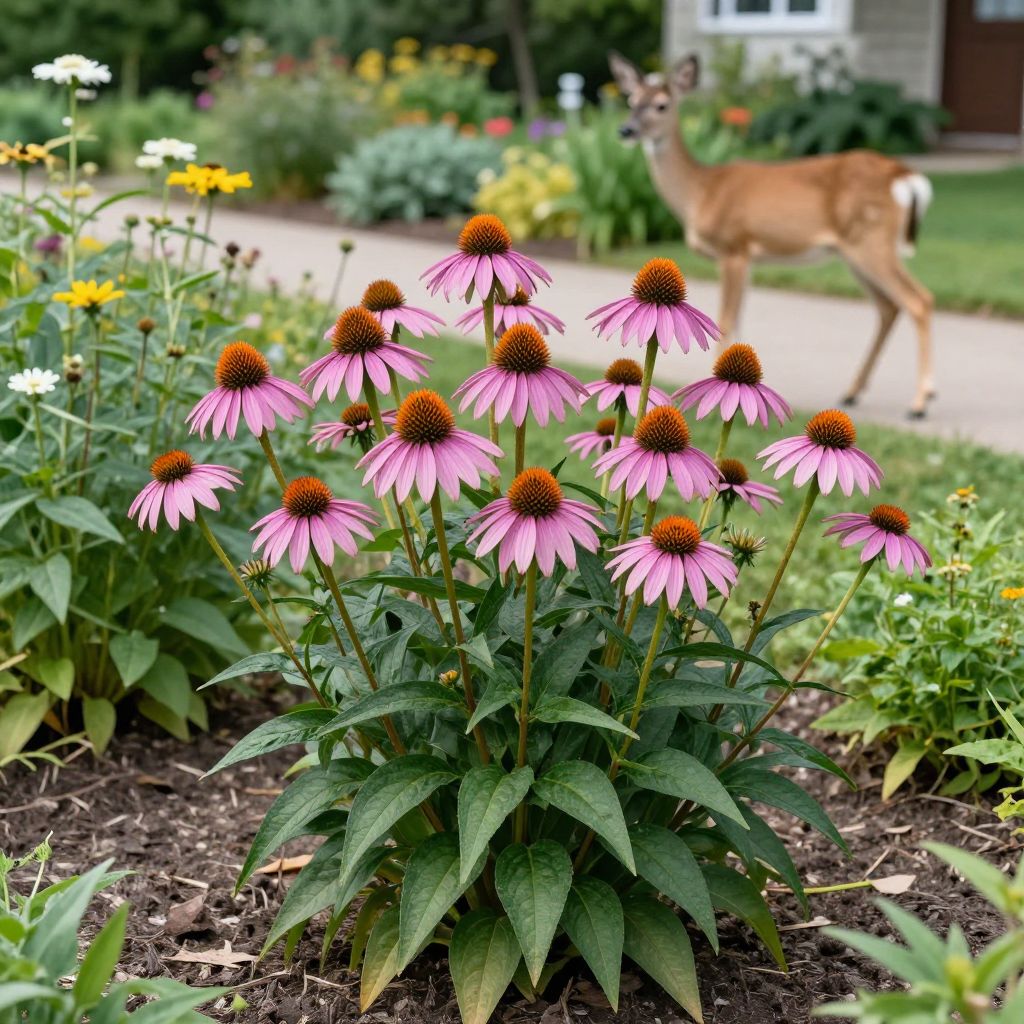
If you’re wondering, “Are coneflowers deer resistant?” the short answer is yes—usually, but not always. Purple coneflower and other Echinacea are among the better choices for gardens where deer browse, yet hungry deer may still sample them, especially when plants are young or food is scarce.
The good news is that coneflowers are often less attractive than many ornamentals, and with the right planting and care, you can improve their chances of being left alone. Here’s what to expect, plus practical ways to grow them successfully in a deer-prone garden.
Are coneflowers deer resistant?
Coneflowers are generally considered deer resistant, not deer proof. Their rough, bristly foliage and strong-tasting flower parts make them less appealing than tender plants, but deer may still nibble new growth, buds, or flowers when pressure is high. In most gardens, mature coneflowers are browsed less often than hostas, tulips, or roses.
Why deer usually leave coneflowers alone
Deer choose plants based on availability, season, and how hungry they are. Coneflowers tend to rank lower on their menu because they have a coarse texture and a scent and taste that many deer dislike.
What makes them less appealing
- Rough leaves and stems that are not as tender as many garden plants.
- Sturdy, upright growth that can feel less palatable than soft, lush foliage.
- Late-season seed heads that are often ignored until other food is scarce.
When deer may still eat them
- When plants are newly planted and soft.
- During drought or winter, when natural food is limited.
- In areas with heavy deer pressure and few alternative plants.
- When deer are young, curious, or used to feeding in gardens.
How to protect coneflowers from deer
If deer regularly visit your yard, treat coneflowers as part of a deer-resistant planting strategy, not your only defense. The best results come from combining plant choice with physical protection and smart placement.
Choose the right location
- Plant coneflowers closer to the house, patio, or other high-traffic areas where deer may feel less comfortable.
- Use them in mixed borders rather than as a lone planting in open ground.
- Avoid placing tender new plants right along wooded edges or deer pathways.
Use physical barriers when needed
- Temporary fencing is the most reliable option for young plants.
- Individual plant cages can protect small clumps during establishment.
- Netting or row cover may help in very small beds, though it is less attractive in ornamental plantings.
Use repellents carefully
Deer repellents can help, but they work best when reapplied after rain and rotated if deer become used to one product. Always follow the label and test any spray on a small area first if you are concerned about leaf spotting.
Growing coneflowers for the best results
Healthy coneflowers are more likely to recover from occasional browsing and less likely to struggle with disease. Give them the conditions they prefer so they can grow into sturdy, resilient plants.
Sunlight
Coneflowers bloom best in full sun, which usually means at least 6 hours of direct light a day. In hotter climates, a little afternoon shade can help flowers last longer and reduce stress.
Soil and drainage
Well-drained soil is essential. Coneflowers tolerate average soil and even some lean conditions, but they dislike heavy, soggy ground. If your soil stays wet after rain, mix in compost to improve structure and consider planting in a raised bed or berm.
Watering
Water new plants regularly until established, especially during dry spells. After that, coneflowers are fairly drought tolerant and usually do better with deep, occasional watering than with frequent shallow watering.
- Water at the base to keep foliage drier.
- Let the top layer of soil dry slightly between waterings.
- Increase watering during extreme heat or prolonged drought.
Mulch and compost
A light layer of mulch can help conserve moisture and suppress weeds, but keep mulch a few inches away from the crown. Too much mulch packed against the stem can encourage rot. A modest amount of compost worked into the soil at planting time is usually enough for good growth.
Planting tips that help coneflowers survive deer pressure
Young plants are the most vulnerable. If deer are common in your area, focus on getting coneflowers established quickly and safely.
- Plant in spring or early fall when temperatures are moderate and roots can settle in.
- Choose a sunny site with loose, well-drained soil.
- Water thoroughly after planting.
- Mulch lightly, but keep mulch away from the crown.
- Protect new plants with a cage or fence if deer are active nearby.
Pruning and maintenance
Routine care can keep coneflowers healthy and reduce stress, which matters in deer-prone gardens. Strong, vigorous plants tend to bounce back better from occasional damage.
Deadheading
If you want more blooms, remove spent flowers during the season. If you want birds to feed on seed heads, leave some flowers standing in late summer and fall. Deer usually ignore mature seed heads more than fresh buds.
Cutting back
At the end of the season, you can leave stems for winter interest and wildlife, then cut them back in late winter or early spring before new growth starts. If deer browse the fresh spring shoots, temporary protection may help until stems toughen up.
Dividing
Over time, clumps can become crowded. Divide established plants when growth slows or the center thins out. This is also a good way to replant healthier divisions in better-protected spots.
Common problems that can look like deer damage
Not every missing leaf is caused by deer. Before you blame browsing, check for other issues that can make coneflowers look ragged.
- Slugs or beetles may chew irregular holes in leaves.
- Powdery mildew can make foliage look dusty or unhealthy, especially in humid weather or crowded plantings.
- Heat and drought stress can cause wilting or leaf drop.
- Rabbit damage is usually lower and cleaner than deer browsing.
How to tell deer browsing from other damage
- Deer usually leave torn, angled stems and stripped tips.
- They often eat the softest new growth first.
- Damage appears higher on the plant than rabbit browsing.
Best companion plants for a deer-resistant border
If you want a border that is less tempting to deer, pair coneflowers with other plants that are also less favored. No plant is completely safe, but mixed plantings can reduce the odds of heavy browsing.
- Lavender
- Salvia
- Russian sage
- Yarrow
- Catmint
- Ornamental grasses
Mixing textures helps too. Deer often avoid beds that contain plants with fuzzy, aromatic, or tough foliage rather than a patch of soft leaves all in one place.
What to do if deer keep eating your coneflowers
If browsing continues, assume your site has heavy deer pressure and upgrade your protection. Repeated nibbling can weaken young plants and reduce flowering.
- Move plants to a more protected area if possible.
- Add a fence or taller barrier around the bed.
- Use repellents consistently, especially after rain.
- Protect new growth in spring, when deer are most likely to sample tender shoots.
Conclusion
So, are coneflowers deer resistant? Yes, usually enough to be a smart choice for many gardens, but not enough to ignore deer completely. For the best chance of success, plant them in full sun, give them well-drained soil, and protect young plants until they are established.
If you want to build a more deer-resistant garden, it also helps to understand what deer prefer to eat. You may find this guide useful: what to feed deer.