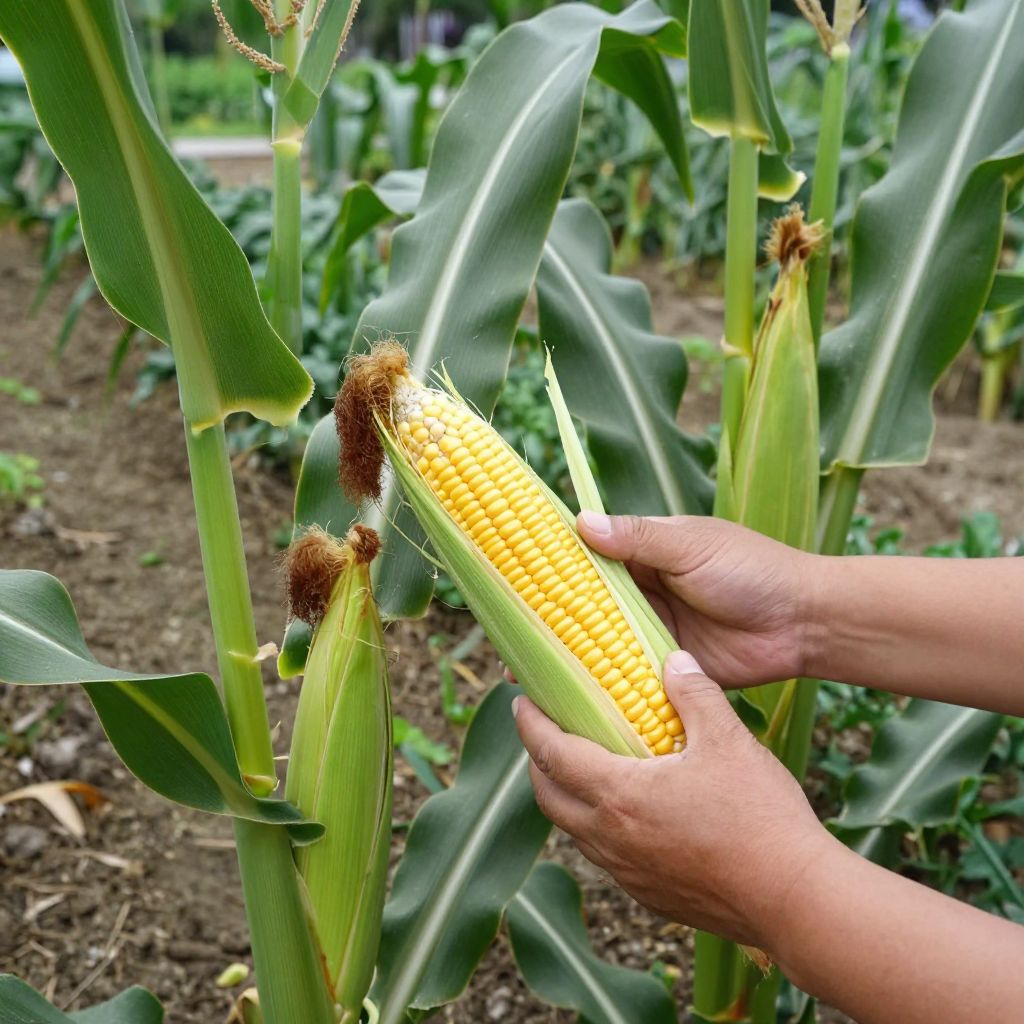
When do you harvest corn? The short answer is: when the ears are full, the silks have dried down, and the kernels release a milky juice when pierced. Sweet corn is best picked at the “milk stage,” which usually arrives about 18 to 24 days after silks first appear, though weather and variety can shift that window.
Harvesting at the right moment matters because corn changes quickly. Pick too early and the ears are small and underfilled; wait too long and the kernels turn starchy and tough. The good news is that a few simple checks will tell you exactly when your corn is ready.
When do you harvest corn?
Harvest corn when the ears feel firm and full, the silks have turned brown and dry, and a kernel squeezed with your fingernail releases a white, milky liquid. For sweet corn, this is usually 18 to 24 days after silking. If the liquid is watery, wait a few more days; if it is doughy, you waited too long.
How to tell corn is ready to pick
Check the silks
The silks are often your first clue. Fresh silks start pale and moist, then dry to tan or brown as the ear matures.
- Ready: silks are brown, dry, and shriveled.
- Not ready: silks are still green, sticky, or actively growing.
Feel the ear through the husk
Gently press the ear through the husk. A ripe ear should feel plump from end to end, not narrow or lumpy. The tip should be filled out, though some varieties may taper slightly.
Do the kernel test
Pull back a small section of husk and puncture a kernel with your fingernail.
- Milky juice: harvest now.
- Clear juice: the corn needs more time.
- No juice or pasty texture: the corn is overripe.
Look at the ears and husks
As corn matures, the husks often become lighter green and papery. The ear should sit snugly in the husk and the tip should be well filled. Missing kernels or a skinny ear usually means pollination was incomplete or the plant was stressed.
How timing changes by corn type
Sweet corn
Sweet corn is the crop most gardeners are asking about when they search for when do you harvest corn. It should be picked in the milk stage, when sugars are highest and starch has not yet built up. Once ripe, the eating window can be surprisingly short, especially in warm weather.
Popcorn
Popcorn is harvested much later, after the ears are fully mature and the kernels are hard. The husks and stalks should dry down before picking, and the kernels need to dry further after harvest before they will pop well.
Dent corn and ornamental corn
Dent corn and decorative types are also harvested at full maturity, not for tenderness. The ears are left longer on the plant so the kernels can dry. These are not eaten like sweet corn when young.
Seasonal timing: what to expect in your garden
Corn maturity depends on planting date, variety, heat, water, and sunlight. In cool summers, ears may take longer to fill. In very hot weather, sweet corn can move from perfect to overripe quickly, so check the patch every day once silks appear.
- Warm, sunny conditions: corn often matures faster.
- Cool spells or cloudy weather: maturation can slow down.
- Drought stress: ears may fill poorly or mature unevenly.
- Late planting: harvest may be pushed later into the season.
If you do not know the exact days to maturity for your variety, use the silks and kernel test rather than the calendar alone. That is the most reliable method in home gardens.
How to harvest corn properly
Pick corn in the morning if possible, when ears are cool and sugars are at their best. Hold the ear firmly, twist downward, and snap it from the stalk. A ripe ear should release with a clean break.
- Inspect the ear using the silk and kernel tests.
- Pull the husk back slightly if needed to confirm ripeness.
- Grasp the ear with one hand and support the stalk with the other if necessary.
- Twist the ear downward until it snaps free.
- Use or chill sweet corn as soon as possible after picking.
For sweet corn, quality is best when you harvest and cook it soon after picking. If you cannot use it right away, refrigerate the ears with husks on to slow sugar loss.
What happens if you harvest too early or too late?
Too early
Early-picked corn has small kernels, weak flavor, and poor fill. The ear may seem thin, and the tip may not be fully developed. If you harvest too soon, the corn will not improve much after picking.
Too late
Overripe sweet corn becomes starchy and chewy as sugars convert to starch. The kernels may look larger, but the eating quality drops fast. In hot weather, this change can happen in just a few days.
Uneven ripening
Sometimes the tip of the ear is not fully filled while the base is ready. This can happen after poor pollination, drought, heat stress, or if the plant was overcrowded. Give the ear a little more time if most kernels are still watery, but do not wait too long once the kernels turn milky.
Growing conditions that affect harvest timing
Sunlight
Corn needs full sun to develop strong stalks and well-filled ears. Shaded plants often produce smaller ears and may mature unevenly.
Soil and fertility
Corn grows best in fertile, well-drained soil with plenty of organic matter. Compost helps improve soil structure and moisture retention, which supports even ear fill. Poor soil can lead to weak growth and reduced harvest quality.
Watering
Consistent moisture is especially important from tasseling through ear fill. Drought stress at that stage can reduce kernel development and delay maturity. Avoid letting the soil swing from very dry to very wet.
Spacing
Corn is wind-pollinated, so planting in blocks rather than a single long row improves pollination. Better pollination usually means fuller ears and a more reliable harvest window.
Common problems that affect harvest readiness
Poor pollination
If kernels are missing in patches or the ear tip is poorly filled, pollination may have been incomplete. This can happen in isolated plantings, during extreme heat, or when plants are too widely spaced in a single row.
Birds and pests
Birds, raccoons, and insects can damage ripening ears. If wildlife is a problem in your area, check the patch daily once the ears begin to fill and harvest promptly at peak ripeness.
Earworms and rot
Inspect the tip of the ear for signs of chewing or mold. Damaged ears may be usable if the problem is minor, but heavily infested or rotting ears should be discarded.
Simple harvest checklist
- Silks are brown and dry.
- Ear feels full and firm through the husk.
- Kernel test shows milky juice for sweet corn.
- Harvest is happening in the morning if possible.
- Ears are picked promptly and cooled quickly.
After harvest: what to do next
Once you have picked the ears, keep them cool and shaded. Sweet corn is best eaten fresh, but if you have more than you can use immediately, refrigerate it right away. For popcorn or dry corn, continue curing the ears in a dry, airy place until the kernels are fully hardened.
After harvest, you can cut the stalks down and add healthy plant residue to the compost pile if it is free of disease. If the plants showed fungal problems, it is better to dispose of them rather than composting infected material.
Conclusion
If you are wondering when do you harvest corn, watch the silks, feel the ears, and test a kernel. For sweet corn, the best picking time is usually the milk stage, when the kernels are full and juicy but not yet starchy. Check your plants daily as they near maturity, and harvest as soon as they are ready for the best flavor.
For more practical crop care, you may also want to read about composting basics for healthier garden soil and how to water a vegetable garden effectively.