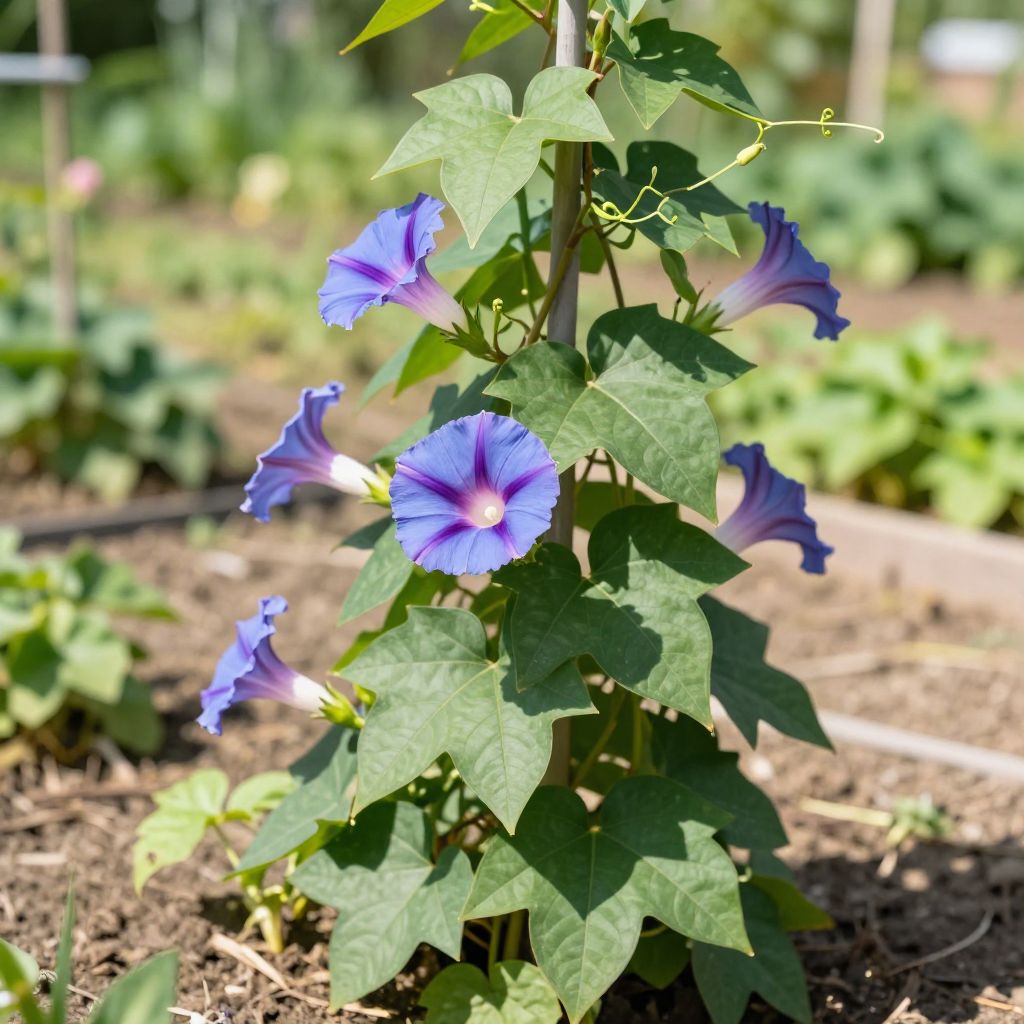
Do morning glories need full sun? In most gardens, yes—they bloom best with plenty of direct light. Morning glories can survive in partial shade, but you’ll usually get fewer flowers, leggier vines, and slower growth.
If you want a dense curtain of blooms on a trellis, fence, or arbor, sunlight is the deciding factor. The good news is that morning glories are adaptable, and with the right site and care, they can thrive in a wide range of home gardens.
Do morning glories need full sun?
Morning glories grow and flower best in full sun, which usually means at least 6 to 8 hours of direct sunlight per day. They may still grow in light shade, but flowering is often reduced and vines can become thin, stretched, and less vigorous.
How much sun morning glories really need
For the strongest bloom display, choose the sunniest spot you have. Morning glories open their flowers in the morning, and bright light helps them produce more buds and stronger vines.
Best light conditions
- Full sun: 6 to 8+ hours of direct sun; best for flowering
- Partial sun: 4 to 6 hours; acceptable, but blooms may be fewer
- Light shade: possible in warm climates, but growth is often sparse
If your garden is hot and dry, a little afternoon shade can sometimes help the plant avoid stress. Even then, morning sun is still very important for good flowering.
What happens in too much shade?
- Fewer flowers
- Long, weak vines with more leaves than blooms
- Slower growth and delayed flowering
- More risk of tangling as the vine reaches for light
If your morning glory is climbing well but not blooming, lack of sunlight is one of the first things to check.
Choosing the right planting spot
Morning glories perform best where they can climb into open light without being shaded by trees, shrubs, or buildings. A south-facing or west-facing fence, trellis, or railing is often ideal, depending on your climate.
Good site features
- Open sky overhead
- At least 6 hours of direct sun
- Well-drained soil
- Room for a vine to climb
- Support such as a trellis, string, arbor, or fence
Try to avoid planting them where nearby plants will quickly shade them out. Even a site that looks sunny in early spring may become too shaded once trees and tall perennials leaf out.
Soil, drainage, and compost
Morning glories are not usually fussy about soil, but they do best in soil that drains well. Rich, overly fertile soil can produce lots of leafy growth with fewer flowers, especially if nitrogen is high.
What to aim for
- Loose, workable soil
- Good drainage
- Moderate fertility
- A small amount of compost worked into poor soil
If your soil is heavy clay, improve drainage before planting by mixing in compost and growing on a raised bed or mound. In containers, use a quality potting mix with drainage holes rather than garden soil.
Too much fertilizer can reduce blooming. If the plant looks lush but refuses to flower, the soil may be too rich or too high in nitrogen.
How to plant morning glories for the best bloom
Morning glories are often grown from seed, and they usually prefer to be sown where they will grow because their roots dislike disturbance. If you start them indoors, use biodegradable pots or transplant very carefully.
Simple planting steps
- Choose a sunny site with a climbing support already in place.
- Prepare the soil so it is loose and drains well.
- Sow seeds according to the packet depth, usually shallowly.
- Water gently to settle the soil.
- Keep the soil evenly moist until seedlings are established.
In cooler climates, wait until the soil has warmed before sowing outdoors. In warmer regions, morning glories can be direct-sown once conditions are consistently favorable.
Spacing and support
Give each plant enough room to climb without crowding. Good airflow helps reduce disease problems, and a sturdy support prevents the vine from collapsing under its own growth.
- Use a trellis, netting, or wire support
- Train young vines early so they grab the structure
- Keep supports stable in wind
Watering morning glories the right way
Morning glories need regular water while they are getting established, but they do not like soggy soil. After that, they usually handle moderate dryness better than constant wetness.
Practical watering tips
- Water deeply when the top inch or two of soil feels dry
- Water new seedlings more often than mature vines
- Avoid frequent shallow watering, which encourages weak roots
- Do not let container-grown plants dry out completely
If the weather is hot, windy, or especially dry, check moisture more often. In rainy periods, reduce watering and make sure the soil drains freely.
Why morning glories may not bloom
When a morning glory grows leaves but little or no flowers, the cause is often one of a few common issues. Sunlight is the first thing to check, but other growing conditions matter too.
Common causes of poor flowering
- Not enough sun
- Too much nitrogen in the soil
- Overwatering or poor drainage
- Planting too late in the season for your climate
- Overcrowding from nearby plants
If the vine is in shade, the fix is simple: move future plantings to a brighter location. If the soil is very rich, avoid adding more fertilizer and let the plant settle into a leaner growing environment.
How to encourage more blooms
- Give the plant more direct sun
- Reduce high-nitrogen feeding
- Keep the soil evenly moist, not wet
- Provide a support that lets the vine reach the light
Pruning and maintenance
Morning glories usually need little pruning, but light maintenance can help keep them tidy and blooming well. Remove tangled or damaged growth if it is blocking light from the rest of the vine.
Helpful maintenance tasks
- Guide young vines onto their support early
- Trim away dead or broken stems
- Pull out weeds that compete for water and light
- Check regularly so the vine does not smother nearby plants
If the vine becomes overly dense, thinning a little can improve airflow and light penetration. That can reduce disease pressure and help the plant look healthier.
Common pests and diseases
Morning glories are generally easy to grow, but stressed plants in poor light or wet soil can be more vulnerable to problems. Healthy sun exposure is one of the best defenses.
Watch for these issues
- Aphids on tender new growth
- Spider mites in hot, dry conditions
- Powdery mildew where airflow is poor
- Root problems in soil that stays wet too long
To reduce trouble, avoid crowding, water at the base instead of overhead when possible, and keep the vine in a bright, airy location. If pests appear, start with a strong spray of water or remove heavily affected growth.
Growing morning glories in containers
You can grow morning glories in pots, but container plants need especially good light. A sunny balcony, patio, or deck is often better than a shaded corner near a wall.
Container care basics
- Use a large pot with drainage holes
- Place it where it gets full sun
- Water more often than in-ground plants
- Use a trellis or obelisk for climbing
Containers dry out faster than garden beds, so check moisture regularly during warm weather. If the plant starts to wilt in midday heat but recovers by evening, it may simply need more frequent watering.
When partial shade can work
Partial shade is not ideal, but it can be workable in very hot regions where intense afternoon sun is harsh. In that case, morning sun plus some afternoon protection may still produce decent growth and flowers.
Partial shade is more likely to succeed when:
- The plant gets bright morning sun
- Temperatures are extreme in the afternoon
- The soil drains well
- The vine is not competing with larger plants
Even in partial shade, expect fewer blooms than a plant grown in full sun. If flowers are your goal, prioritize the brightest location available.
Quick troubleshooting guide
If your morning glory is not thriving, use this simple checklist to pinpoint the problem.
- Few flowers: move to a sunnier spot or reduce fertilizer
- Yellowing or weak growth: check drainage and watering habits
- Long, thin vines: the plant likely needs more sun
- Wilting in heat: water deeply and check container dryness
- Leaf spots or mildew: improve airflow and avoid overcrowding
Conclusion
So, do morning glories need full sun? For the best results, absolutely. Give them at least 6 to 8 hours of direct light, well-drained soil, and a support to climb, and you’ll have a much better chance of getting a vigorous, flower-covered vine.
If you want to improve your planting site, start by observing how much direct sun it really gets over the course of the day, then move your morning glories to the brightest spot you have. For more practical vine-growing advice, you may also enjoy reading about how to grow climbing flowers on trellises and choosing the best soil for flowering annuals.