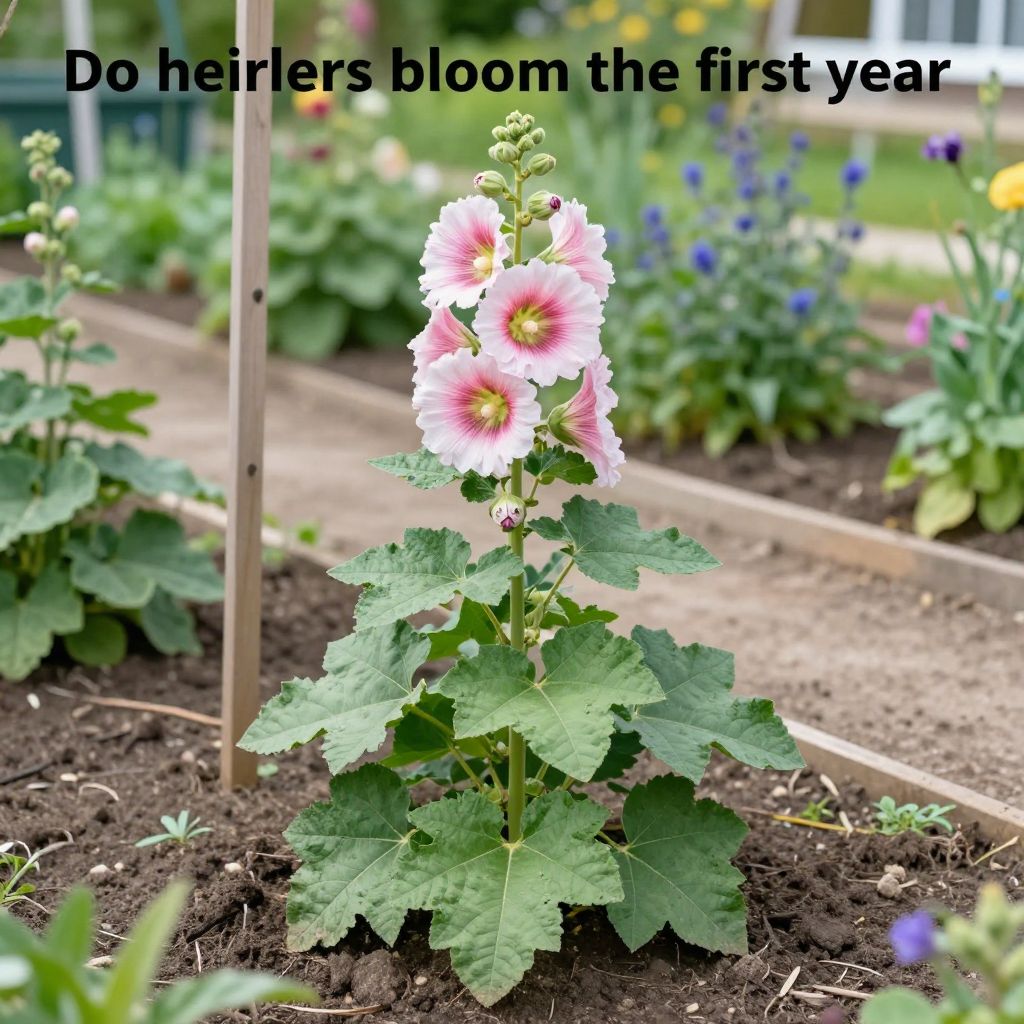
Do hollyhocks bloom the first year? Sometimes they do, but not always. Most hollyhocks are biennial or short-lived perennials that spend their first season building roots and leaves, then flower the following year. With the right variety, early sowing, and good growing conditions, you may get blooms sooner.
If you want flowers the first summer, the key is choosing the right type and giving the plants a strong start. Even when they do not bloom immediately, healthy hollyhocks often reward you with taller, better flowering plants in year two.
Do hollyhocks bloom the first year?
Yes, some hollyhocks can bloom in their first year, but many do not. Common hollyhock (Alcea rosea) is usually biennial, so it often makes leaves the first season and flowers the second. First-year bloom is more likely from early-sown seed, mild climates, or certain faster-flowering strains.
Why hollyhocks often wait until year two
Hollyhocks naturally focus on root and leaf growth before flowering. That early energy helps them support tall stems, which can reach several feet high and need a strong base. If the plant is stressed, started too late, or grown in poor conditions, flowering may be delayed even longer.
What type of hollyhock you have matters
- Biennial hollyhocks usually bloom in their second year.
- Short-lived perennial types may bloom sooner or later depending on climate and planting time.
- Seed-started plants are more likely to flower the first year if started early indoors or in a long growing season.
How to increase the chance of first-year blooms
If your goal is flowers the same season, start as early as your climate allows and give the plant steady, non-stressful growth. Hollyhocks bloom best when they get full sun, decent soil, and enough time to mature before extreme heat, cold, or drought slows them down.
- Start seed early indoors or in a protected outdoor spot, depending on your local frost dates.
- Use a well-drained seed-starting mix or garden soil that is not heavy and soggy.
- Provide full sun, ideally at least 6 hours daily.
- Keep seedlings evenly moist, not waterlogged.
- Transplant carefully so roots are not disturbed too much.
- Avoid excess nitrogen, which can produce leafy growth with fewer flowers.
Start seed at the right time
For the best chance of first-year bloom, sow hollyhock seed early enough for the plant to size up before the season ends. In many climates, that means starting indoors several weeks before the last expected frost or sowing outdoors in a prepared bed when conditions are workable.
If you live in a long, mild growing season, direct sowing can still work well. In short-season areas, indoor starting usually gives the plant the extra time it needs.
Give seedlings room and light
Hollyhock seedlings need bright light to grow sturdy stems instead of becoming weak and leggy. Space them so air can move around the leaves, because crowded plants are more likely to develop disease and may bloom poorly.
- Use a bright windowsill with supplemental light if needed.
- Harden off seedlings before planting outside.
- Space mature plants generously so they are not competing for light and air.
Best growing conditions for healthy hollyhocks
Healthy hollyhocks are more likely to bloom on schedule. They prefer a sunny site, reasonably fertile soil, and good drainage. They can adapt to average garden conditions, but they struggle in dense shade, soggy ground, and highly compacted soil.
Sunlight
Choose a site with full sun for the strongest flowering. In very hot regions, a little afternoon shade can help prevent stress, but too much shade often means tall, weak plants with fewer blooms.
Soil and drainage
Hollyhocks do best in soil that drains well but still holds some moisture. If your soil is heavy clay, improve it with compost and avoid planting in low spots where water collects. Constantly wet roots can slow growth and invite disease.
Watering
Water deeply when the top layer of soil begins to dry, especially while plants are young or during dry spells. Try to water at the base of the plant rather than overhead, since wet leaves can encourage rust and other leaf diseases.
Mulch and compost
A thin layer of compost worked into the soil before planting helps hollyhocks establish. Mulch can also conserve moisture and reduce soil splash onto the leaves, which is helpful for disease prevention. Keep mulch a little away from the crown.
Common reasons hollyhocks don’t bloom the first year
If your hollyhocks are growing well but not flowering, one of a few common issues is usually to blame. The good news is that many of these problems are fixable, especially if you catch them early.
- Planted too late in the season for the plant to mature.
- Too much shade, which reduces flower bud formation.
- Overfertilizing with nitrogen, which pushes leaves instead of blooms.
- Poor drainage or compacted soil that slows root growth.
- Transplant shock from rough handling of roots.
- Stress from drought or heat during active growth.
How to troubleshoot a non-blooming plant
If a first-year hollyhock is still leafy, check its light, soil, and spacing first. Move or thin nearby plants if they are shading it. Improve drainage if the area stays wet. If you have been feeding heavily, pause and let the plant settle into steadier growth.
Pruning, staking, and maintenance for better flowering
Hollyhocks are tall and can be top-heavy, especially when they begin to set buds. A little support and cleanup can help the plant stay healthy enough to bloom well. Good maintenance also reduces disease pressure, which matters a lot for this plant.
Staking tall plants
In windy locations or rich soil where plants grow very tall, a stake can prevent stems from bending or snapping. Tie stems loosely with soft ties so they can move a little without rubbing.
Remove damaged leaves
Lower leaves often yellow or develop rust spots first. Remove badly affected leaves promptly and discard them rather than composting them if disease is present. This helps improve airflow and keeps the plant looking tidier.
Deadheading
Removing spent flowers can encourage a longer bloom period on some plants. If you want seeds, leave a few flower spikes to mature at the end of the season. If you want the plant to focus on flowering rather than seed production, deadhead regularly.
Pests and diseases that can affect blooming
Hollyhocks are famous for leaf rust, and that disease can weaken plants enough to reduce flowering. Aphids, Japanese beetles, and caterpillars may also damage buds or foliage. Healthy plants are more resilient, so prevention matters as much as treatment.
Hollyhock rust
Rust shows up as orange-brown pustules, usually on the undersides of leaves. It spreads more easily in humid weather and where leaves stay wet. To reduce it, water at soil level, space plants well, and remove infected foliage early.
Aphids and chewing insects
Aphids cluster on new growth and flower stalks, sucking sap and sometimes distorting buds. A strong blast of water can knock them off, and beneficial insects often help keep them in check. For heavier infestations, inspect plants regularly and act early.
Prevention tips
- Choose a sunny, airy site.
- Avoid crowding plants against fences or walls.
- Water the soil, not the leaves.
- Clean up fallen leaves and old stems at season’s end.
- Rotate planting areas if rust has been a recurring issue.
Can you get hollyhocks to bloom faster?
You can sometimes encourage earlier flowering, but you cannot force every hollyhock to bloom in year one. The most reliable approach is to start seed early, grow the plant vigorously without stress, and choose a site that supports strong root development and full sun.
Best practices for faster flowering
- Start from seed early enough to give the plant a long growing window.
- Use compost-rich but well-drained soil.
- Keep moisture even while plants are establishing.
- Avoid heavy feeding with high-nitrogen fertilizer.
- Protect young plants from slugs, wind, and transplant shock.
What to expect in the first season
If your hollyhock does bloom the first year, the flowers may appear later in the season than you hoped. If it does not, that is still normal. A healthy plant that makes a strong rosette of leaves in year one is often setting itself up for a better show later.
In the first season, your main job is to keep the plant growing steadily and disease-free. That foundation matters more than forcing blooms too soon.
Simple care checklist for first-year hollyhocks
- Plant in full sun or very bright light.
- Use well-drained soil with some compost.
- Water consistently, especially when young.
- Keep leaves dry when possible.
- Watch for rust, aphids, and leaf damage.
- Stake tall stems if needed.
- Do not overfeed with nitrogen-heavy fertilizer.
Conclusion
So, do hollyhocks bloom the first year? Sometimes, yes, but many will wait until the second year. If you want the best chance of first-year flowers, start early, give them sun and drainage, and avoid stress. If they only make leaves this season, keep them healthy and you may be rewarded with a stronger bloom display next year.
For more practical flower-growing advice, you may also want to read about how to grow tall cottage garden flowers and preventing rust on common garden plants.