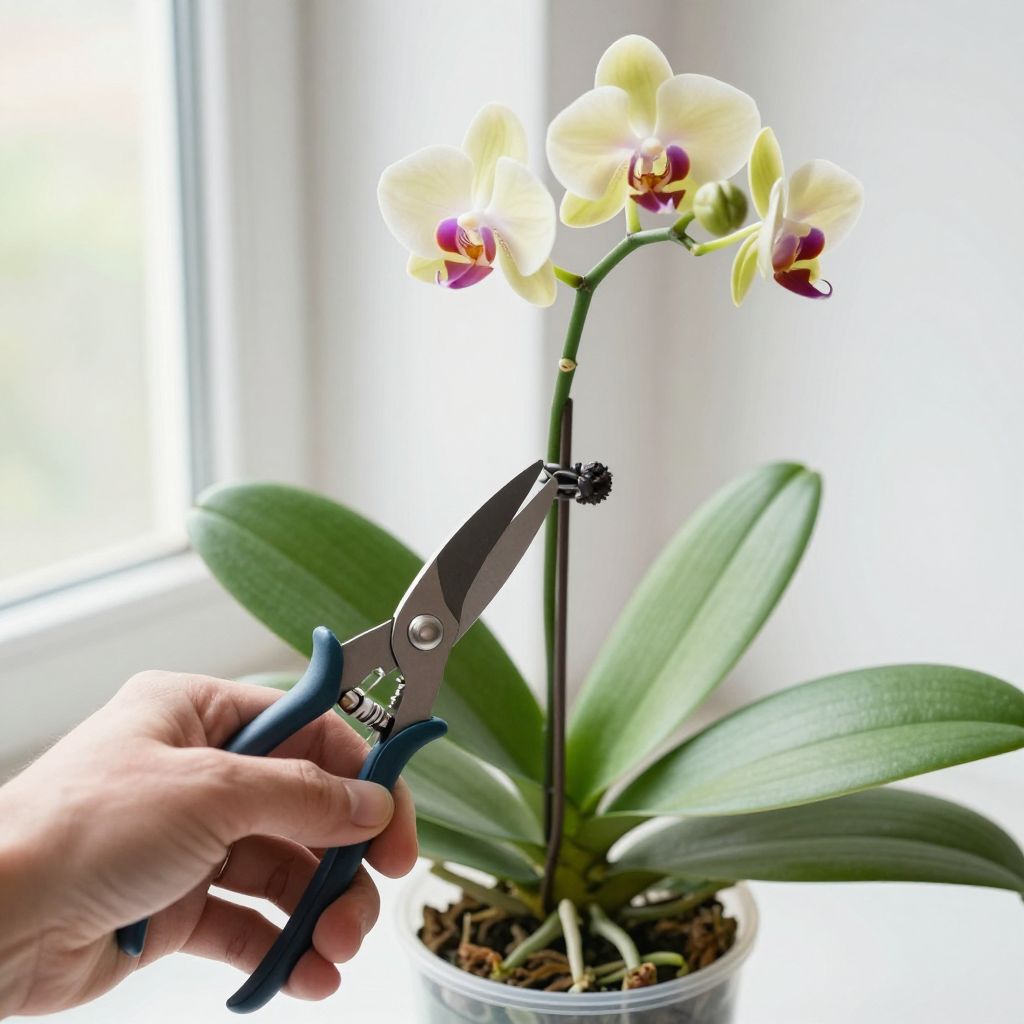
Wondering where to cut orchid stem after bloom? The right cut depends on the orchid type and the condition of the flower spike. A healthy Phalaenopsis often can be trimmed above a node to encourage a side branch, while a brown, dried stem is usually cut back at the base.
Making the cut in the right place helps your orchid conserve energy and recover well. With a clean tool, a careful look at the stem, and a little patience, you can prune confidently without harming the plant.
Where To Cut Orchid Stem After Bloom?
For a Phalaenopsis orchid, cut a green flower spike about 1/4 inch above a node if the stem is still firm and healthy. If the spike is brown, dry, or mushy, cut it off near the base of the plant. Other orchid types often bloom on new canes or pseudobulbs, so their pruning needs can differ.
How to tell whether the stem should be cut back or left alone
Before you snip, inspect the flower spike closely. The safest cut depends on whether the stem is still alive and whether the plant has enough energy to rebloom from that spike.
Signs the spike is still worth keeping
- The stem is green and firm.
- There are visible nodes along the spike.
- The plant looks healthy with firm leaves and active roots.
- The flowers have dropped, but the spike has not turned brown.
Signs you should cut it off near the base
- The spike is yellow, brown, or papery.
- The stem feels dry and brittle.
- The plant is weak, stressed, or recovering from root problems.
- There is rot, blackening, or a soft section on the spike.
Important: A green spike can still photosynthesize a little, but a dead spike only drains the plant’s appearance and can become a disease entry point if left to deteriorate.
Best cutting locations for common orchids
Not all orchids bloom the same way. If you know the type you grow, you can prune more accurately and avoid cutting away a future bloom point.
Phalaenopsis orchids
These moth orchids are the most common house orchids and the ones most often pruned after flowering. If the spike is green, cut about 1/4 inch above a node, usually the second or third node from the base. This may trigger a side branch and another round of flowers.
If the spike has turned brown all the way down, remove it near the base, leaving a short stub so you do not nick the crown or leaves.
Cattleya, Dendrobium, and other orchids
Many orchids in these groups do not rebloom from the same flower spike in the same way Phalaenopsis does. Some bloom from new growths, canes, or pseudobulbs. In those cases, remove only dead flower stems and leave healthy canes or growths intact unless you are sure a stem is finished.
If you are unsure of the orchid type, wait and observe the plant’s growth habit before making a major cut.
How to cut an orchid stem after bloom
Use a clean, sharp tool and make one neat cut. Crushing the stem can slow healing and invite problems.
- Disinfect pruning shears, scissors, or a razor blade with rubbing alcohol.
- Locate the node you want to cut above, or identify where the spike turns brown.
- Hold the stem steady and make a clean cut.
- Leave about 1/4 inch above the node or base.
- Dispose of dead flower spikes and any fallen debris.
If you are cutting a green spike above a node, aim for a slight angle or a straight cut that does not leave a long stub. The exact angle matters less than making a clean, tidy cut.
What happens after you cut the orchid stem?
After pruning, the plant shifts energy toward roots, leaves, and sometimes a new side shoot. A healthy Phalaenopsis may produce a secondary bloom spike from a node, but it may also rest and grow leaves instead.
Do not expect immediate results. Some orchids rebloom quickly, while others need a recovery period before they flower again.
How to support recovery after pruning
- Keep the orchid in bright, indirect light.
- Water only when the potting mix is nearly dry, not on a fixed calendar.
- Make sure the pot drains freely.
- Avoid letting water sit in the crown or leaf joints.
- Resume normal feeding only if the plant is actively growing and healthy.
Tip: A repotted or stressed orchid may do better if you remove the entire spent spike instead of trying to force a rebloom from it.
When not to leave a green spike on the plant
Keeping a green stem is not always the best choice. Sometimes a full cut is healthier than hoping for another bloom.
Cut the spike all the way back if:
- The orchid is small or weak.
- The roots are damaged, soft, or sparse.
- The plant recently had pest pressure or disease.
- The spike is producing a weak, awkward side branch.
- You want the plant to focus on vegetative growth instead of another bloom cycle.
For a stressed orchid, removing the old spike can reduce demand on the plant and help it rebuild strength faster.
Common mistakes to avoid
Most orchid pruning mistakes are simple and easy to prevent. A careful cut and basic sanitation make a big difference.
- Cutting too low into the crown and damaging the plant tissue.
- Leaving long stubs that dry out unevenly or look untidy.
- Using dirty tools that can spread bacteria or fungi.
- Pruning a healthy spike too aggressively when the orchid could have rebloomed from a node.
- Forcing a rebloom on a weak plant instead of letting it recover.
Aftercare: light, water, and general maintenance
Pruning is only one part of post-bloom care. The right growing conditions help your orchid recover and prepare for the next flowering cycle.
Light
Most indoor orchids that are grown for repeat blooming do best in bright, indirect light. A window with filtered light is often ideal. Too little light can delay reblooming, while harsh direct sun can scorch leaves.
Water
Water based on the plant’s needs and the drying rate of the potting mix. Orchid bark, moss, and mixed media dry at different speeds, so check the roots and medium rather than watering by habit. Roots should not sit in water.
Potting mix and drainage
Use a free-draining orchid mix suited to the plant’s roots. A pot with drainage holes is essential. If the mix stays soggy too long, root problems can appear and the plant may stop blooming well.
Humidity and air movement
Moderate humidity and gentle air circulation usually help orchids stay healthy indoors. Stagnant, damp air can encourage fungal issues, while very dry air can stress roots and leaves.
Pests and diseases to watch for after pruning
Spent orchid stems are not usually a major pest magnet, but weak plants can attract trouble. Check the plant while you prune so you can catch issues early.
Watch for these problems
- Mealybugs in leaf joints or along the spike.
- Scale insects on stems and undersides of leaves.
- Soft rot near the crown or base.
- Gray mold or black spotting on damaged tissue.
If you see rot, remove affected tissue with a sterile tool and improve airflow and watering habits. If pests are present, isolate the orchid from other houseplants until the problem is under control.
Can you propagate an orchid from the cut stem?
In most home situations, no. A cut flower spike is not a reliable way to propagate orchids. Some hobbyists experiment with stem cuttings or keikis on certain orchids, but success is inconsistent and depends heavily on species and conditions.
If you want more orchids, the most dependable approach is to encourage healthy growth on the parent plant or divide orchids that naturally form separate growths, when appropriate for that type.
Quick decision guide
If you are still unsure where to cut orchid stem after bloom, use this simple rule:
- Green and healthy spike: cut just above a node if you want to try for a side bloom.
- Brown or dead spike: cut near the base.
- Weak or stressed plant: remove the spike entirely so the orchid can recover.
That approach works well for most common indoor Phalaenopsis orchids and keeps you from overpruning a plant that still has useful energy stored in its stems.
Conclusion
To cut an orchid stem after bloom, look first at the color and condition of the spike. Green spikes can be trimmed above a node, while dead ones should be removed near the base. Use clean tools, give the plant bright indirect light, and let its roots and leaves guide your next care steps. If you want more orchid care help, consider reading about orchid repotting basics and how to water orchids correctly.