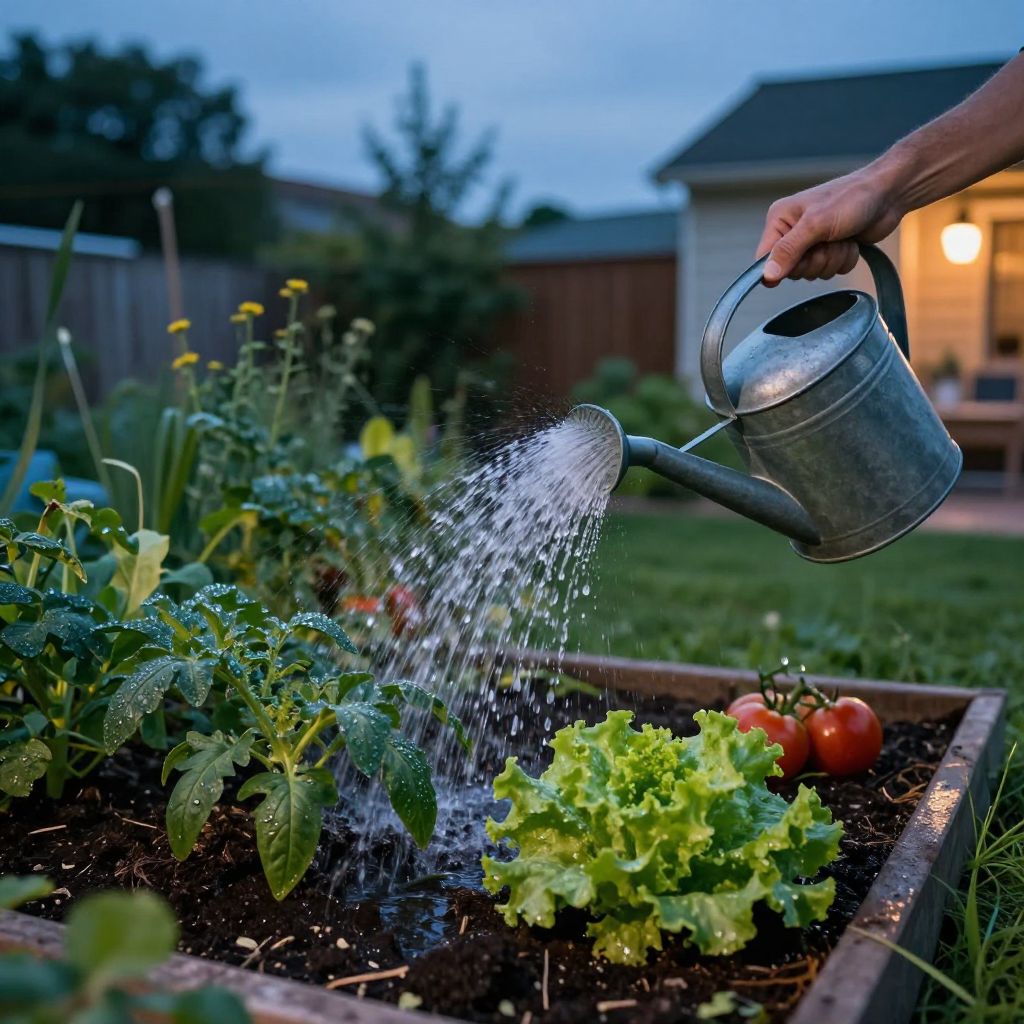
Can you water plants at night? Yes, you can, but it is not always the best choice for every garden. The main issue is that leaves and soil may stay wet longer after sunset, which can increase the risk of fungal disease and root problems in some conditions.
For many gardeners, the better question is when night watering is safe and when it should be avoided. The answer depends on your plant type, soil drainage, weather, and whether you are watering outdoors or indoors.
Can you water plants at night?
Yes, you can water plants at night, especially if the soil is dry and the plants need moisture. The key is to water the soil, not the foliage, and to avoid leaving the root zone soggy for long periods. In humid climates or poorly drained beds, night watering can encourage disease more than morning watering.
When night watering works well
Night watering can be useful when daytime heat causes water to evaporate too quickly or when you are trying to reduce stress on wilted plants. It may also be practical if your schedule only allows evening garden care.
Good situations for watering after dark
- Hot, dry weather where afternoon watering disappears fast.
- Newly planted trees, shrubs, and perennials that need steady moisture.
- Container plants that dry out quickly in summer.
- Lawns or beds that are easier to water in the evening because of access or restrictions.
If you water at night, do it early enough that the foliage can dry before the coolest part of the night. That is especially important in humid areas where leaves may stay damp until morning.
When night watering is a bad idea
Night watering is less suitable when your garden already has disease pressure, heavy clay soil, or poor air circulation. Wet leaves and slow-drying soil create ideal conditions for mildew, leaf spot, and root rot.
Be extra cautious with these plants
- Tomatoes, peppers, cucumbers, and squash in humid weather, because they are prone to fungal issues.
- Roses and other ornamentals that regularly develop black spot or mildew.
- Seedlings and young transplants sitting in dense, cool soil.
- Houseplants in pots without drainage holes or with saucers that hold water.
For these plants, morning watering is usually safer because it gives the foliage and surface soil time to dry during the day.
Morning vs. night watering: what is best?
In most gardens, early morning is the best time to water. The plant can take up moisture before the day heats up, and any splashed leaves dry quickly in the sun and breeze. That reduces disease risk while still giving roots access to water when they need it most.
Simple comparison
- Morning: usually best overall for outdoor plants.
- Evening/night: acceptable when done carefully and conditions are dry enough.
- Midday: often least efficient because more water evaporates.
If you must water at night, try to make it a deep, targeted watering rather than a light sprinkle. Shallow watering encourages roots to stay near the surface, where they dry out faster.
How to water plants at night the right way
Night watering can be done well if you focus on the root zone and avoid soaking the leaves. The goal is to moisten the soil deeply enough that roots can access water through the next day, without keeping the plant wet for too long.
- Check the soil first. Push a finger 2 to 3 inches into the soil for small plants, or 4 to 6 inches for larger beds and shrubs.
- Water only if the soil feels dry at the root depth, not just on the surface.
- Use a watering can, soaker hose, drip line, or hose at the base of the plant.
- Water slowly so moisture sinks in instead of running off.
- Avoid splashing leaves, especially on disease-prone plants.
- Stop when the soil is evenly moist, not muddy or waterlogged.
How much water is enough?
There is no single amount that fits every garden. Sandy soil dries faster and may need more frequent watering, while clay soil holds water longer and needs slower, less frequent soaking. Containers also dry much faster than in-ground beds.
A useful rule is to water deeply enough that moisture reaches the main root zone. For established beds, that often means a slow soak rather than a quick sprinkle. For potted plants, water until a little drains from the bottom, then empty excess water from saucers.
Soil, drainage, and why they matter at night
Soil type affects whether night watering is helpful or risky. Well-drained loam usually handles evening watering better than heavy clay, which can stay wet for a long time and suffocate roots.
Improve watering results with better soil structure
- Work in compost to improve drainage and moisture balance.
- Mulch beds with 2 to 3 inches of organic mulch, keeping it away from stems and trunks.
- Raise beds or plant in mounds if your site stays wet after rain.
- Check containers for drainage holes before watering at night.
Healthy soil can make night watering much safer because it drains more evenly and supports stronger roots. Poorly drained soil, on the other hand, can leave plants sitting in wet conditions for hours.
Indoor plants and night watering
For indoor plants, watering at night is usually less of a problem than it is outdoors, because leaves are not exposed to dew and nighttime humidity outdoors. The main concern indoors is overwatering, especially in low light or cool rooms where soil dries slowly.
Indoor watering tips
- Water only when the top layer of soil has dried to the plant’s needs.
- Always empty saucers after watering.
- Use pots with drainage holes.
- Adjust watering for winter, when indoor light and growth are usually lower.
If your indoor plant sits near a cool window or in a dim room, night watering can leave the pot wet for too long. In that case, morning watering gives the soil more time to dry during the day.
Common mistakes to avoid
Most problems with night watering come from watering too often, wetting the leaves, or ignoring how slowly the soil dries in cool weather. A few simple corrections can prevent many issues.
- Do not water on a fixed schedule without checking the soil first.
- Do not soak the foliage if the plant is prone to fungal disease.
- Do not leave pots standing in runoff water.
- Do not water heavy soil again before it has had time to drain.
- Do not assume wilt always means thirst; some plants wilt from heat even when soil is moist.
Troubleshooting after night watering
If you watered at night and the plant still looks stressed the next day, look at the soil and the roots before watering again. The problem may be too much water, not too little.
Signs you may have overwatered
- Soil stays wet or muddy for more than a day or two.
- Leaves yellow, droop, or feel soft rather than crisp.
- There is a sour smell from the soil.
- Lower leaves drop even though the plant was watered recently.
What to do next
- Pause watering until the topsoil begins to dry.
- Improve drainage if water pools around the plant.
- Move containers to a brighter, breezier spot if possible.
- Remove badly affected foliage if disease is starting to spread.
If the plant is in a bed with poor drainage, consider amending the soil with compost or relocating it to a better-drained spot. For pots, repotting into fresh mix may solve the problem faster than changing your watering time.
Best practices for healthy watering habits
Whether you water in the morning or at night, the best results come from consistent moisture, good drainage, and careful observation. Plants do not need a rigid clock; they need water when their roots are actually drying out.
- Water at the base of plants whenever possible.
- Use mulch to slow evaporation and protect roots.
- Check soil moisture before every watering.
- Adjust for heat waves, rain, wind, and seasonal changes.
- Give young plants more attention than established ones.
In dry, hot conditions, night watering can be a practical backup. In humid or disease-prone gardens, morning watering is usually the safer routine.
Conclusion
So, can you water plants at night? Yes, but do it carefully: water the soil, avoid soaking the leaves, and make sure your soil drains well. If you want the safest routine, check your plants at dawn or early morning and water only when the root zone actually needs it.
For more practical plant care guidance, you may also want to read about how to tell when plants need water and improving garden soil drainage.