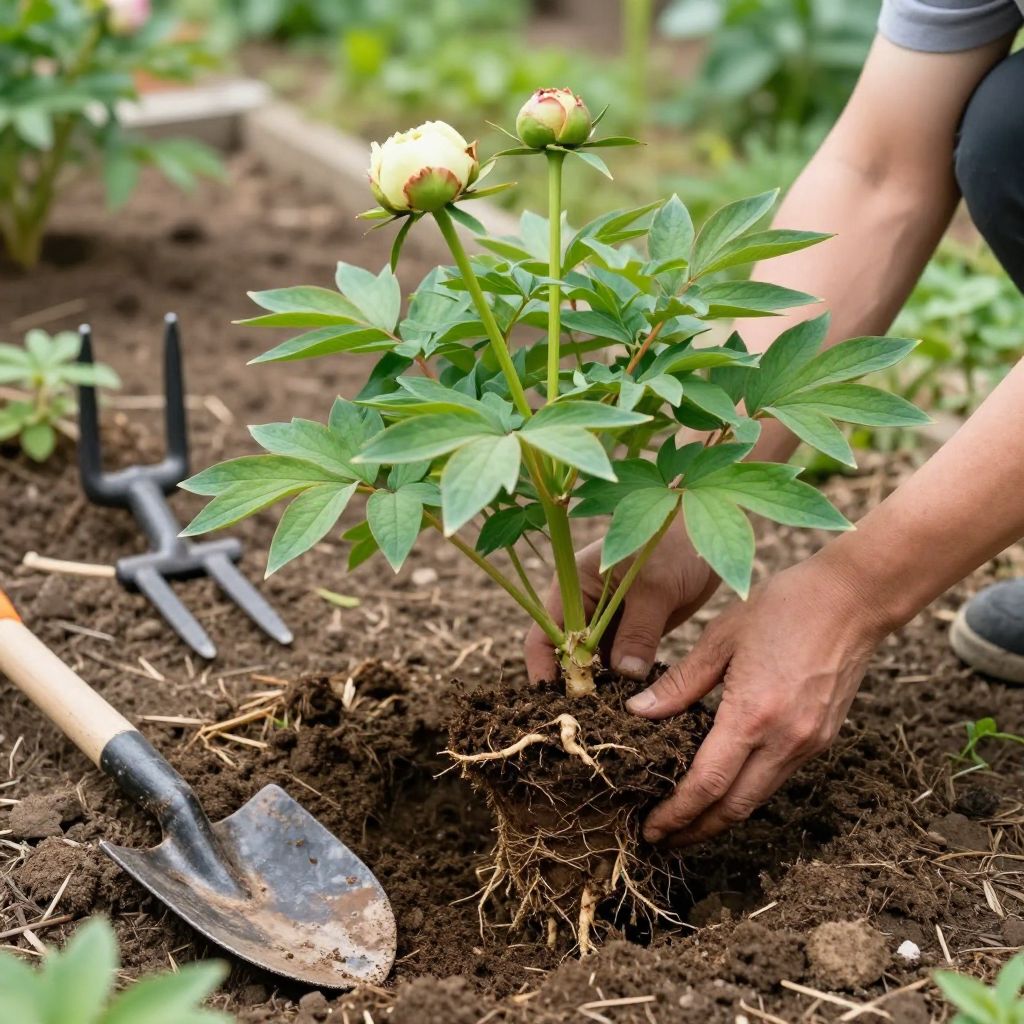
Wondering when to transplant peonies without setting them back for years? The short answer is to move them in early fall, after the foliage starts to die back and the plant is entering dormancy. That timing gives roots cool weather to re-establish before winter.
Peonies can live for decades in the same spot, so transplanting should be done carefully and only when needed. If you move them at the right time and keep the eyes near the soil surface, they usually recover well and bloom again after a short adjustment period.
When to transplant peonies?
The best time to transplant peonies is in early fall, typically 6 to 8 weeks before the ground freezes in your area. At that stage the plant is dormant or nearly dormant, roots are still active in cool soil, and stress is lower than during spring or summer moves.
Why fall is the best season
Peonies dislike disturbance, especially when they are actively growing or flowering. In fall, the plant has finished top growth and can focus on root repair instead of supporting blooms and leaves.
What makes fall ideal
- Cooler soil encourages root growth without heat stress.
- Lower water demand reduces transplant shock.
- Less top growth means the plant can recover more easily.
- Winter dormancy gives roots time to settle before spring growth begins.
If you live in a mild-winter climate, fall still works well, but you may have a longer window. In colder regions, aim earlier in fall so roots can establish before the soil freezes.
Can you transplant peonies in spring or summer?
You can, but it is not ideal. Spring and summer transplanting often leads to more transplant shock, fewer blooms, and slower recovery because the plant is already using energy for stems, leaves, and flower buds.
If you must move them outside fall
- Choose a cool, cloudy day if possible.
- Dig a generous root ball to protect as many roots as you can.
- Water deeply after planting and keep soil evenly moist, not soggy.
- Expect reduced flowering for a season or two.
Spring moves are sometimes necessary during construction, redesign, or if the plant is in the wrong place. Just understand that the plant may need extra time to recover.
How to transplant peonies step by step
Moving peonies is straightforward if you handle the roots gently and replant them at the correct depth. The most common mistake is burying the eyes too deeply, which can delay or prevent flowering.
- Prepare the new site first. Choose a sunny location with well-drained soil and room for mature growth.
- Cut back the foliage. Trim stems to a few inches above the ground after they begin to yellow or die back.
- Dig wide, not just deep. Use a spade or garden fork to lift the clump with as much root mass as possible.
- Divide only if needed. If the clump is large or you want more plants, separate it into divisions with 3 to 5 healthy eyes each.
- Replant promptly. Set the crown so the eyes are about 1 to 2 inches below the soil surface, or even slightly shallower in heavier soils.
- Water in well. Soak the soil to settle it around the roots.
- Mulch lightly. Use a thin layer to conserve moisture, but keep mulch away from the crown.
Tools that make the job easier
- Sharp spade or garden fork
- Pruning shears
- Bucket or tarp for moving divisions
- Watering can or hose
- Compost for improving poor soil
Choosing the right spot after transplanting
Peonies bloom best in full sun, though in hotter climates they appreciate light afternoon shade. They also need soil that drains well, because roots sitting in wet ground are more likely to rot.
Ideal growing conditions
- Sunlight: at least 6 hours of direct sun daily
- Soil: fertile, loose, and well-drained
- pH: slightly acidic to neutral is usually suitable
- Airflow: enough space to reduce fungal disease pressure
If your soil is heavy clay, improve the planting area with compost and consider planting on a slight mound or raised bed. Good drainage matters more than rich soil alone.
How deep should peonies be planted?
Depth is critical. Peony eyes planted too deep often produce healthy foliage but few or no flowers. Keep the buds shallow, and resist the urge to “protect” them with extra soil.
Rule of thumb: place the eyes about 1 to 2 inches below the soil surface in most gardens. In warmer areas, slightly deeper planting may help with heat, but deep planting can still reduce blooming.
Aftercare following transplanting
Peonies usually need a season to settle in after being moved. Good aftercare helps the roots establish without encouraging weak, floppy growth.
Watering
Water thoroughly at planting, then keep the soil evenly moist while the roots re-establish. Avoid frequent shallow watering, which encourages surface roots and weak establishment.
Mulching
Use a light mulch layer to moderate soil temperature and reduce moisture loss. Keep mulch a few inches away from the crown so the eyes do not stay too wet.
Fertilizing
Do not overfertilize a newly transplanted peony. If your soil is poor, a small amount of compost mixed into the planting area is usually enough. Heavy feeding can push leafy growth at the expense of flowering.
Bloom expectations
It is normal for a transplanted peony to bloom less the first year after moving. Some plants skip a season entirely, especially if they were divided or moved at the wrong time.
Common mistakes to avoid
- Transplanting during peak summer heat. This increases stress and water loss.
- Planting too deep. This is one of the main reasons peonies fail to bloom.
- Using soggy soil. Poor drainage can lead to root rot.
- Dividing too aggressively. Tiny divisions take longer to recover.
- Expecting immediate blooms. Peonies often need time to re-establish after moving.
Should you divide peonies when transplanting?
Not always. If the plant is healthy and you only need to relocate it, move the whole clump intact. Divide only when the clump is overcrowded, you want more plants, or the center is declining.
For the best results, each division should have several healthy eyes and a good portion of root attached. Very small divisions may survive, but they usually take longer to bloom again.
Troubleshooting after transplanting
Peony is leafy but not blooming
This usually means the plant is too deep, recently divided, or still recovering from transplant shock. Check planting depth first, then give it another season before making major changes.
Leaves yellow early
Some yellowing is normal as peonies go dormant in fall. If yellowing happens during active growth, check for waterlogged soil, poor drainage, or stress from a recent move.
Stems flop or break
Transplanted peonies may have weaker stems the first season. Use a peony ring or discreet support if needed, especially in windy sites or with large-flowered varieties.
Fungal spots or mildew
Good spacing, sun, and cleanup of old foliage help reduce disease. Remove dead leaves in fall and avoid overhead watering when possible.
Long-term care after the move
Once established, peonies are low-maintenance perennials. They prefer to stay put, so choose the final location carefully and avoid moving them again unless necessary.
- Leave the plant undisturbed once it settles in.
- Remove dead foliage in fall to reduce disease carryover.
- Keep weeds down so roots are not competing for moisture and nutrients.
- Refresh compost lightly in spring if the soil is poor.
If your peony is in the wrong place, the best fix is usually one careful move rather than repeated transplanting. A stable site with sun and drainage will reward you for years.
Conclusion
When to transplant peonies comes down to timing and patience: move them in early fall whenever possible, plant them shallowly, and give them a well-drained sunny site. If you do that, your peony has the best chance to recover and bloom well again. Before you dig, prepare the new bed first so the roots spend as little time out of the ground as possible.
If you want more practical perennial care tips, you may also enjoy reading about how to divide perennials and fall garden cleanup.