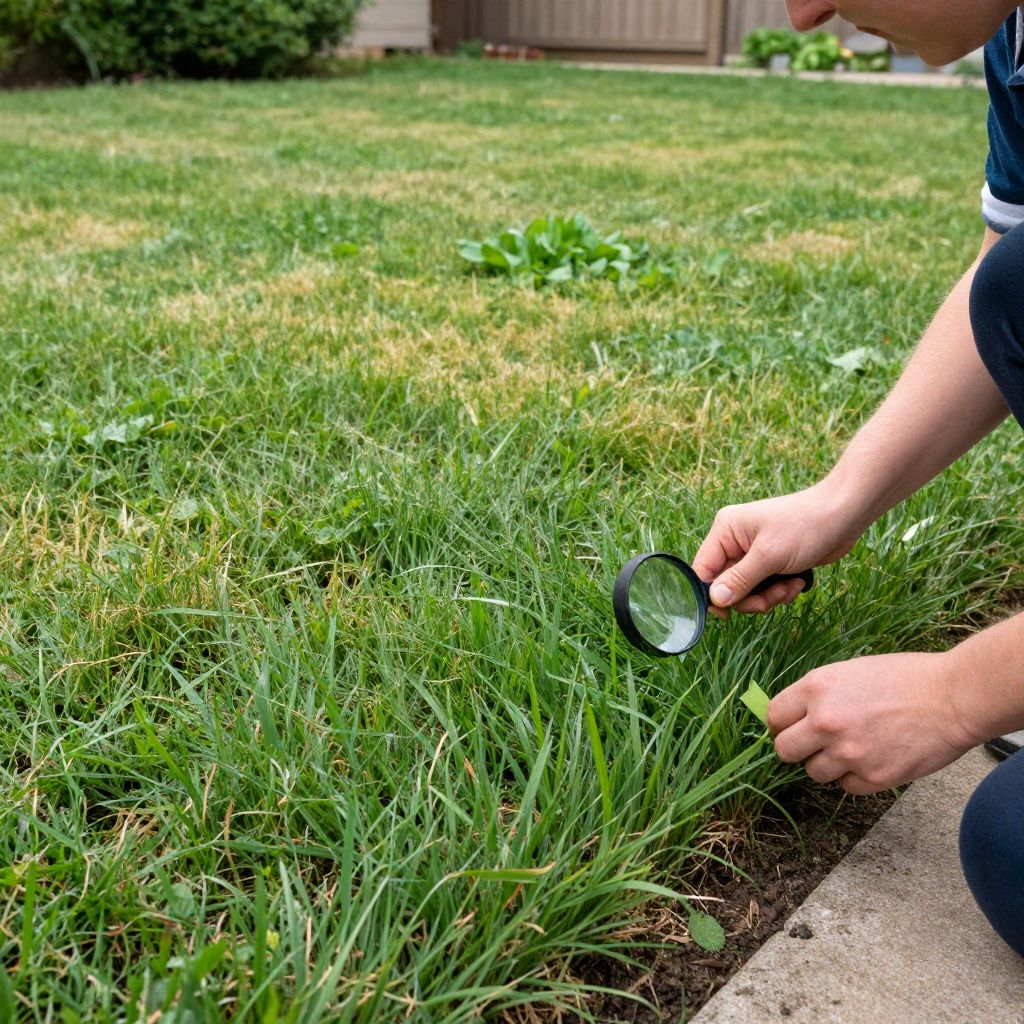
If you’re asking, “What kind of grass do I have?” the fastest answer comes from looking closely at the blades, growth habit, seedhead, and how the lawn behaves through the seasons. Those clues usually tell you whether you have a cool-season turfgrass, a warm-season turfgrass, or a mix of several grasses.
Once you identify the grass type, you can mow, water, fertilize, overseed, and repair it correctly. That matters because the right care for Kentucky bluegrass is not the same as the right care for Bermuda grass, and guessing often leads to thin turf, weeds, or patchy growth.
What kind of grass do I have?
You likely have one of two broad groups: cool-season grasses such as tall fescue, Kentucky bluegrass, ryegrass, or fine fescue, or warm-season grasses such as Bermuda grass, zoysia, centipede grass, or St. Augustine grass. The easiest way to narrow it down is by leaf width, texture, growth pattern, seedheads, and whether the lawn grows best in spring/fall or summer.
How to identify your grass step by step
Start with a close look at the plant, not the whole lawn. Many lawns contain more than one grass, plus weeds, so identifying a few representative patches is more reliable than making a guess from a distance.
- Look at the blade width and texture. Fine blades point toward grasses like fine fescue or Bermuda; broader blades may suggest tall fescue or St. Augustine.
- Check the growth habit. Does it spread by runners above or below ground, or does it grow in clumps?
- Notice the color and density. Some grasses are naturally blue-green, others bright green, and some form very dense mats.
- Inspect the seedheads. Seedheads can be a strong clue in spring or early summer.
- Watch seasonal growth. A lawn that greens up in cool weather is usually cool-season grass; one that thrives in heat is usually warm-season grass.
Blade shape and texture
Run your fingers along the leaf blades. Fine-textured grasses feel soft and narrow, while coarse grasses feel wider and stiffer. Tall fescue is usually broader and rougher than Kentucky bluegrass. Bermuda grass is often very fine and wiry, while St. Augustine has noticeably wider blades.
Growth pattern: clumps or spreading runners
Growth habit is one of the best clues. Some grasses form upright bunches, while others spread aggressively by stolons or rhizomes.
- Bunch-type grasses: tall fescue, perennial ryegrass, many fine fescues.
- Rhizome spreaders: Kentucky bluegrass.
- Stolon spreaders: Bermuda grass, St. Augustine, centipede, zoysia.
If you see stems creeping across the soil surface and rooting at nodes, you are likely dealing with a spreading grass. That matters because spreading grasses can fill in bare spots more readily, but they can also invade garden beds.
Seedheads and flowering stems
Grass seedheads are often overlooked, but they can be very helpful. Kentucky bluegrass often produces a loose, open seedhead that can look a little like a tiny fan. Perennial ryegrass tends to show a narrow, upright seedhead. Bermuda grass often produces finger-like seedheads that radiate from one point.
Seasonal behavior
Think about when the lawn looks best. Cool-season grasses usually grow strongly in spring and fall, then slow down in summer heat. Warm-season grasses wake up later in spring, love summer heat, and go dormant or brown in cool weather.
- Cool-season clue: stays greener in cool weather and may struggle in hot, dry summers.
- Warm-season clue: thrives in heat but browns with frost or prolonged cool weather.
Common lawn grasses and how to tell them apart
If you are still unsure, compare your lawn to the most common turfgrasses below. These are not perfect rules, but they are practical enough for home gardeners making a field identification.
Cool-season grasses
- Kentucky bluegrass (Poa pratensis): medium-fine blades, soft feel, rich green color, spreads by rhizomes, often forms a dense lawn.
- Tall fescue (Festuca arundinacea): broader blades, coarse texture, clump-forming, good heat and drought tolerance once established.
- Perennial ryegrass (Lolium perenne): shiny underside on blades, fine-to-medium texture, bunch-type growth, quick to establish.
- Fine fescues (Festuca spp.): very fine, narrow blades, often shade-tolerant, can look wispy compared with other turfgrasses.
Warm-season grasses
- Bermuda grass (Cynodon dactylon and hybrids): very fine blades, aggressive spreading runners, loves sun and heat, can form a tight, low lawn.
- Zoysia grass (Zoysia spp.): medium-fine texture, dense and carpet-like, slower to establish, tolerates heat and some drought.
- St. Augustine grass (Stenotaphrum secundatum): broad blades, coarse texture, spreads by stolons, common in warm coastal or southern areas.
- Centipede grass (Eremochloa ophiuroides): light green, medium-fine texture, slow-growing, low fertility needs, spreads by stolons.
Simple tests you can do at home
A few hands-on checks can help you identify your grass more confidently. Use a sharp knife or small trowel to take a small sample, including leaves, stems, and roots.
The runner test
Look for above-ground runners, called stolons, or below-ground runners, called rhizomes. If the grass spreads horizontally and roots at nodes, it is not just a bunch-type grass. That often points to Bermuda, zoysia, St. Augustine, or Kentucky bluegrass.
The blade-width test
Measure a few blades with a ruler if needed. Very fine blades are often less than 1/8 inch wide, while broader blades may be 1/4 inch or more. Width alone does not identify the grass, but it helps narrow the list.
The pull test
Gently tug on a small patch. If the grass resists because it is anchored by runners, it may be a spreading type. If it lifts in a clump, it may be a bunch grass or a patch with shallow roots from stress.
The shade and sun check
Notice where the grass thrives. Fine fescue often performs better in shade than Bermuda grass, which usually needs strong sun. St. Augustine handles some shade better than many warm-season grasses, while tall fescue is often a strong all-around choice for mixed light.
Why identification matters for lawn care
Knowing your grass type helps you choose the right mowing height, watering approach, and repair method. It also prevents common mistakes like scalping a lawn that needs taller mowing or overseeding a warm-season lawn at the wrong time of year.
- Mowing: different grasses have different ideal heights.
- Watering: some grasses prefer deeper, less frequent watering; others need more consistent moisture when establishing.
- Fertilizing: warm-season and cool-season lawns have different feeding windows.
- Overseeding: some lawns accept overseeding well, while others are usually repaired by plugs, sod, or sprigs.
Typical care differences once you know the grass
These are general guidelines, not rigid rules. Your local climate, soil type, sun exposure, and lawn age all affect what your grass needs.
Cool-season lawn care basics
Cool-season grasses usually respond best to maintenance in spring and fall. They often benefit from mowing a bit higher during heat and drought, and they may need more attention to irrigation during summer stress.
- Mow regularly so you remove only about one-third of the leaf blade at a time.
- Water deeply when needed rather than giving tiny daily sprinkles.
- Overseed thin areas in the season when the grass is actively growing in your climate.
- Keep an eye out for summer patch, dollar spot, and other lawn diseases if the turf is stressed.
Warm-season lawn care basics
Warm-season grasses usually grow most strongly in hot weather. They can be excellent choices for sunny sites, but they often look poor or dormant in cool weather.
- Wait until the grass is actively growing before major repairs or feeding.
- Keep mowing height appropriate for the species; many warm-season grasses tolerate lower mowing than cool-season types.
- Do not panic if the lawn browns after cold weather; dormancy is normal for many warm-season grasses.
- Watch for chinch bugs, grubs, and fungal issues in stressed lawns.
Common mistakes when trying to identify grass
Misidentification is common, especially when a lawn contains weeds, mixed grass seed, or patches that have been stressed by shade, drought, or mowing. A damaged lawn can look very different from a healthy one.
- Judging from color alone. Fertility, water, and season can change color dramatically.
- Ignoring mixed lawns. Many lawns are a blend of grasses, especially after overseeding.
- Confusing weeds with turf. Crabgrass, nutsedge, and other weeds can mimic lawn texture at a glance.
- Cutting too short before identifying. Scalping removes useful clues like blade shape and seedheads.
Troubleshooting if your lawn looks patchy or unhealthy
If you are asking what kind of grass you have because the lawn is failing, the problem may be more than identification. Stress from compacted soil, poor drainage, shade, pests, or mowing mistakes can make any turfgrass look thin.
Patchy growth
Patchiness can come from shade, worn traffic areas, dog spots, drought, or disease. Check whether the thin area matches a change in sun exposure or soil moisture before assuming the grass type is wrong.
Weeds taking over
Weeds often move into thin turf. Once you identify the grass, you can improve density with the right mowing height, watering, and seasonal repair method. Dense turf is one of the best weed suppressors.
Brown areas
Brown does not always mean dead. Warm-season grasses go dormant in cool weather, and cool-season grasses can brown during summer heat or drought. Scratch the crown and stems; green tissue below the surface usually means the plant is still alive.
When to call in extra help
If you still cannot determine the grass type, take a clear close-up photo of the blade, the whole patch, and any seedheads. A local extension office, garden center, or turf professional can often identify it quickly from a sample.
Bring a small sample in a sealed bag with roots, stems, and leaves attached. Include a note about sun exposure, irrigation, mowing height, and whether the lawn greens up in cool weather or hot weather. Those details make identification much easier.
Quick checklist for identifying your grass
- Look at blade width and texture.
- Check whether it grows in clumps or spreads by runners.
- Note the color and density.
- Watch when it grows best during the year.
- Photograph the seedheads if present.
- Compare the sample to common cool-season and warm-season grasses.
Once you know what kind of grass you have, you can care for it with much more confidence. If you want to keep learning, a good next step is reading about lawn care basics from a university extension or general lawn maintenance guidance to match mowing, watering, and seasonal care to your turfgrass type.