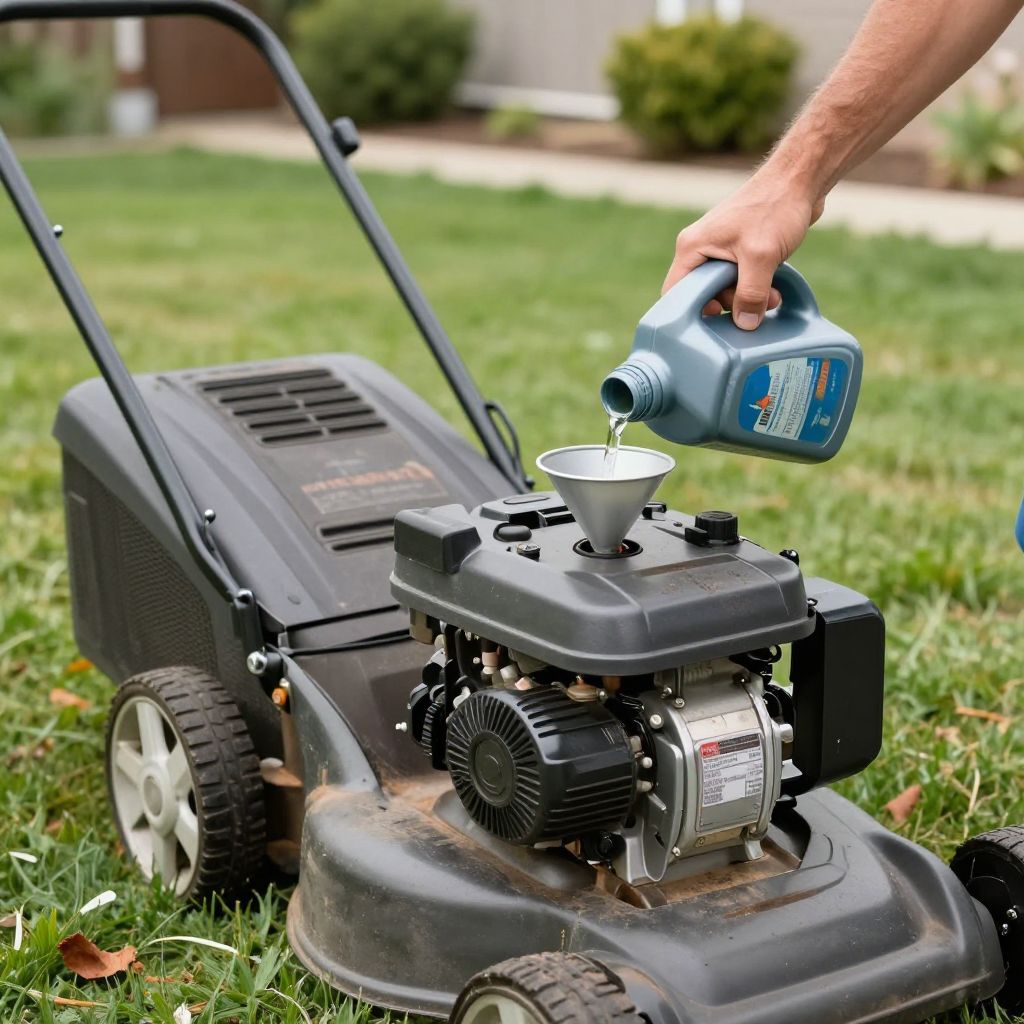
What kind of oil for lawn mower should you use? The short answer is: the oil recommended in your mower’s owner’s manual, usually SAE 30, 10W-30, or a synthetic 5W-30 depending on engine type and outdoor temperature. The right choice helps the engine start easily, run smoothly, and last longer.
If you’ve ever stared at a bottle of oil in the store and wondered which one belongs in your mower, you’re not alone. The best oil depends on whether your mower has a 4-stroke or 2-stroke engine, your climate, and the manufacturer’s instructions.
What kind of oil for lawn mower should you use?
Most walk-behind lawn mowers with 4-stroke engines use SAE 30 for warm weather, while 10W-30 works well across a wider temperature range. In cooler conditions, a synthetic 5W-30 is often a better choice. Always check the owner’s manual first, because engine design and climate matter more than guesswork.
First, identify your mower engine type
Before buying oil, confirm whether your mower has a 4-stroke engine or a 2-stroke engine. This is the most important step, because they use different lubrication systems and different oil products.
4-stroke mower engines
Most modern push mowers, many self-propelled mowers, and many riding mowers use 4-stroke engines. These engines have a separate oil reservoir and use standard engine oil.
2-stroke mower engines
Some older or smaller equipment uses a 2-stroke engine. These require oil mixed with fuel, not oil poured into a crankcase. If you have a 2-stroke mower, use only the mix ratio and oil type listed by the manufacturer.
If you are unsure, check the manual or the engine label before adding anything. Using the wrong oil can cause hard starting, smoking, poor lubrication, or engine damage.
Common oil types for lawn mowers
There is no single “best” oil for every mower, but a few types are common and reliable for home use.
- SAE 30: A common choice for warm-weather mowing and many small 4-stroke engines.
- 10W-30: A versatile multi-viscosity oil that handles a broader temperature range.
- 5W-30 synthetic: Often helpful in cooler weather and for easier starting.
- 2-stroke oil: Used only in engines designed for fuel-oil mixing.
What the oil numbers mean
The numbers describe how the oil flows at different temperatures. A lower first number, such as 5W, usually means easier cold-weather flow. A higher single grade like SAE 30 is often fine in warmer conditions but may be thicker when starting in cool weather.
How temperature affects mower oil choice
Climate matters. A mower used in a hot summer yard has different needs than one stored in a cool garage and started on chilly spring mornings.
- Warm climates: SAE 30 is often suitable for regular mowing season use.
- Variable climates: 10W-30 is a practical all-purpose option.
- Cooler spring or fall use: 5W-30 synthetic can improve starting and flow.
If your area has hot afternoons and cool mornings, a multi-viscosity oil may be more forgiving than a single-grade oil. If you mow only during the warmest part of the season, SAE 30 may be perfectly fine if your manual approves it.
How to check and change lawn mower oil
Changing oil is one of the simplest maintenance jobs you can do, and it pays off in better engine life. Work on a level surface and let the engine cool before you begin.
- Turn off the mower and disconnect the spark plug wire for safety.
- Clean around the oil fill cap and drain area so dirt does not enter the engine.
- Drain the old oil into a suitable container, following your mower’s design.
- Replace the drain plug if your mower has one.
- Add the recommended oil slowly, checking the dipstick often.
- Stop at the full mark; do not overfill.
- Wipe up spills and recycle used oil properly.
Some mowers do not have a drain plug and are designed to be tipped for draining. Follow the manual carefully, because tipping the mower the wrong way can flood the air filter or carburetor with oil.
How much oil does a mower need?
Capacity varies by engine size and model, so do not rely on a universal amount. Many push mowers take less than a quart, but the exact fill level should be confirmed with the dipstick or manual. Never guess by pouring in a full bottle.
Signs you may be using the wrong oil
If your mower behaves oddly after an oil change, the oil type or level may be part of the problem. Look for these common warning signs:
- Hard starting, especially in cool weather
- Excessive smoke from the exhaust
- Rough running or loss of power
- Oil leaking from the air filter housing
- Oil level reading too high or too low on the dipstick
Too-thick oil can make starting harder in cool weather. Too-thin oil, or oil that is not approved for your engine, may not protect moving parts well enough under load.
Common mistakes to avoid
Many mower problems come from simple maintenance errors rather than major mechanical failure. Avoid these common mistakes when choosing oil for your lawn mower.
- Using car oil without checking the label: Some car oils contain additives that may not be ideal for small engines.
- Overfilling the crankcase: Too much oil can cause smoking, fouled plugs, and air filter contamination.
- Ignoring the manual: Manufacturer guidance matters more than general advice.
- Mixing 2-stroke and 4-stroke oils: These are not interchangeable.
- Skipping oil changes: Old oil breaks down and collects dirt and combustion byproducts.
When to change mower oil
Oil change intervals vary by engine and how hard you use the mower. A new mower often needs an early oil change after the break-in period, while regular maintenance may be based on mowing hours or seasonal use.
For many home gardeners, a practical approach is to check oil before each mowing session and change it at least once per season if the manual recommends it. If you mow large areas, work in dusty conditions, or use the mower heavily, you may need more frequent service.
Seasonal maintenance tip
Before the main mowing season begins, inspect the oil level and condition, clean the air filter, and sharpen the blade. Clean oil and a sharp blade both help the engine work less hard.
How to choose oil for different mower situations
Here is a simple way to narrow down the right oil quickly:
- Newer 4-stroke mower in warm weather: SAE 30 is often a standard choice if approved by the manual.
- 4-stroke mower used across changing temperatures: 10W-30 is often the most flexible option.
- Mower started in cool spring weather: 5W-30 synthetic may help with easier starting.
- 2-stroke mower: Use the specified fuel-oil mix only.
- Older mower with uncertain history: Check the engine label and manual before changing anything.
If your mower is older and you cannot find the manual, look for the engine model number and search the manufacturer’s oil recommendation. That is safer than choosing based only on what another mower uses.
Troubleshooting after an oil change
If the mower runs poorly after an oil change, do not assume the engine is failing. Start with the basics.
- Check that the oil level is between the add and full marks.
- Make sure the spark plug wire is reconnected.
- Inspect the air filter for oil saturation.
- Confirm that the correct oil grade was used.
- Look for spills around the fill cap or drain plug.
If the mower smokes heavily after service, it may have been overfilled or tipped incorrectly. Let the engine sit, recheck the level, and clean or replace the air filter if needed.
Practical buying tips for home gardeners
You do not need the most expensive bottle on the shelf, but you should buy oil that clearly matches your engine’s needs. Read the label carefully and look for small-engine compatibility if your manual recommends it.
- Buy the viscosity listed in the manual first.
- Choose synthetic if you need better cold-start performance or longer storage stability.
- Keep oil sealed and stored in a cool, dry place.
- Label opened containers with the purchase date so you can track age.
Fresh, correctly stored oil is a simple way to protect your mower from unnecessary wear. It also makes routine maintenance faster and less frustrating.
Conclusion
The right answer to what kind of oil for lawn mower is the one your manual recommends, matched to your engine type and local temperature. For many 4-stroke mowers, SAE 30, 10W-30, or 5W-30 synthetic are the most common choices. Check the dipstick, avoid overfilling, and change the oil regularly for smoother mowing and a longer-lasting engine.
For more practical mower guidance, you may also find this helpful: what kind of oil does a lawn mower take.