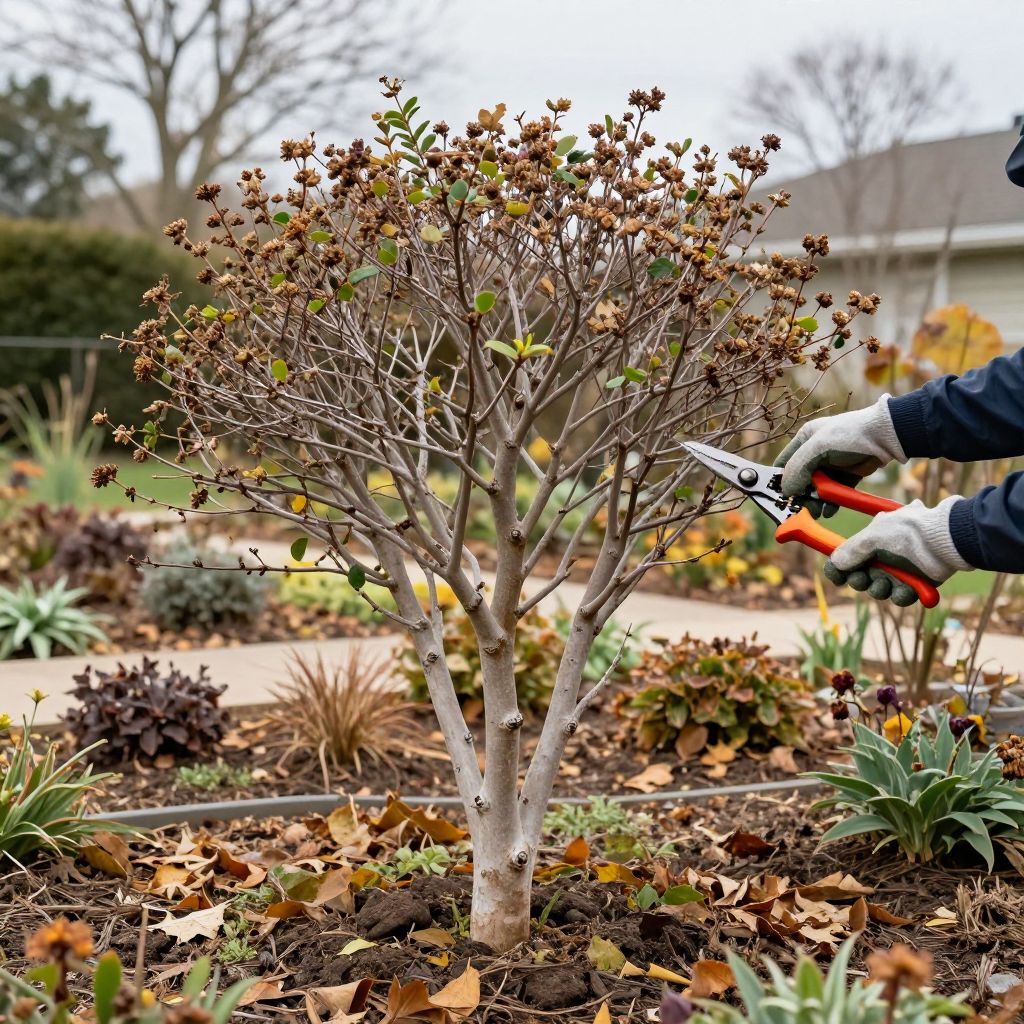
If you’re wondering when is it too late to prune crepe myrtles, the short answer is: once the plant has started active spring growth, heavy pruning is usually too late. Late pruning can remove flower buds, encourage weak new shoots, and stress the tree or shrub at the wrong time.
The best time to prune crepe myrtle is during late winter while the plant is dormant, before new leaves and buds expand. If you missed that window, you can still do light cleanup pruning, but it’s better to avoid hard cuts until the following dormant season.
When Is It Too Late To Prune Crepe Myrtles?
It is generally too late to prune crepe myrtles after new growth has begun in spring, especially once leaves are fully emerging and flower buds are forming. At that point, major pruning can reduce blooms and create awkward, weak regrowth. Light deadheading or removing damaged branches is still fine.
Why Timing Matters for Crepe Myrtle Pruning
Crepe myrtles bloom on new wood, which means they make flower buds on the current season’s growth. Pruning at the right time helps shape the plant without sacrificing too many flowers. Pruning at the wrong time can trigger a flush of long, thin shoots that are more prone to breakage.
What happens if you prune too late?
- Fewer blooms because you remove developing flower wood.
- More tender regrowth that can be damaged by wind or heat.
- Uneven shape from rushed cuts made after growth has started.
- Extra stress on young or recently transplanted plants.
The Best Time to Prune Crepe Myrtles
The ideal pruning window is late winter to very early spring, while the plant is still dormant and before buds swell. In many climates, that means roughly from the coldest part of winter until just before new growth begins. If your winters are mild, the window may be shorter.
How to tell the pruning window is closing
Watch for these signs that it may be too late for major pruning:
- Buds are swelling and turning green.
- Leaves are unfolding on the tips of branches.
- New shoots are already several inches long.
- Flower clusters are beginning to form on fresh growth.
What You Can Still Prune Safely in Spring or Summer
If you missed the dormant season, don’t panic. You can still make selective, light cuts to improve plant health without reshaping the entire plant. The goal is to avoid stimulating a big flush of new growth or removing too much flowering wood.
Safe late-season pruning tasks
- Remove dead, broken, or diseased wood.
- Cut off crossing branches that rub together.
- Take out suckers from the base if they are unwanted.
- Deadhead spent flower clusters if you want a tidier look.
- Remove a few small branches to improve air movement.
Avoid “topping” or hard heading cuts once the plant is actively growing. That old practice often leads to ugly knuckles of regrowth and weak stems.
How to Prune Crepe Myrtles the Right Way
Good pruning is selective, not severe. You are aiming to improve structure, remove problems, and preserve the plant’s natural form. A healthy crepe myrtle usually needs far less cutting than many people think.
Step-by-step pruning approach
- Start by removing dead, damaged, or diseased branches.
- Cut out any stems that cross or crowd the center.
- Thin out a few weak shoots from the base if needed.
- Shorten only branches that truly need shaping, making cuts back to a side branch or bud.
- Step back often and keep the canopy balanced.
Use clean, sharp hand pruners for small stems, loppers for thicker branches, and a pruning saw for larger wood. Clean tools help reduce the spread of disease and make smoother cuts.
Where to make the cut
- Cut just above a bud or side branch when shortening a stem.
- Remove whole branches at their point of origin when thinning.
- Do not leave long stubs, which can die back and look messy.
- Do not cut flush into the trunk, which can damage the branch collar.
Common Crepe Myrtle Pruning Mistakes to Avoid
Many pruning problems come from trying to force a crepe myrtle into a shape it naturally does not want. These plants look best when they are trained lightly and allowed to keep their branching structure.
1. Topping the plant
Topping means cutting all main stems to the same height. This creates weak, crowded regrowth and often leads to a lollipop look that is hard to fix later.
2. Pruning too late in the season
If you prune after growth has started, you may remove the season’s flower buds and force the plant to spend energy replacing lost shoots.
3. Removing too much at once
Taking off a large percentage of the canopy can stress the plant, especially if it is young, newly planted, or already struggling with drought or heat.
4. Ignoring the plant’s natural form
Crepe myrtles usually look best with a graceful multi-stemmed shape or a clean single trunk, depending on how they were trained. Prune to enhance that form rather than fighting it.
Seasonal Pruning Guide by Plant Condition
The right answer to “when is it too late to prune crepe myrtles” also depends on the plant’s age, health, and the reason you are pruning. A mature, established tree can handle more selective work than a stressed young plant.
Young crepe myrtles
For young plants, focus on structure. Remove weak, low, or crossing stems during dormancy, but avoid heavy cuts that slow establishment. If you miss the dormant window, limit yourself to minor corrections.
Mature crepe myrtles
Established plants can usually tolerate selective thinning and cleanup, but they still should not be severely cut back once spring growth is underway. Mature plants benefit most from annual light maintenance.
Neglected or overgrown plants
If a crepe myrtle has been badly pruned in the past, do not try to fix everything in one season during active growth. Rebuild the plant gradually over several dormant seasons so it can recover without shock.
How Climate and Region Affect Pruning Timing
Because climates vary, the calendar date matters less than the plant’s growth stage. In warmer regions, crepe myrtles may break dormancy earlier, so the pruning window closes sooner. In cooler areas, you may have a little more time before buds swell.
Use the plant itself as your guide. If you see fresh leaves, swelling buds, or active shoot growth, you are likely past the best time for major pruning, even if the calendar says winter is not over yet.
What to Do If You Missed the Best Pruning Window
If you realize it is too late to prune crepe myrtles heavily, shift your goal from reshaping to maintenance. The plant will usually recover better if you make only the cuts that are truly necessary.
Best next steps
- Remove broken or dead wood first.
- Wait until next dormant season for major shaping.
- Support healthy growth with even moisture during dry spells.
- Mulch around the base, keeping mulch a few inches away from the trunk.
- Watch for pests or disease on stressed plants.
Watering, Mulch, and General Care After Pruning
After pruning, crepe myrtles do best with steady but not excessive care. Newly cut plants can be more sensitive to drought, especially in hot weather. Water deeply during dry periods rather than giving frequent shallow sprinklings.
A 2- to 3-inch layer of mulch helps moderate soil temperature and conserve moisture. Keep mulch off the trunk to reduce rot and pest problems. If your soil drains poorly, avoid overwatering, since soggy roots can weaken the plant.
Common Problems to Watch For After Pruning
Most crepe myrtles recover well from light pruning, but stressed plants can show a few issues. Catching problems early makes them easier to manage.
Watch for these signs
- Lots of thin, upright shoots after a hard cut.
- Reduced flowering compared with previous years.
- Sunscald on branches suddenly exposed to strong light.
- Powdery mildew in humid weather, especially if air circulation is poor.
- Scale insects or aphids on tender new growth.
If you notice disease or pest buildup, improve airflow, avoid excess nitrogen, and remove badly affected growth as needed. For persistent issues, identify the specific problem before treating it.
Practical Rule of Thumb for Home Gardeners
If you want a simple guideline, prune crepe myrtles during dormancy before spring growth begins. Once leaves are out and new shoots are actively growing, it is too late for major pruning in that season. At that stage, stick to cleanup cuts only.
When in doubt, prune less rather than more. Crepe myrtles usually look better, bloom better, and stay healthier when they are lightly thinned and shaped instead of heavily cut back.
Conclusion
If you have been asking when is it too late to prune crepe myrtles, the safest answer is: once spring growth is underway, stop major pruning and limit yourself to cleanup work. Save any larger shaping for the next dormant season, when the plant can respond with less stress and better flowering.
For more seasonal plant-care guidance, it also helps to read about crepe myrtle pruning basics and other ornamental tree care tips.