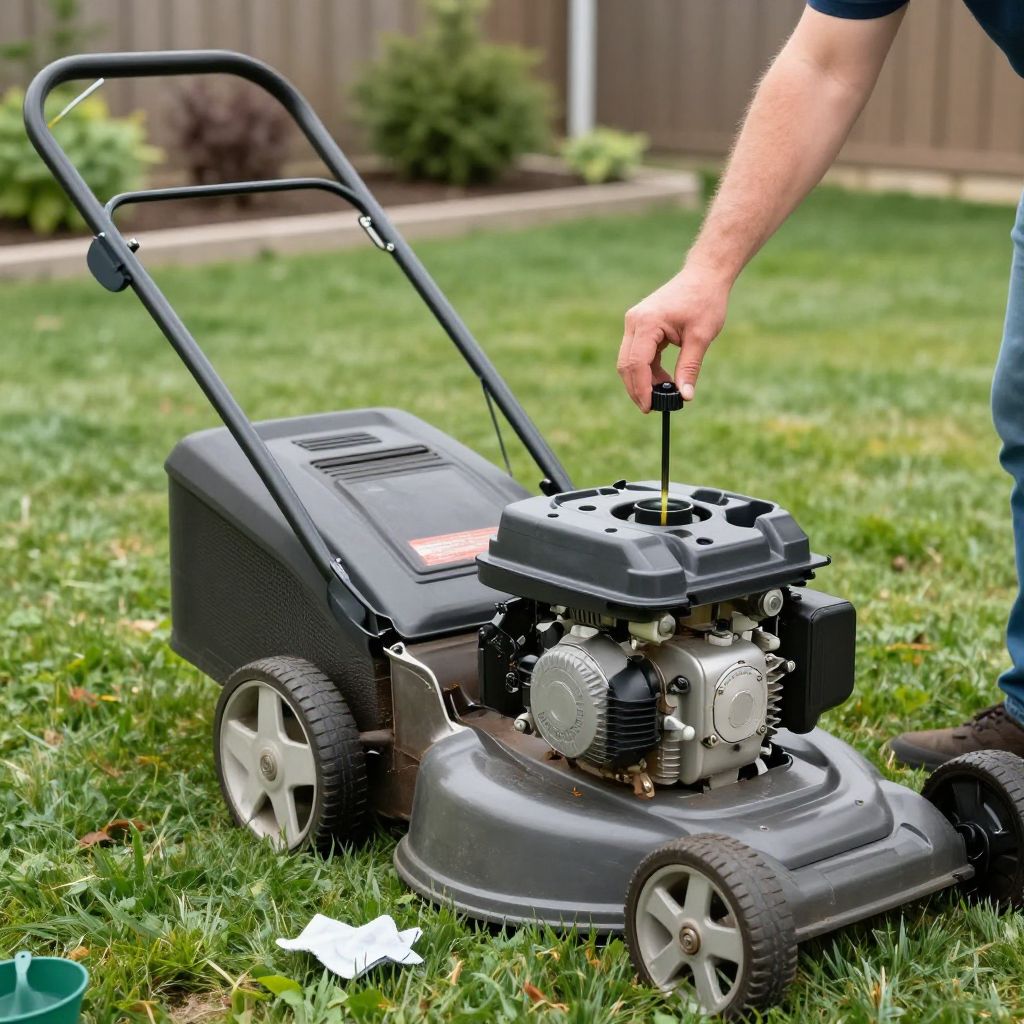
What kind of oil goes in a lawn mower? The short answer is: use the oil grade listed in your mower’s owner’s manual, because the right choice depends on the engine type, outdoor temperature, and whether your mower has a 4-stroke or 2-stroke engine. In many modern walk-behind mowers, that means SAE 30, 10W-30, or synthetic 5W-30.
Using the wrong oil can make starting harder, increase wear, or cause poor performance in hot or cold weather. A few minutes spent checking the manual and the oil level can help your mower run smoothly all season.
What kind of oil goes in a lawn mower?
Most 4-stroke lawn mower engines use SAE 30 in warm weather, while 10W-30 or 5W-30 synthetic may be better in cooler conditions or for wider temperature swings. Always check the owner’s manual first, because some engines have specific oil requirements that override general advice.
Start with the engine type
The first step is knowing whether your mower has a 4-stroke engine or a 2-stroke engine. This matters because they use oil differently, and putting the wrong oil in the wrong engine can cause serious damage.
4-stroke mower engines
Most push mowers, self-propelled mowers, and many riding mowers use 4-stroke engines. These engines have a separate crankcase oil reservoir, so you add oil directly to the engine oil fill or dipstick tube.
2-stroke mower engines
Some older or specialty mowers use 2-stroke engines. These do not have a separate oil sump; instead, oil is mixed with gasoline at a specific ratio. If your mower is 2-stroke, do not pour regular engine oil into the crankcase unless the manual specifically says to do so.
Common oil types for lawn mowers
For most home lawn mowers, the main oil choices are straightforward. The best one depends on temperature and the manufacturer’s recommendation.
- SAE 30 — A common choice for warmer weather and many standard 4-stroke mowers.
- 10W-30 — Better for variable temperatures and cooler starts, though some engines may use a little more oil with this grade.
- 5W-30 synthetic — Often a good all-around option, especially if you mow in cooler weather or want easier starting.
- 2-stroke oil — Only for engines designed to mix oil with fuel.
If the manual gives a specific oil specification, follow that first. A mower engine is small, but it still depends on the right lubrication to stay cool and reduce wear.
How temperature affects mower oil
Outdoor temperature is one of the biggest factors in choosing mower oil. Oil that works well in summer heat may be too thick for cold spring starts, while lighter oil can be less ideal in high heat if the engine was designed for a heavier grade.
Warm weather use
In hot conditions, many mowers run well on SAE 30, especially if the manufacturer recommends it. This is a common summer choice for standard residential mowers.
Cool weather use
If you mow in early spring or late fall, a multigrade oil such as 10W-30 or 5W-30 may help with easier starting and smoother lubrication during cold starts. Synthetic oil can be especially useful when temperatures swing from cool mornings to warm afternoons.
Why the manual matters
Some engines are designed for a specific viscosity range. If your manual lists acceptable oil grades for different temperatures, use that chart rather than guessing.
How to check the oil in a lawn mower
Checking the oil is a simple maintenance task, but it should be done correctly so you get an accurate reading and avoid overfilling.
- Park the mower on level ground.
- Turn off the engine and let it cool.
- Remove the dipstick or oil cap, depending on the model.
- Wipe the dipstick clean, then reinsert it fully.
- Remove it again and read the oil level.
- Add small amounts of oil if needed, checking often.
Most mowers have a fill range marked on the dipstick. Do not overfill, because too much oil can cause smoking, foaming, or engine problems.
How to change lawn mower oil
Changing oil at the right interval helps keep the engine cleaner and better protected. The exact schedule varies by mower model, engine size, and how often you use it.
Basic oil change steps
- Run the engine briefly so the oil flows more easily, then shut it off.
- Disconnect the spark plug wire for safety.
- Drain the old oil into a suitable container, following your mower’s design.
- Replace the drain plug or close the drain system.
- Add the recommended oil slowly.
- Check the level with the dipstick and adjust if needed.
Use a clean funnel to avoid spilling oil onto the deck or into the grass. If oil is spilled, wipe it up promptly to reduce slipping hazards and prevent debris from sticking to the mower.
Signs you may be using the wrong oil
When the wrong oil is used, the mower may still run, but it often shows warning signs. Catching these early can prevent bigger engine problems.
- Hard starting, especially in cooler weather
- Excessive smoke from the muffler
- Oil leaking or blowing out of the engine
- Unusual engine noise or rough running
- Oil looking very dirty very quickly
- Low oil pressure symptoms on mowers designed to show them
If the mower is smoking, first check whether it was overfilled. If the oil level is correct, confirm that the oil grade matches the manual and that the air filter is clean.
Common mistakes to avoid
Most oil problems in lawn mowers come from simple maintenance mistakes rather than major engine failures. These are the ones to watch for.
- Using car oil without checking the grade — Some car oils are fine, but the viscosity still has to match the mower’s needs.
- Overfilling the crankcase — Too much oil can cause smoking and poor performance.
- Mixing 2-stroke and 4-stroke systems — They are not interchangeable.
- Ignoring the manual — Manufacturer guidance should always come first.
- Running the engine with dirty oil — Old oil loses protection and can carry debris.
When synthetic oil makes sense
Synthetic oil is not required for every mower, but it can be a practical choice. It often performs well across a broader temperature range and may help with easier starting in cooler weather.
It can be especially useful if you:
- Mow in changing spring and fall temperatures
- Store the mower through seasonal transitions
- Want a more stable oil option for frequent use
- Have a mower manual that allows synthetic oil
Even so, synthetic oil is not a cure-all. If your manual specifies a certain oil grade or warns against a type, follow that guidance.
Seasonal mower oil tips
Your mowing season affects oil choice and maintenance timing. A mower used once in a while has different needs than one used weekly through hot weather.
Spring
Before the first mow, check the oil level and condition. Cold starts are easier with the right viscosity, especially if the mower was stored for winter.
Summer
Hot weather increases engine stress, so make sure the oil level stays within range. If the mower works harder in tall or damp grass, monitor it more often.
Fall
As temperatures drop, multigrade oil may start more easily. This is also a good time to change old oil before storage if the manual recommends it.
Storage
For off-season storage, clean oil and a clean air filter help protect the engine. Follow your mower’s storage instructions, especially if fuel treatment or fuel draining is recommended.
Troubleshooting oil-related mower problems
If your mower is not running well, oil is only one possible cause, but it is worth checking early. A few common issues have simple fixes.
- Engine smokes after oil change — The mower may be overfilled or tilted incorrectly during service.
- Oil level keeps dropping — Look for leaks, worn seals, or engine wear.
- Engine is hard to start — Oil may be too thick for the temperature, or the spark plug and air filter may need attention.
- Oil looks milky — Moisture may have entered the crankcase; change the oil and inspect storage conditions.
If a mower continues to consume oil or smoke after the correct oil and level are confirmed, it may need professional service.
Simple checklist before you mow
A quick pre-mow check can prevent most oil-related problems and keep your mower working reliably.
- Confirm the oil type in the manual
- Check the oil level on level ground
- Look for leaks under the mower
- Inspect the air filter
- Make sure the spark plug wire is secure
- Clean grass buildup from the deck and engine area
Conclusion
The best answer to what kind of oil goes in a lawn mower is simple: use the oil grade your manual recommends, with SAE 30, 10W-30, or 5W-30 synthetic being common choices for many 4-stroke mowers. Match the oil to the season, check the level regularly, and avoid overfilling.
If you want to keep your mower in good shape, check the manual now, inspect the oil before your next cut, and change it on schedule. For more mower maintenance guidance, you may also find this related reading useful: what kind of oil does a lawn mower take.