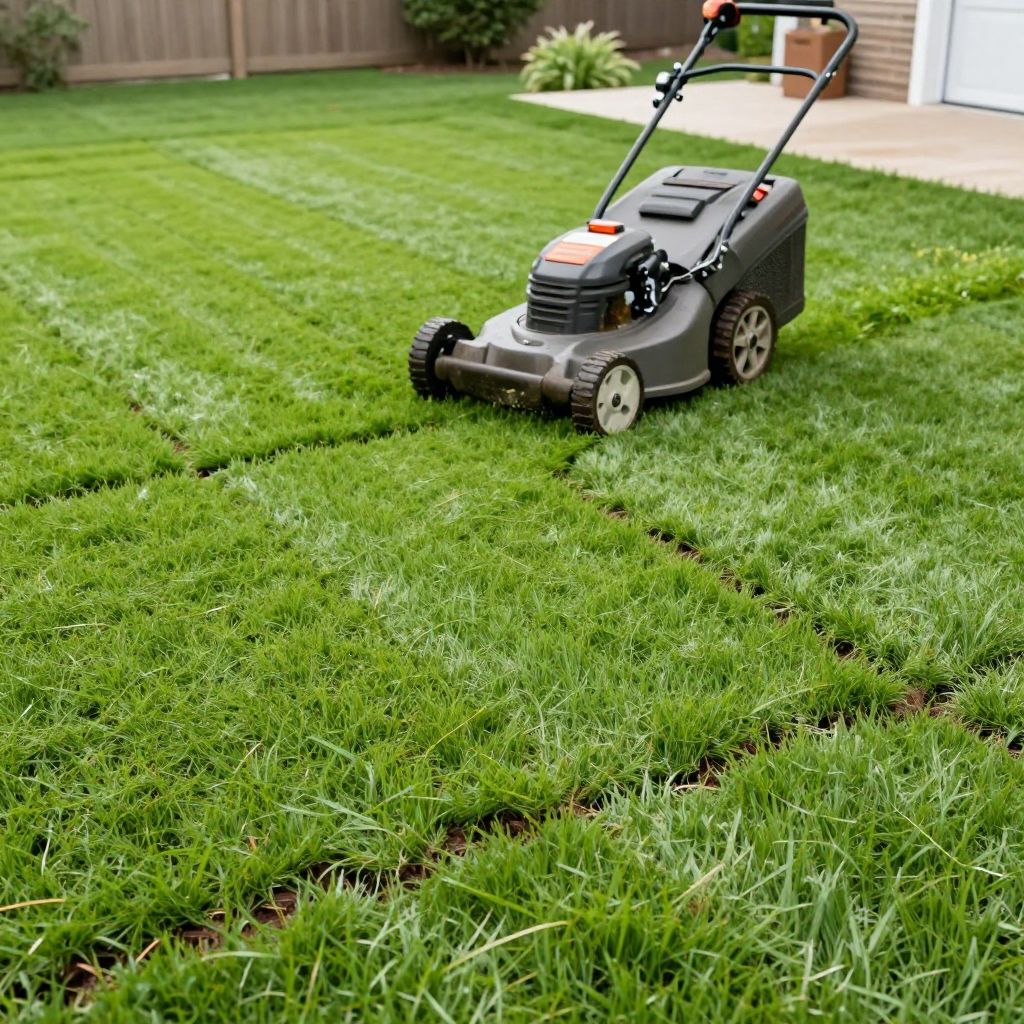
Wondering when to mow new sod without damaging it? The short answer is: wait until the sod has rooted enough that it resists a gentle tug, then mow when the grass is dry and tall enough to trim without removing too much at once.
New sod needs time to knit into the soil before it can handle mower traffic. Mowing too early can lift edges, shift seams, and stress tender roots, but waiting too long can make the grass flop over and grow unevenly.
When to mow new sod?
Mow new sod for the first time when the roots have started anchoring firmly, usually after about 2 to 4 weeks, depending on weather, grass type, and how well it was watered in. A good test is to try lifting a corner gently; if it resists, and the grass has reached about one-third taller than your target mowing height, it is usually ready.
How to tell if new sod is ready for its first mow
Time alone is not the best indicator. Root establishment matters more than the calendar, because cool weather, shade, compacted soil, or drought can slow rooting.
Simple readiness checks
- Root test: Tug lightly at a seam or corner. If the sod feels anchored, it is closer to mowing time.
- Height: Wait until the grass is about 1 to 1.5 inches taller than your intended mowing height.
- Surface firmness: The lawn should feel stable underfoot, not spongy or easily shifted.
- Dry blades: Mow only when the grass blades are dry to reduce clumping and tearing.
What affects rooting speed
- Season: Sod laid during active growth usually roots faster than sod laid in cool or very hot weather.
- Grass type: Warm-season and cool-season turfgrasses establish at different rates.
- Soil contact: Good contact between sod and prepared soil speeds rooting.
- Watering: Consistent moisture helps, but soggy soil can slow rooting and encourage disease.
- Sunlight: Full sun areas often establish faster than shaded spots.
How to mow new sod for the first time
The first mow should be gentle. Your goal is to trim the top growth, not scalp the lawn or force the mower over loose seams.
- Check that the sod is rooted and the surface is dry.
- Make sure the mower blades are sharp.
- Set the mower high so you remove only the top third of the grass blade.
- Use a lightweight mower if possible and avoid sharp turns.
- Mow in straight lines and keep traffic to a minimum.
- Leave clippings on the lawn only if they are light and evenly dispersed; otherwise, bag them.
Why mower height matters
New sod is still building energy reserves. Cutting too short reduces leaf area and can slow root growth, especially in hot weather. A higher cut helps the lawn stay cooler and recover faster.
Never remove more than one-third of the grass blade at a time. That rule is especially important with new sod, which is more vulnerable to stress than an established lawn.
Seasonal timing: when to mow new sod by weather conditions
The best mowing time depends more on growing conditions than on the date you installed the sod. Use the season as a guide, then adjust for your local climate.
Spring
Spring sod often roots well because temperatures are moderate and rainfall may help keep the soil evenly moist. Watch for fast top growth, especially on fertilized lawns, and be ready to mow once the sod is anchored.
Summer
Summer-installed sod may need extra caution. Heat can dry the soil quickly, and stressed sod is easier to damage. Mow later in the day only if the grass is dry and temperatures are not extreme; many gardeners prefer morning once dew has evaporated.
Fall
Fall is often an excellent time for sod establishment in many regions because cooler temperatures reduce stress. Growth may be slower, so the first mow may take longer to become necessary, but rooting can still be strong.
Winter or cool dormant periods
If sod is laid when growth is slow or dormant, mowing may not be needed for a while. Avoid mowing just because the calendar says so; wait until there is active growth and the sod has anchored properly.
Best mowing practices for new sod
Good mowing habits help new sod transition into a healthy lawn. A few careful passes can make the difference between a smooth establishment and a patchy, damaged surface.
Use sharp blades
Sharp blades cut cleanly instead of tearing the grass. Torn tips dry out more quickly and make the lawn look ragged.
Keep the mower light and steady
Heavy equipment can press into soft soil and shift seams. If the ground still feels soft, wait a few more days before mowing.
Change direction each time
Once the sod is established enough for regular mowing, vary your mowing direction to reduce wheel tracks and help the grass stand upright.
Do not mow wet sod
Wet blades stick together, clump under the mower, and can pull at the sod surface. Wet soil also increases the chance of rutting and seam separation.
Common mistakes when mowing new sod
Most early mowing problems come from impatience or mowing too aggressively. Avoid these common errors:
- Mowing too soon: Loose sod can lift, wrinkle, or shift.
- Cutting too short: Scalping weakens new turf and exposes soil.
- Using dull blades: Tearing the grass slows recovery.
- Mowing when the soil is saturated: This can create ruts and compact the root zone.
- Ignoring uneven seams: Raised edges can catch the mower and damage the lawn.
What to do if your new sod is growing unevenly
Uneven growth is common in the first few weeks. Some sections may root faster because of better sun exposure, soil contact, or drainage.
Patchy height differences
If one area grows faster, mow only when the slower areas are ready. You may need to raise the mower height and make a light pass rather than forcing a uniform cut too early.
Loose seams or lifted edges
Press seams back into contact with the soil and keep them moist. If the sod is still loose, delay mowing until it anchors better.
Yellowing or thinning after mowing
This can happen if the lawn was cut too short, mowed during heat stress, or not watered evenly during establishment. Increase mowing height and check irrigation coverage.
Watering, soil, and drainage before the first mow
Healthy mowing starts with healthy establishment. New sod needs consistent moisture to root, but it also needs oxygen in the soil.
- Keep the sod evenly moist during the establishment period, especially the top layer where roots are forming.
- Avoid puddling; standing water can slow rooting and invite disease.
- Check drainage if the lawn stays soggy for long periods.
- Do not over-amend after installation; disturbing new sod can weaken the bond with the soil below.
If you notice soft, muddy areas long after watering, the soil may be poorly drained or compacted. In that case, reduce watering frequency slightly and investigate the drainage problem before mowing heavily.
How often should you mow after the first cut?
Once new sod is established, follow normal mowing rhythm for your grass type and season. In active growth, that may mean mowing weekly or more often, but the exact schedule depends on how fast the lawn grows in your climate.
The key is consistency. Regular mowing at the proper height encourages denser turf and helps the lawn fill in quickly. Avoid letting the grass get too tall between cuts, because removing too much at once stresses the lawn.
Quick checklist before mowing new sod
- The sod resists a gentle tug.
- The surface feels firm, not loose or spongy.
- The grass is dry.
- The mower blades are sharp.
- The mower deck is set high enough to follow the one-third rule.
- The lawn is not waterlogged or muddy.
Conclusion
When to mow new sod comes down to one simple idea: wait until it is rooted, dry, and tall enough for a light first cut. If you are unsure, give it a few more days rather than rushing the job. A careful first mow helps your new lawn establish faster and stay healthier.
If you are maintaining the rest of your lawn equipment too, you may also want to read about what kind of oil a lawn mower takes so your mower is ready when your sod is.