Wondering when to cut new grass without damaging the young lawn? The right time depends on how the grass was established, how fast it is growing, and whether the roots are strong enough to handle mowing. Cutting too early can pull seedlings out of the soil, while waiting too long can make the grass flop over and thin out.
With a little timing and a few simple checks, you can mow new grass safely and help it thicken into a healthy lawn. The goal is to cut lightly, not short, and only when the grass is tall, rooted, and dry enough to mow cleanly.
When to cut new grass?
Cut new grass for the first time when it reaches about 3 to 4 inches tall and the roots are firmly anchored in the soil. For most lawns, that means waiting until seedlings resist a gentle tug and the ground is dry enough that the mower won’t sink or smear the surface.
How to tell new grass is ready for its first cut
Height alone is not enough. New grass should also be rooted well enough to stay in place when you mow.
Use the tug test
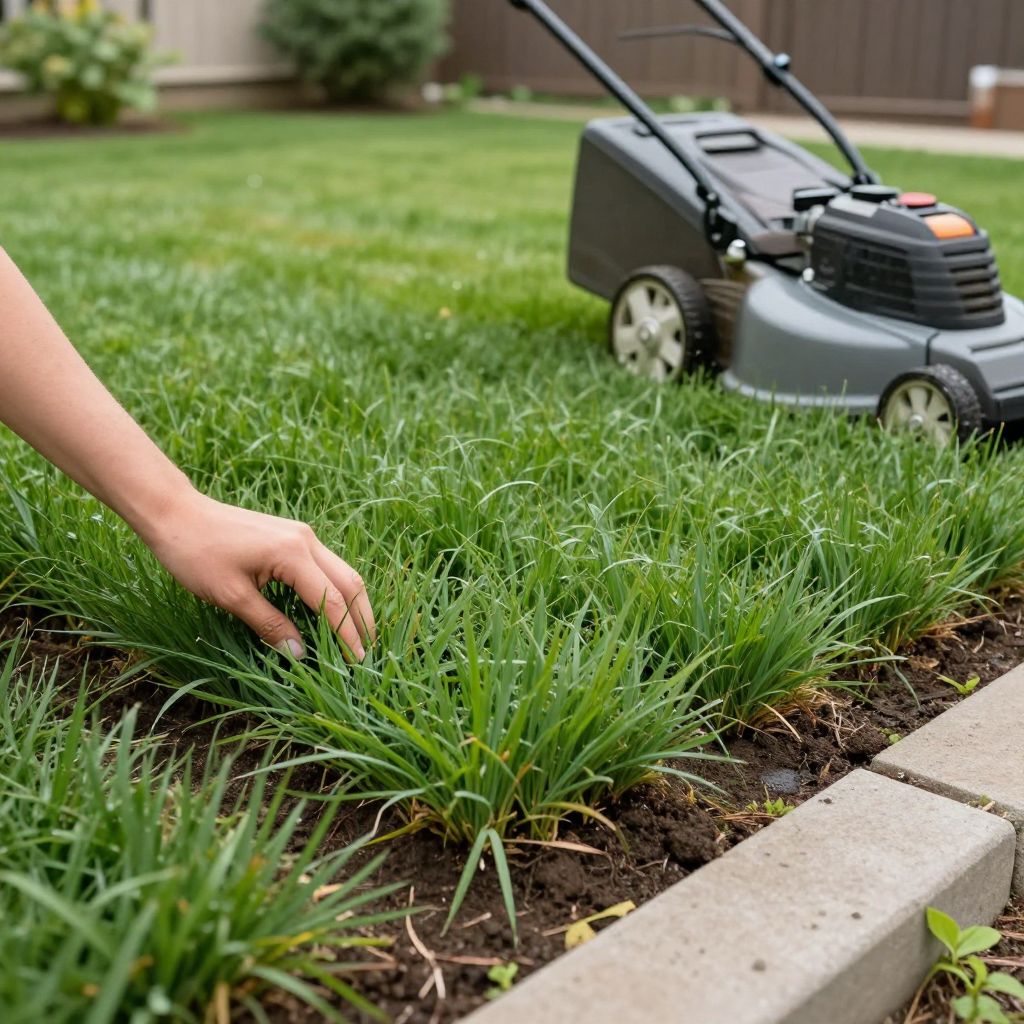
Gently grasp a small handful of grass and give it a light pull. If the seedlings lift easily, wait a few more days. If they stay put, the lawn is usually ready for a cautious first mow.
Check the soil surface
The soil should be firm, not muddy. Mowing on wet or soft ground can create ruts, compact the soil, and uproot tender seedlings.
Look at the growth pattern
When new grass starts to bend over or shade itself, it is often close to mowing height. That is a sign the lawn may benefit from a trim to encourage thicker growth.
Seasonal timing: when to mow new grass in spring, summer, or fall
The best mowing time depends on when you seeded or laid turf and what your local weather is doing. New grass grows fastest in mild temperatures and slows down in heat, drought, or cold.
Spring
Spring-seeded grass often needs its first cut sooner because moisture and mild temperatures encourage quick growth. Watch for rapid height gain, but avoid mowing if the soil is still wet from rain or irrigation.
Summer
Summer lawns can be tricky. Heat stress makes young grass more vulnerable, so mow only when the turf is actively growing and not wilted. If temperatures are high, let the grass recover from watering before cutting.
Fall
Fall is often ideal for establishing cool-season lawns because the weather is cooler and the soil stays warm enough for roots. New grass in fall may grow steadily, but it usually handles mowing better than seedlings in summer heat.
After laying sod
Sod can usually be mowed sooner than seeded grass, but only after the roots begin knitting into the soil. A light tug should meet resistance. If the sod shifts or lifts, wait longer before mowing.
How to mow new grass the right way
The first few cuts matter. A gentle mowing routine helps the lawn establish without stress.
- Wait until the grass is tall enough. Aim for 3 to 4 inches before the first cut unless your seed or sod supplier gives different guidance.
- Use a sharp mower blade. A dull blade tears tender leaves and leaves the lawn looking frayed.
- Remove only the top third. Never cut more than one-third of the blade length at a time.
- Mow when the grass is dry. Dry blades cut cleanly and are less likely to clump or pull.
- Keep the mower high. Set the cutting height higher than you would for an established lawn.
- Go slowly. A slower pace reduces strain on the mower and the new turf.
Why the one-third rule matters
Cutting too much at once removes too much leaf surface, which the plant needs for photosynthesis. New grass is still building roots, so heavy mowing can set it back quickly.
Common mistakes to avoid with new grass
Most first-mow problems come from trying to rush the process. These are the mistakes that cause the most trouble.
- Mowing too early: This can uproot seedlings or bruise young sod.
- Cutting too short: Scalping exposes soil, dries the lawn, and weakens young plants.
- Mowing wet grass: Wet clippings clump and the mower can drag seedlings out of place.
- Using a heavy mower on soft soil: This can compact the ground and leave tracks.
- Ignoring uneven spots: High and low areas can cause missed patches or scalping on bumps.
What to do before the first mow
A little preparation makes the first cut smoother and safer for the lawn.
Water wisely
Keep the soil evenly moist while the grass establishes, but avoid soggy conditions. If the lawn is wet enough to squish underfoot, wait to mow.
Clear debris
Pick up sticks, stones, and leftover construction debris. Small objects can damage a mower blade and young grass alike.
Level problem spots if needed
If the lawn has shallow dips or bumps, address them early. Uneven ground increases the chance of scalping the grass or scraping the soil surface.
Check mower settings
Before you start, make sure the blade is sharp and the deck is set high. A clean, high cut is much safer for new turf than a low, aggressive one.
How often should you mow new grass after the first cut?
Once the lawn is established enough for mowing, keep up with growth rather than waiting until it gets too tall. In active growing weather, that may mean mowing every 5 to 10 days, but the exact timing depends on rainfall, temperature, and grass type.
The key is to mow often enough that you never remove more than one-third of the blade at a time. If growth slows during hot or dry weather, you may mow less often.
Signs you should delay mowing
Even if the grass is tall enough, some conditions mean it is better to wait.
- The seedlings pull up easily when tugged.
- The soil is muddy or soft after rain.
- The lawn is uneven and the mower would scalp high spots.
- The grass is wilted from heat or drought stress.
- The turf is patchy and still filling in heavily bare areas.
What if the new grass gets too tall before you mow?
If you miss the ideal window and the grass grows too long, do not cut it down hard in one pass. Raise the mower and take off only the top third, then mow again a few days later if needed.
If the grass is very tall and floppy, you may need to make two light passes rather than one heavy one. That reduces stress and helps avoid tearing the young turf.
Special notes for seeded lawns and sod
Seeded lawns and sod establish differently, so the first mow may not happen at the same time.
Seeded lawns
Seedlings are delicate and often need more patience. Wait for strong rooting and a consistent stand of grass before mowing. Thin patches may need a little more time to fill in.
Sodded lawns
Sod is more mature at installation, so it can often be cut earlier. Still, it needs time to root into the soil before the mower goes over it.
Healthy mowing habits that help new grass thicken
Good mowing is not just about cutting; it is also about encouraging a dense, resilient lawn.
- Keep mower blades sharp.
- Leave clippings on the lawn if they are short and not clumping.
- Adjust mowing height with the season and grass growth.
- Water deeply enough to support roots, but avoid constant surface wetness.
- Limit foot traffic on young turf until it is well rooted.
Conclusion: the safest rule for when to cut new grass
For most new lawns, mow for the first time when the grass is about 3 to 4 inches tall, the roots hold firmly, and the soil is dry enough to support the mower. Cut lightly, keep the blade sharp, and never remove more than one-third of the height at once.
If you want to keep building a strong lawn, it also helps to learn more about basic lawn care and soil preparation for new grass before your next mowing session.