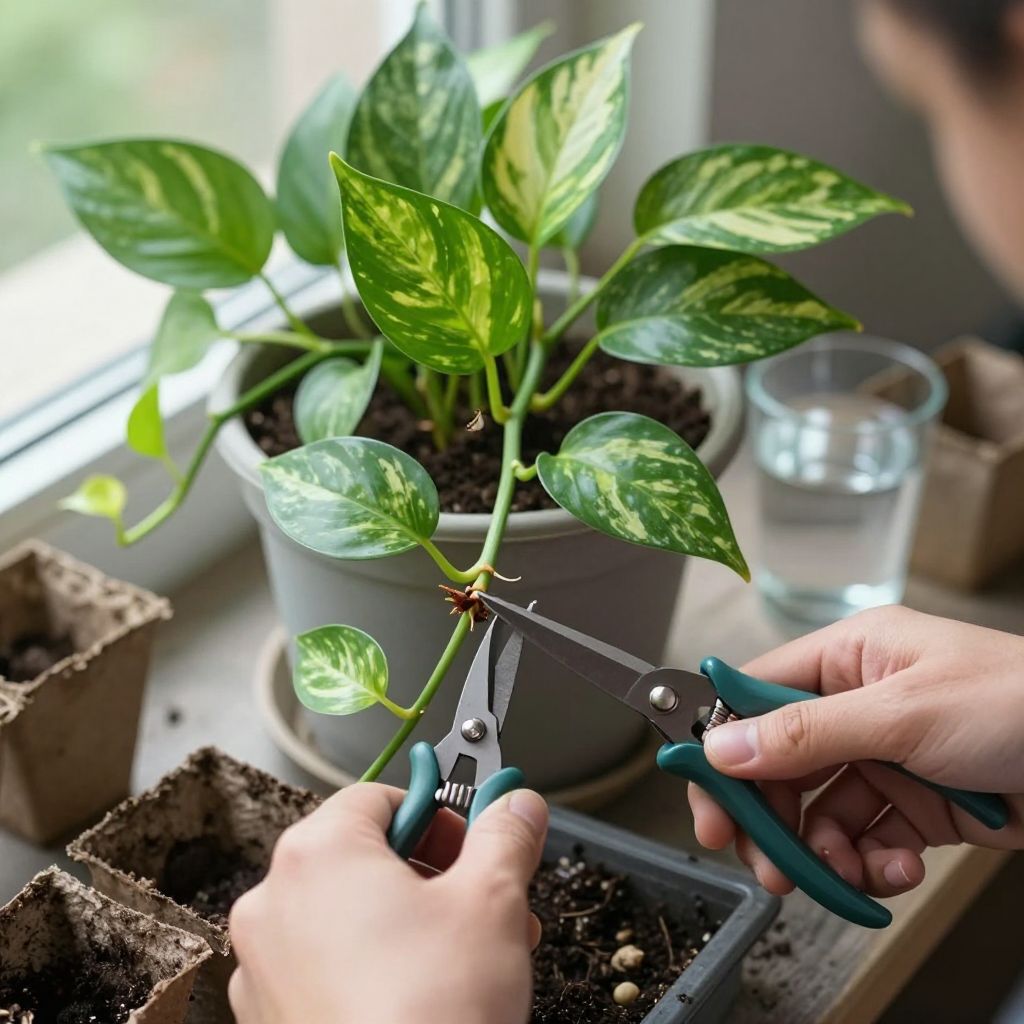
Wondering where to cut pothos for propagation? The best cut is usually just below a node, the small bump on the vine where leaves and aerial roots emerge. That node is the part that can grow new roots, so if you leave it on the cutting, your pothos has the best chance of rooting successfully.
With a clean cut, the right node placement, and a little patience, you can turn one trailing plant into several healthy new plants. Whether your pothos is growing in water or soil, the key is knowing which part of the vine to remove and how much stem to keep.
Where To Cut Pothos For Propagation?
Cut just below a node on a healthy vine, ideally leaving at least one node and one leaf on each cutting. A node is the point where a leaf attaches and where roots form. Avoid cutting only between leaves, because stem pieces without nodes usually will not root.
What a Pothos Node Looks Like
Before you make any cut, identify the node. On pothos, nodes often look like a small brown bump, ring, or slightly swollen joint along the vine. Sometimes you’ll also see a tiny aerial root starting there.
Node vs. internode
- Node: the growth point where roots and new shoots can form
- Internode: the smooth stem section between nodes
If you cut from the internode only, the cutting may look fine but often won’t propagate well. For reliable rooting, the node must be included.
Best Places on the Vine to Cut
The best cutting points are usually on healthy, mature vines with several leaves and visible nodes. Choose sections that are vigorous, not yellowing, and not carrying pests or disease.
Good cutting locations
- Just below a node near the tip of a healthy vine
- Mid-vine sections with multiple nodes and leaves
- Long trailing stems that can be trimmed back to encourage fuller growth
Cutting length to aim for
Most pothos cuttings do well with 1 to 3 nodes per piece. A single-node cutting can work, but a cutting with two or three nodes is often easier for beginners because it has more rooting points and a better chance of success.
How to Take a Pothos Cutting Step by Step
- Choose a healthy vine with visible nodes.
- Use clean scissors, pruners, or a sharp knife.
- Cut just below a node, not through it.
- Remove the lower leaf if it would sit in water or soil.
- Place the cutting in water or a moist rooting medium right away.
Clean tools matter. A quick wipe with rubbing alcohol or soap and water helps reduce the risk of spreading disease or damaging the stem with a dull cut.
How Many Nodes Should You Include?
For most home gardeners, one to three nodes per cutting is the sweet spot. More nodes can increase your chances of rooting, but very long cuttings may be harder to manage and more likely to rot if too much stem sits in water or damp soil.
Simple rule for beginners
- 1 node: possible, but less forgiving
- 2 nodes: a very practical choice
- 3 nodes: ideal for a stronger cutting if the vine is long enough
Should You Cut Above or Below the Node?
Always cut below the node when taking a cutting. That leaves the node attached to the piece you want to root. If you cut above the node, you may leave the important growth point behind on the mother plant.
When pruning the mother plant to encourage bushier growth, make your cut just above a node. That helps the remaining vine branch and produce a fuller plant.
Water Propagation vs. Soil Propagation
Pothos can root in either water or soil, and the best choice depends on your comfort level and growing setup. Water propagation is easier to monitor, while soil propagation can reduce transplant shock later.
Water propagation
- Place the node under water and keep leaves above the surface
- Use a clear jar if you want to watch root growth
- Change the water regularly to keep it fresh
Soil propagation
- Insert the node into lightly moist, well-draining potting mix
- Keep humidity moderate and the mix evenly damp, not soggy
- Use a pot with drainage holes
If you are new to propagation, water is often the easiest place to start. If you already know how to keep cuttings evenly moist without overwatering, soil can work very well too.
Ideal Conditions for Rooting Pothos Cuttings
Pothos roots best in warm, bright, indirect light. Avoid harsh direct sun, which can stress cuttings and dry them out. A stable indoor spot near a bright window is usually enough.
Helpful rooting conditions
- Bright indirect light
- Warm room temperatures
- Clean container or pot
- Fresh water or airy potting mix
- Good airflow without cold drafts
Rooting slows in cool conditions, and cuttings may rot if the medium stays wet and cold. If your home is chilly, place cuttings somewhere consistently warm rather than near a drafty window.
Common Mistakes to Avoid
Most pothos propagation problems come from cutting in the wrong place or giving the cutting too much moisture. A few small adjustments can make a big difference.
Frequent mistakes
- Cutting without a node — the cutting may never root
- Leaving too many leaves on the cutting — excess foliage can lose moisture faster than roots can replace it
- Submerging leaves in water — this encourages rot
- Using dirty tools — this can spread disease
- Keeping soil too wet — soggy conditions can rot the stem
If a cutting starts to turn soft, brown, or mushy near the base, remove the damaged part and try again with a fresh, healthy section. Rot usually spreads quickly once it begins.
How to Tell If Your Cutting Is Rooting
In water, you’ll usually see small white roots emerging from the node first. In soil, the cutting may stay upright and begin producing new growth before you can easily check the roots.
Signs of success
- New white roots forming at the node
- Leaves staying firm and green
- New leaf growth after several weeks
- Resistance when you gently tug the cutting in soil
Do not rush to repot. Let the roots develop enough to support the plant. In water, wait until roots are several inches long before moving to soil. In soil, give the cutting time to establish before disturbing it.
How to Plant Rooted Pothos Cuttings
Once roots are established, move the cutting into a small pot with a well-draining indoor potting mix. Pothos likes a light, airy medium rather than heavy garden soil.
- Fill a pot with drainage holes using potting mix.
- Make a small hole and place the rooted cutting in it.
- Cover the roots gently and firm the mix lightly.
- Water enough to settle the soil, then let excess drain away.
- Keep the plant in bright, indirect light while it adjusts.
If you rooted several cuttings in one jar, you can plant them together for a fuller pot. Grouping cuttings creates a bushier look faster than planting one stem at a time.
Pruning the Mother Plant After Cutting
Taking cuttings is also a chance to shape the original plant. If your pothos has become long and sparse, trim vines back to just above a node to encourage branching.
Why pruning helps
- Encourages a fuller, less leggy plant
- Removes weak or damaged growth
- Gives you healthy cuttings to propagate
Do not remove too much at once if the plant is already stressed. A moderate trim is usually better than a heavy cutback, especially for a plant recovering from low light or inconsistent watering.
Indoor Care After Propagation
Newly rooted pothos plants need gentle care while they settle in. Keep them in bright indirect light and water only when the top layer of soil begins to dry slightly, adjusting for your home’s temperature and humidity.
Good aftercare habits
- Rotate the pot occasionally for even growth
- Wipe dust from leaves so they can photosynthesize well
- Watch for yellowing, which can signal overwatering
- Check for pests such as spider mites or mealybugs
Pothos is generally easygoing, but newly propagated plants are more vulnerable than established ones. A steady routine is better than frequent changes.
Troubleshooting Pothos Propagation Problems
Cutting is wilting
The cutting may have too few roots, too much leaf mass, or too much direct sun. Trim off extra leaves if needed and move it to brighter indirect light.
Stem is rotting
Rot usually means the node or stem stayed too wet, or the cutting was taken from unhealthy tissue. Cut back to firm, healthy stem and restart with clean tools.
No roots after several weeks
Check that the cutting includes a node and that the water or soil environment is warm enough. Some cuttings take longer than others, especially in cooler indoor conditions.
Leaves are yellowing
Yellow leaves can happen from overwatering, poor light, or old leaves naturally aging off. Remove badly damaged leaves and review the cutting’s conditions.
Final Tips for Better Success
If you remember only one thing, remember this: the node is the key. Cut just below it, keep it healthy, and give the cutting warm, bright, indirect light. From there, your pothos usually does the rest.
Start with one or two healthy cuttings, watch how they respond, and adjust your technique for your indoor conditions. If you want to keep learning about pothos care, propagation, and houseplant maintenance, see related guidance on pothos plant care and how to propagate houseplants.