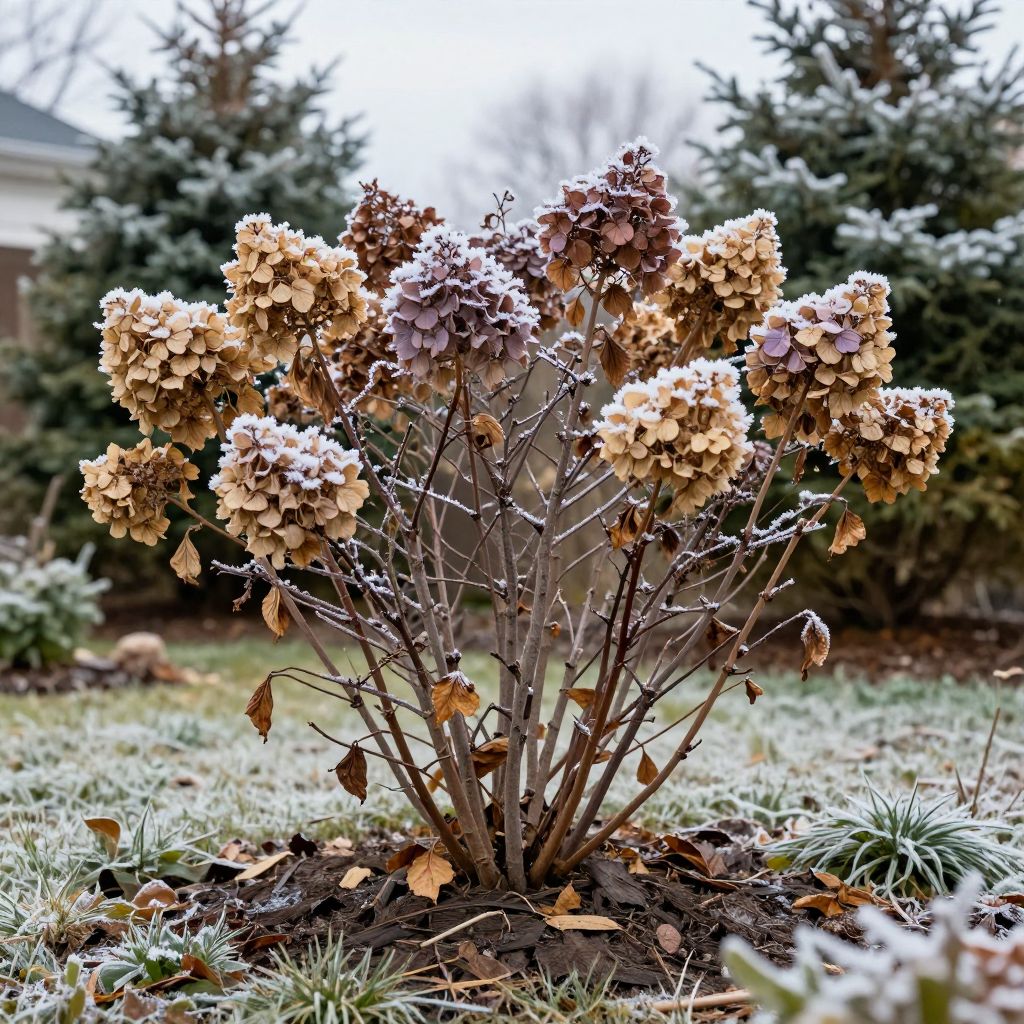
What do hydrangeas look like in the winter? In most gardens, they turn into woody shrubs with bare stems, faded flower heads, and dried leaves or buds depending on the type. Some keep their old blooms through frost and snow, while others look tidier after leaf drop.
Winter hydrangea appearance is normal, but the exact look depends on the species, your climate, and how you pruned them the previous season. Knowing what to expect helps you avoid damaging next year’s flowers while still keeping the plant healthy.
What do hydrangeas look like in the winter?
In winter, hydrangeas usually look dormant: leafless woody stems, brown or tan flower heads, and visible buds along the canes. Some varieties hold dried blooms all season, while others collapse to bare stems after frost. The plant is alive underground, even when the top growth looks dead.
Why hydrangeas look different in winter
Hydrangeas are not all the same. Their winter appearance depends on whether they bloom on old wood, new wood, or both, plus how cold your winters are and whether the plant is deciduous or semi-evergreen in your area.
Common winter looks by hydrangea type
- Bigleaf hydrangea (Hydrangea macrophylla): often keeps dried flower heads and visible buds on woody stems.
- Oakleaf hydrangea (Hydrangea quercifolia): may retain tan leaves for part of winter, especially in milder climates.
- Panicle hydrangea (Hydrangea paniculata): usually loses leaves, but dried cone-shaped blooms may stay on the shrub.
- Smooth hydrangea (Hydrangea arborescens): often dies back to bare stems after frost, with little winter ornament.
- Climbing hydrangea (Hydrangea anomala subsp. petiolaris): may keep some dried foliage or cling to structures with woody stems.
If your hydrangea looks brown, twiggy, and a little rough around the edges, that is usually normal dormancy, not a sign the plant is dead. The real test is whether the stems are still firm and alive beneath the bark.
How to tell if your hydrangea is healthy in winter
A healthy winter hydrangea may look messy, but it should still have firm stems and living buds. You can check by gently scratching a small section of bark with your fingernail; green tissue underneath usually means the stem is alive.
Signs the plant is fine
- Stems are firm, not brittle or hollow.
- Buds are plump and attached, especially on old-wood bloomers.
- The base of the plant is stable, with no major heaving from freeze-thaw cycles.
- There is no extensive blackening, mushiness, or foul smell at the crown.
Signs of winter damage
- Stems snap easily and are dry all the way through.
- Buds shrivel, blacken, or fall off after severe cold.
- Canes are split, especially after ice or heavy snow.
- The crown sits exposed because soil has lifted around the roots.
Don’t rush to remove everything that looks brown. Many hydrangeas set their flower buds on old wood, so aggressive winter pruning can remove the next season’s blooms.
What to do with hydrangeas before winter
Good winter care starts before the first hard freeze. Your goal is to help the plant enter dormancy gradually, protect roots from temperature swings, and avoid pruning mistakes that reduce flowering.
Late-season care checklist
- Water deeply during dry autumn spells until the ground begins to freeze.
- Stop fertilizing late in the season so new growth can harden off.
- Spread 2 to 4 inches of mulch over the root zone, keeping it a few inches away from the stems.
- Remove only dead, broken, or diseased wood if needed.
- Leave healthy flower heads in place if you want winter interest or extra bud protection.
Mulch helps roots more than stems. A layer of shredded bark, leaf mold, compost, or wood chips moderates soil temperature and reduces freeze-thaw stress, especially for younger plants.
Should you cut hydrangeas back in winter?
That depends on the type. Some hydrangeas bloom on old wood, so winter pruning can remove flower buds. Others bloom on new wood, so they can be cut back more safely while dormant.
Pruning by bloom type
- Old-wood bloomers such as many bigleaf and oakleaf hydrangeas: prune lightly, and ideally wait until after flowering or only remove dead wood in late winter.
- New-wood bloomers such as smooth and panicle hydrangeas: can usually be pruned in late winter or early spring before new growth starts.
If you are unsure which hydrangea you have, it is safer to leave most stems alone through winter and wait until spring growth makes the plant easier to identify.
How winter weather changes the plant’s appearance
Cold, wind, snow, and ice all affect how hydrangeas look. The same plant can appear neat in one winter and battered in another, even if its roots are perfectly healthy.
Common winter effects
- Frost can darken leaves and flowers, making them papery and brown.
- Wind can dry out stems and shred leftover foliage.
- Heavy snow may bend canes outward or flatten the shrub.
- Ice can split stems and break older wood.
- Freeze-thaw cycles can heave shallow-rooted plants and expose roots.
In colder climates, a hydrangea may look nearly dead above ground by midwinter and still recover strongly in spring. In milder areas, it may keep more foliage and dried blooms, giving the shrub a fuller winter silhouette.
How to protect hydrangeas in winter
Protection is most important for young plants, potted hydrangeas, and varieties that form buds on old wood. The best method depends on your climate and how exposed the shrub is to wind and cold.
Practical winter protection steps
- Water the plant well before a hard freeze if the soil is dry.
- Apply mulch after the ground cools, not too early while soil is still warm.
- Use burlap or a breathable windbreak in very exposed sites.
- Wrap or move containers to a sheltered spot if the hydrangea is growing in a pot.
- Remove snow gently from branches if it is bending them dangerously.
For container-grown hydrangeas, the roots are more exposed than in-ground plants. An unheated garage, shed, or protected corner can help, but the pot should not dry out completely.
Why some hydrangeas still have leaves in winter
If your hydrangea still has brown leaves attached, that is common with oakleaf hydrangeas and sometimes with plants in sheltered locations. The leaves may be dead but remain attached until wind or new spring growth pushes them off.
These persistent leaves are not usually a problem. They can even add texture and winter interest, though they may look ragged after storms.
Common winter problems and how to fix them
Most winter issues with hydrangeas are caused by exposure, poor drainage, or pruning at the wrong time. Catching problems early can save the plant and improve next year’s flowering.
Problem: stems look black or mushy
This may indicate dieback or rot. Cut back to healthy tissue in spring once you can see where living wood begins, and check whether poor drainage is keeping the crown too wet.
Problem: no flowers after winter
On old-wood bloomers, winter injury or pruning may have removed the buds. In this case, focus on protecting stems next season and avoid cutting them back hard in late fall or winter.
Problem: roots are exposed
Freeze-thaw cycles can lift shallow roots. Add mulch and gently firm the soil back into place when conditions allow, but avoid digging into frozen ground.
Problem: branches split under snow
Shake off heavy snow carefully with a broom or gloved hand. If a branch is badly split, prune it cleanly in late winter or early spring once severe cold has passed.
What to expect in spring after a wintery-looking hydrangea
Many hydrangeas look rough in winter and then rebound quickly once temperatures warm. Bud swelling, green shoots, and new leaves are the clearest signs that the plant made it through dormancy well.
Wait until spring growth starts before making major pruning decisions. That way, you can see which stems survived and whether the plant is flowering from old wood or new wood.
Simple winter care mistakes to avoid
- Do not prune too hard in fall if you have an old-wood hydrangea.
- Do not pile mulch against the stems; keep it around the root zone instead.
- Do not overwater frozen or waterlogged soil, which can stress roots.
- Do not assume brown stems are dead; test for living tissue first.
- Do not fertilize late in the season, because tender growth is more likely to winter-damage.
Conclusion: what your hydrangea should look like now
In winter, hydrangeas usually look like dormant woody shrubs with bare stems, dried blooms, or leftover leaves, depending on the type. That appearance is often completely normal. If you want the best results, protect the roots, avoid unnecessary pruning, and wait for spring to reveal what survived.
If you want to plan your next steps, read more about how to prune hydrangeas correctly and hydrangea growing care and maintenance for practical seasonal guidance.