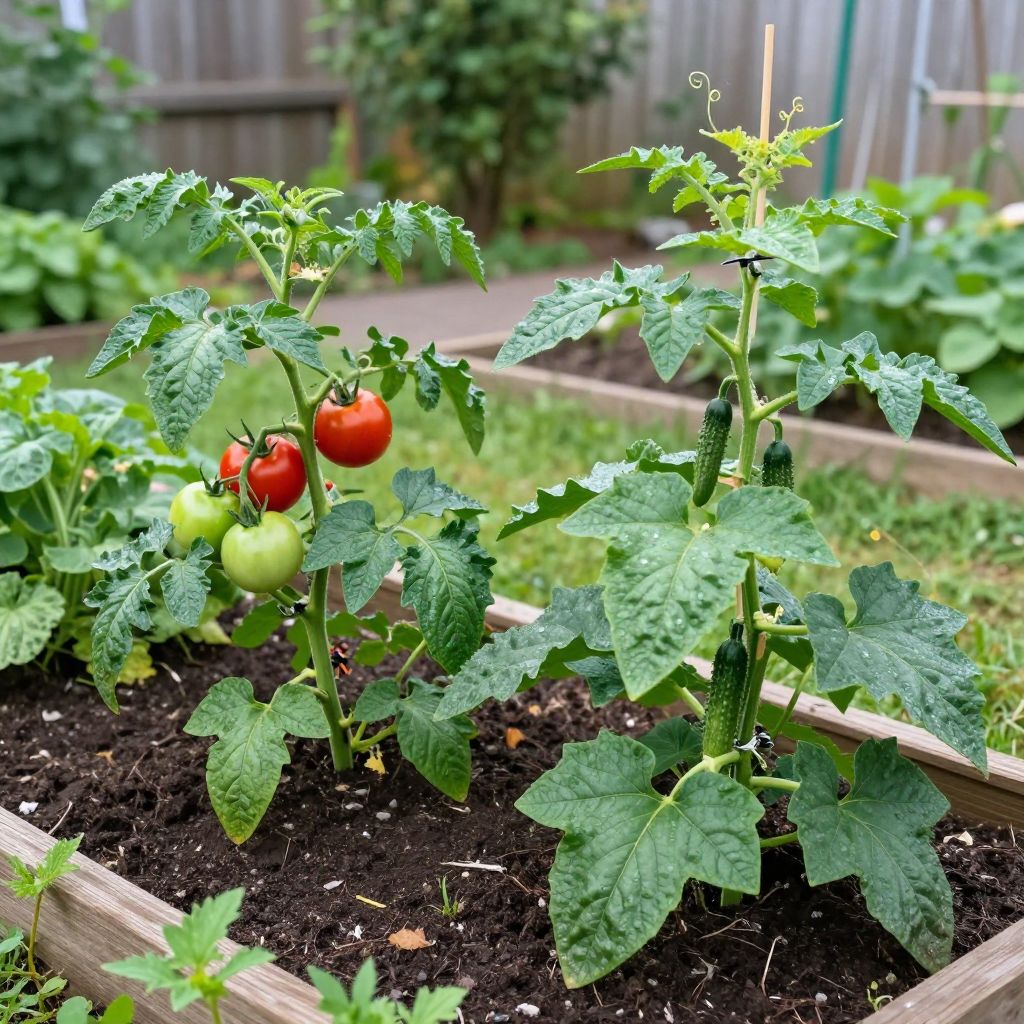
Can you plant cucumbers and tomatoes together? Yes, you can grow them in the same garden bed or large container, but they are not perfect companions in every situation. Both need warmth, sun, and regular watering, yet they differ in spacing, growth habit, and disease pressure, so success depends on giving each plant enough room and support.
If you plan it well, interplanting cucumbers and tomatoes can save space and make a productive summer bed. The key is to manage airflow, moisture, and trellising so the faster, sprawling cucumber vines do not overwhelm the tomato plants or increase pest and disease problems.
Can you plant cucumbers and tomatoes together?
Yes, cucumbers and tomatoes can be planted together if you give them full sun, rich soil, consistent moisture, and enough space for airflow. They are both warm-season crops, but tomatoes need more vertical support and cucumbers can spread quickly, so the pairing works best with trellises and careful spacing.
Why this pairing can work well
Cucumbers and tomatoes share many growing needs, which makes them compatible in a home vegetable garden. Both prefer fertile, well-drained soil, moderate to consistent watering, and protection from cold weather.
Shared growing conditions
- Sun: Aim for at least 6 to 8 hours of direct sun.
- Soil: Rich, loose, and well-drained soil with plenty of organic matter.
- Water: Even moisture, especially during flowering and fruiting.
- Temperature: Both are warm-season crops that dislike frost.
Because their basic needs overlap, you can often plant them in the same raised bed or row if you plan the layout carefully. This is especially useful in smaller gardens where every square foot matters.
Where the pairing can help
- Efficient use of space in raised beds and small plots
- Shared trellises or supports in compact gardens
- Similar mulching and watering routines
When cucumbers and tomatoes do not mix well
Although they can grow together, they are not always the easiest combination. The main issues are crowding, shading, and disease spread when leaves stay wet or airflow is poor.
Common conflicts to watch for
- Cucumber vines can sprawl aggressively and shade tomato foliage.
- Tomatoes need good airflow to reduce fungal problems.
- Both can suffer if watering is inconsistent or if the bed becomes crowded.
- Shared pests, such as aphids and whiteflies, can move between plants.
If you grow indeterminate tomatoes, which keep growing and producing over a long season, they can become large and leafy. In that case, cucumbers should be trained separately so they do not tangle into the tomato canopy.
How to plant cucumbers and tomatoes together successfully
The best way to grow them together is to treat them as neighboring crops, not as plants that should intermingle freely. Give each crop its own support, root space, and pruning attention.
Step 1: Choose the right site
- Select a spot with full sun and good drainage.
- Avoid low areas where water collects after rain.
- Pick a location with room for trellises or cages.
In cooler climates, a south-facing bed or wall can help both crops warm up faster. In very hot climates, a site with strong morning sun and some afternoon relief may reduce stress.
Step 2: Improve the soil before planting
Work compost into the top 6 to 8 inches of soil to improve structure and water retention. Both crops perform best in soil that is fertile but not soggy.
- Add compost or well-rotted organic matter before planting.
- Make sure the bed drains well after watering or rain.
- Avoid fresh manure, which can be too strong and may encourage excess leafy growth.
Step 3: Space them correctly
Spacing is one of the most important parts of growing cucumbers and tomatoes together. Crowding leads to disease, poor fruiting, and hard-to-harvest vines.
- Tomatoes: Space according to the plant type and support system, often about 18 to 24 inches apart for staked or caged plants, with more room for larger varieties.
- Cucumbers: Space bush types more closely than vining types, but give climbing cucumbers room to spread on a trellis.
- Keep cucumber vines from climbing directly into tomato branches.
If you are unsure of the exact spacing for your varieties, err on the side of more room. Better airflow usually means healthier plants and easier harvests.
Step 4: Use vertical supports
Vertical growing makes this pairing much easier. Trellising cucumbers keeps the vines off the ground and reduces the chance they will smother tomatoes.
- Use tomato cages, stakes, or a sturdy trellis for tomatoes.
- Train cucumbers onto a separate trellis, netting, or fence panel.
- Keep the supports close enough for efficient use of space, but not so close that the plants overlap heavily.
If you are growing in containers, use large pots and separate supports. A cramped container is one of the fastest ways to create weak growth and disease problems.
Watering and mulching tips for both crops
Consistent moisture is important for tomatoes and cucumbers, but both dislike wet foliage. Water at the base of the plants rather than overhead whenever possible.
Best watering practices
- Water deeply so moisture reaches the root zone.
- Check soil before watering instead of following a fixed schedule.
- Adjust frequency based on heat, wind, rainfall, and soil type.
- Use drip irrigation or a soaker hose if you can.
Mulch helps conserve moisture and keeps soil from splashing onto leaves, which can reduce disease. Apply a layer of organic mulch, such as straw or shredded leaves, after the soil has warmed up.
Why mulch matters
- Helps reduce water stress during hot weather
- Keeps fruit cleaner
- Limits weeds that compete for water and nutrients
- Reduces soil splash, which can spread disease organisms
Pruning and training for better airflow
Good airflow is one of the biggest advantages you can create when growing cucumbers and tomatoes together. It helps leaves dry faster after rain or watering and makes it harder for fungal problems to spread.
Tomato care
- Remove damaged or yellowing lower leaves as needed.
- Keep indeterminate tomatoes tied to a stake or cage.
- Do not let stems flop onto the ground.
Some gardeners remove tomato suckers, while others prune less aggressively. The main goal is to keep the plant manageable and open enough for light and air to move through it.
Cucumber care
- Train vines upward early while they are still flexible.
- Guide stray tendrils back to the trellis instead of letting them wander into tomato plants.
- Remove only damaged or diseased leaves unless the vine is becoming overcrowded.
Avoid heavy pruning of cucumbers unless necessary. Healthy leaves feed fruit production, so the goal is control, not stripping the plant bare.
Pests and diseases to watch for
When you plant cucumbers and tomatoes together, you need to monitor both crops closely. Shared conditions can encourage some of the same pest and disease problems, especially in humid weather.
Common pests
- Aphids
- Whiteflies
- Spider mites in hot, dry weather
- Cucumber beetles on cucumbers
- Tomato hornworms on tomatoes
Check the undersides of leaves regularly. Catching pests early is much easier than dealing with a large infestation later.
Common diseases
- Powdery mildew
- Early blight on tomatoes
- Downy mildew on cucumbers
- Bacterial leaf spots in wet, crowded conditions
To reduce disease risk, avoid wetting leaves, keep plants spaced properly, and remove badly infected foliage promptly. If a plant becomes severely diseased, remove it from the garden to protect the rest of the bed.
Best planting layout ideas
The most successful layouts keep the crops close enough to share space but far enough apart to avoid competition. Think in terms of zones rather than mixing the plants randomly.
Simple bed layout
- Place tomatoes on the north side of the bed if possible so they do not shade cucumbers too much.
- Set cucumber trellises along one edge or end of the bed.
- Leave a clear path for harvesting and watering.
This layout works well in many gardens because taller tomato plants can be positioned where they block the least light. In the Southern Hemisphere, reverse the north/south positioning accordingly.
Container layout
- Use separate large containers rather than one small pot for both crops.
- Choose a container that holds enough soil to buffer moisture changes.
- Place pots where each plant gets full sun and easy access to water.
Container growing can work, but it dries out faster than in-ground planting. In hot weather, you may need to monitor moisture more often than you would in a garden bed.
Propagation and timing considerations
Both crops are usually started from seed or transplants, but timing depends on your climate and the length of your growing season. Plant them only after frost danger has passed and the soil has warmed.
Starting from seed or transplants
- Cucumbers can be direct-sown or transplanted carefully when young.
- Tomatoes are commonly transplanted as seedlings.
- Handle roots gently to reduce transplant shock.
If your season is short, starting tomatoes indoors and transplanting healthy seedlings can help you get a better harvest. Cucumbers are often quicker to establish from direct sowing, especially in warm soil.
Harvesting without damaging the other plant
Once the vines and tomato stems are intertwined, harvest carefully so you do not break branches or step on roots. Regular picking also encourages continued production.
Harvest tips
- Pick cucumbers when they are the right size for the variety and still firm.
- Harvest tomatoes when fully colored or at the stage best suited to your use.
- Use two hands when reaching into dense foliage.
- Check plants often so fruit does not overripe on the vine.
Frequent harvesting helps reduce the weight on vines and branches, which is especially important when the plants are sharing a small space.
Common mistakes to avoid
Most problems with this pairing come from crowding or neglecting airflow. A few small mistakes can quickly create a tangled, disease-prone bed.
- Planting too close together
- Letting cucumbers climb into tomato plants
- Watering overhead late in the day
- Skipping support structures
- Ignoring early signs of mildew or pests
- Growing both crops in poor, compacted soil
If you avoid these issues, cucumbers and tomatoes can be a productive and practical combination rather than a frustrating one.
Final verdict: should you grow them together?
Yes, you can plant cucumbers and tomatoes together, and many home gardeners do. The pairing works best when you give each crop enough space, use supports, keep foliage dry, and stay on top of pests and disease.
If you want to try it, start with a well-prepared bed, separate trellises, and a simple layout that keeps the tomatoes from shading the cucumbers. For more vegetable-growing help, you may also want to read related guides on tomato care in the home garden and how to trellis cucumbers for better harvests.