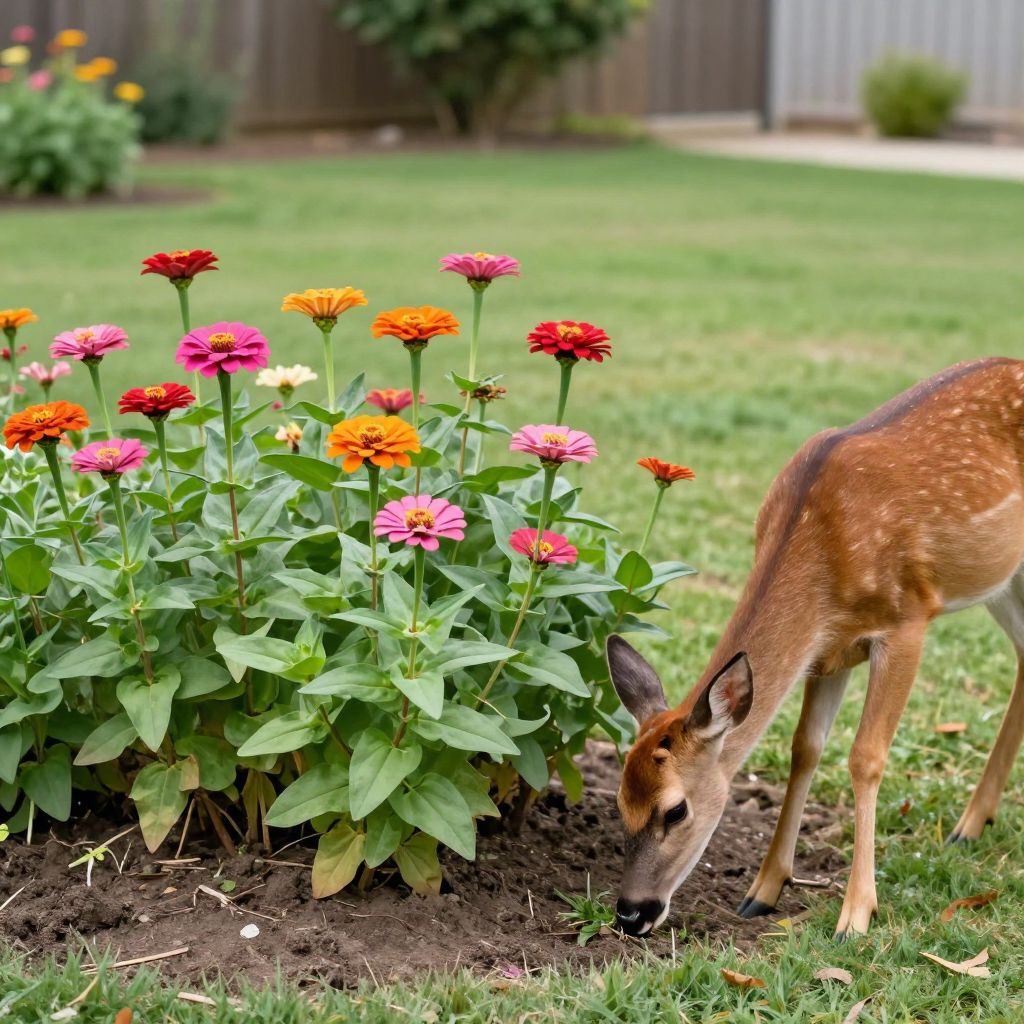
Are zinnias deer resistant? If deer are browsing your flower beds, zinnias can be a smart choice, but they are not a guaranteed deer-proof plant. In many gardens, deer tend to leave zinnias alone more often than highly palatable flowers, yet hungry deer may still sample them, especially when other food is scarce.
The good news is that zinnias are easy to grow, bloom for a long season, and can fit well into a deer-prone border. With the right planting and a few protection strategies, you can improve your chances of getting strong, colorful flowers all summer.
Are zinnias deer resistant?
Zinnias are generally considered deer resistant, not deer proof. Deer usually prefer tender, aromatic, or highly palatable plants over zinnias, but browsing pressure changes with season, local deer populations, and food availability. If deer are very hungry, they may nibble leaves, buds, or flowers.
Why deer usually avoid zinnias
Deer often pass over zinnias because the foliage is rougher and less appealing than many other ornamentals. Their upright stems and slightly coarse leaves are not as tempting as soft, lush growth on plants deer commonly favor.
What makes a plant less attractive to deer
- Texture: rough or hairy leaves are less appealing
- Flavor or scent: some plants taste or smell unpleasant to deer
- Availability: deer choose the easiest, most nutritious foods first
- Seasonal pressure: late summer, drought, or winter scarcity can change browsing habits
Zinnias fit the “less preferred” category, but that does not mean they are safe in every landscape. Young transplants and fresh flower buds are often more vulnerable than established plants.
When zinnias still get eaten
Even deer-resistant plants can be damaged when deer are hungry, numerous, or used to feeding in gardens. If your area has heavy deer traffic, zinnias may be clipped, trampled, or partially stripped, especially at the edges of beds.
Common situations where browsing increases
- Gardens near woods, fields, or greenbelts
- Dry spells when natural forage is limited
- Newly planted beds with tender growth
- Yards where deer have become comfortable around people
If deer are a major problem in your neighborhood, treat zinnias as part of a broader planting plan rather than your only defense.
How to grow zinnias for the best chance of success
Healthy, vigorous zinnias recover better from minor browsing and bloom more heavily. Give them full sun, well-drained soil, and enough space for air movement so they grow quickly and stay less stressed.
Sunlight and location
Zinnias grow best in full sun, with at least 6 to 8 hours of direct light daily. In partial shade, plants may stretch, bloom less, and stay damp longer, which can invite disease.
For deer-prone gardens, place zinnias where they are easier to monitor, such as near a porch, path, or frequently used area. Deer are less likely to linger where human activity is common.
Soil and drainage
Zinnias prefer soil that drains well. Heavy, waterlogged soil weakens roots and increases disease risk, which can make plants more vulnerable overall.
- Work in compost to improve soil structure if needed
- Avoid planting in low spots where water collects
- Keep mulch light and away from stems to reduce rot
They do not need rich soil to perform well, but moderate fertility supports steady growth and flowering. Too much nitrogen can produce leafy plants with fewer blooms.
Watering
Water zinnias deeply when the soil begins to dry, especially after transplanting and during hot weather. Aim to wet the root zone rather than splashing the foliage, since wet leaves can encourage fungal problems.
Established plants usually handle brief dry periods better than soggy conditions. If you are unsure, check the top inch or two of soil with your finger before watering.
Planting zinnias in a deer-prone garden
Good planting choices can reduce damage and help zinnias fill in quickly. The faster they establish, the less appealing they may be to browsing deer.
- Choose a sunny site with good drainage.
- Prepare the soil with compost if it is thin or compacted.
- Plant after frost danger has passed in your area, or start indoors if your climate allows.
- Space plants so air can move between them, which helps prevent disease.
- Water at the base after planting to settle the soil.
If deer pressure is high, consider planting zinnias in clusters near less-palatable plants or within a protected border. Mixed plantings can make the bed less noticeable and harder for deer to browse cleanly.
Best ways to protect zinnias from deer
If you want reliable blooms, combine deer-resistant planting with physical or behavioral deterrents. No single method works every time, but layered protection is much more effective.
Protection methods that work well
- Fencing: the most dependable option for repeated deer pressure
- Netting or cages: useful for small beds or young plants
- Motion-activated devices: can help in some gardens, though deer may adapt
- Repellents: may reduce browsing, especially when reapplied as directed
- Strategic placement: keep zinnias near the house or in visible areas
For small gardens, a temporary wire or mesh barrier around new zinnias can be enough to get them established. Once plants are larger and blooming, deer may still ignore them more often, but protection is still wise if browsing is common.
Practical tips for using repellents
Repellents work best when deer are already browsing and when you apply them before a problem becomes severe. Reapply after rain and follow the product label carefully.
Rotate deterrent types if deer get used to one scent or taste. Even then, repellents are usually a support tool, not a complete solution.
Pruning and maintenance for healthier blooms
Zinnias respond well to regular deadheading and cutting. Removing spent flowers encourages more blooms and helps the plant look fuller, which can be useful if deer have nibbled lightly.
What to remove
- Faded blooms to keep flowers coming
- Yellowing or damaged lower leaves
- Stems that are diseased or broken
Use clean pruners or snips to avoid spreading disease. If deer have clipped a stem, cut back to healthy tissue and keep the plant watered so it can recover.
Common zinnia problems that can be mistaken for deer damage
Not every missing leaf or damaged flower is caused by deer. Sometimes insects, disease, or weather are the real culprits, and knowing the difference helps you respond correctly.
Look for these signs
- Deer damage: ragged or cleanly bitten stems, missing buds, browsed tops, hoof prints nearby
- Insect damage: holes, chewed edges, or distorted new growth
- Disease: spots, mildew, yellowing, or collapsing stems
- Weather stress: wilt after heat, wind, or drought
Zinnias are prone to powdery mildew in humid or crowded conditions. Good spacing, morning watering, and avoiding overhead irrigation help reduce that issue.
Can you propagate zinnias if deer damage them?
Yes. If deer ruin a planting, you can often reseed zinnias quickly, especially in warm weather. Zinnias are commonly grown from seed and are one of the easiest annual flowers to restart during the season.
If your climate still has enough warm days left, re-sowing can restore the bed. In cooler areas, start indoors only if you have enough time before frost; otherwise direct sowing outdoors is usually simpler.
Best companion planting ideas for deer-prone beds
Pairing zinnias with other less-preferred plants can help reduce the visual appeal of the bed to deer. While no companion plant guarantees protection, mixed plantings often work better than a single exposed patch.
- Plants with strong scent or coarse foliage
- Dense border plants that obscure young zinnias
- Herbs or ornamentals deer tend to avoid in your area
Choose companions based on your local conditions, not just deer resistance. A plant that dislikes your soil or shade will not help the bed if it struggles to grow.
Simple takeaways for gardeners
Zinnias are a good choice if you want colorful annuals that are often left alone by deer, but they are not immune to browsing. Their best defense is healthy growth, smart placement, and protection when deer pressure is high.
If you are planting zinnias this season, start with full sun, well-drained soil, and a plan for deer protection if needed. For more ideas on managing browsing pressure, you may also find what to feed deer useful for understanding what attracts them to a yard—and what may keep them moving on.