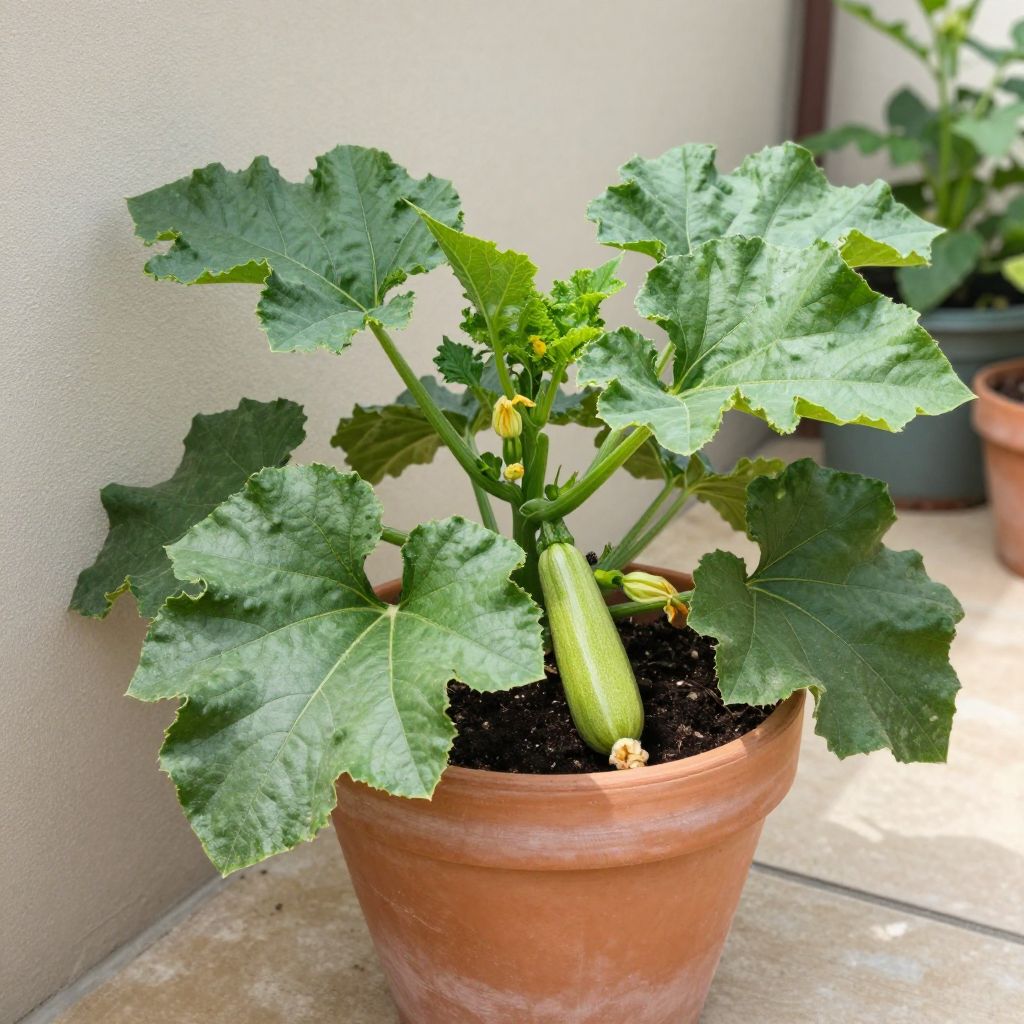
Can you grow zucchini in a pot? Yes—zucchini can do very well in a container if you give it enough root space, strong sunlight, rich soil, and consistent moisture. The biggest difference from in-ground growing is that potted plants dry out faster and need closer attention.
Container-grown zucchini is a great option for patios, balconies, and small gardens. With the right pot size and care, you can still harvest tender, productive summer squash without a large vegetable bed.
Can you grow zucchini in a pot?
Yes, zucchini grows well in a pot if the container is large enough, drains freely, and gets at least 6 to 8 hours of direct sun. Choose a compact or bush-type zucchini, use a rich potting mix, and water often enough to keep the soil evenly moist but never soggy.
Choosing the right pot for zucchini
Zucchini has a vigorous root system and a large canopy, so small pots usually lead to weak growth and poor harvests. A roomy container gives the plant enough moisture buffer and room for roots to spread.
Best pot size
- Minimum size: about 5 gallons for one plant, though larger is better.
- Better choice: 10 to 15 gallons or more for steadier growth.
- Shape: a wide, deep pot is usually better than a narrow one.
Look for a container with several drainage holes. Fabric grow bags, large plastic pots, resin planters, and half-barrels can all work well if they drain properly.
Why drainage matters
Zucchini roots dislike standing water. If the pot holds water for too long, the plant may develop root stress, yellowing leaves, or disease problems. Elevate the container slightly so excess water can escape freely.
Best soil mix for container zucchini
Use a high-quality potting mix rather than garden soil. Garden soil compacts in pots, drains poorly, and can make zucchini roots struggle.
A good container mix should be:
- Light and well-draining
- Rich in organic matter
- Able to hold moisture without becoming muddy
You can improve a standard potting mix by blending in compost. This helps with moisture retention, fertility, and overall soil structure. A mix that includes compost is especially helpful because zucchini is a heavy feeder.
What to avoid
- Heavy garden soil
- Dense, clay-based mixes
- Containers without drainage holes
- Very sandy mixes that dry out too quickly
How much sun does potted zucchini need?
Zucchini performs best in full sun. Aim for 6 to 8 hours of direct sunlight daily, and more is often better in cooler climates. In very hot regions, some afternoon shade can help prevent heat stress and wilting.
If you are growing on a balcony or patio, watch how the sun moves across the space during the day. A plant that gets morning sun only may survive, but it usually produces less than one in a brighter location.
How to plant zucchini in a pot
Direct sowing is often easiest, but you can also transplant young seedlings. Zucchini dislikes root disturbance, so handle transplants gently.
- Fill the pot with moist potting mix, leaving a little space at the top.
- Plant 1 to 2 seeds about 1 inch deep, or set out one healthy seedling per container.
- If sowing seeds, thin to the strongest plant after germination.
- Water thoroughly after planting.
- Place the pot in full sun and keep the soil evenly moist while the plant establishes.
If you start indoors, transplant only when the seedling has a few true leaves and the weather is warm enough for zucchini to grow strongly outdoors. Cool soil and cold nights can slow the plant down or stunt it.
Watering container-grown zucchini
Watering is one of the most important parts of container zucchini care. Pots dry out faster than garden beds, especially in warm, windy, or sunny weather.
Check the soil often by feeling the top inch. If it feels dry, water deeply until excess runs from the drainage holes. The goal is consistent moisture, not constant saturation.
Signs of watering problems
- Too dry: wilting, curled leaves, slow growth, small fruit, blossom drop
- Too wet: yellowing leaves, limp growth, poor root health, fungal issues
Try to water at the base of the plant rather than over the foliage. Wet leaves can encourage disease, especially in humid weather.
Feeding zucchini in a pot
Zucchini is a heavy feeder, and container plants use nutrients faster than in-ground plants. Compost in the potting mix helps, but it usually is not enough for the whole season.
Use a balanced vegetable fertilizer or an organic feeding approach suited to container plants, following the label directions. Avoid overfeeding with nitrogen, which can produce lots of leaves but fewer flowers and fruit.
As the plant grows and begins flowering, steady nutrition matters more than aggressive feeding. If growth looks pale or weak despite good watering and light, the potting mix may be depleted.
Do zucchini need support in pots?
Most zucchini varieties are bushy, not climbing, so they usually do not need a trellis like pole beans or cucumbers. However, some support can still help in a container garden.
Helpful support options
- A small stake for temporary support in windy spots
- A plant cage to keep sprawling stems a little more contained
- A pot placed where the plant has room to spread outward
Do not force a bush zucchini to grow upward like a vine. It is better to choose a compact variety and give it space to sprawl naturally.
Pollination and fruit set in containers
Zucchini plants produce separate male and female flowers. Pollinators usually move pollen between them, but container plants on balconies or in enclosed spaces may set fewer fruits if pollinators are scarce.
If flowers open but tiny fruits turn yellow and shrivel, poor pollination may be the issue. You can hand-pollinate by transferring pollen from a male flower to the center of a female flower with a small brush or by touching the flowers together.
How to recognize flowers
- Male flowers: grow on slender stems and do not have a small fruit behind the bloom
- Female flowers: have a tiny zucchini-shaped swelling at the base
Common pests and diseases
Container zucchini can still face the same pests and diseases as garden-grown plants. Good spacing, airflow, and careful watering help reduce problems.
Common pests
- Aphids
- Squash bugs
- Cucumber beetles
- Spider mites in hot, dry conditions
Check the undersides of leaves regularly. Early detection makes control much easier. Hand-picking pests, washing them off with water, and removing badly damaged leaves can help in a home garden.
Common diseases
- Powdery mildew
- Downy mildew
- Root rot from poor drainage
Powdery mildew often appears as a white coating on leaves later in the season. Improve airflow, avoid wetting foliage, and remove heavily infected leaves if needed. If the plant is crowded or shaded, disease pressure usually increases.
Pruning and maintenance
Zucchini does not need heavy pruning, but light maintenance can improve airflow and make harvesting easier. Remove yellowing or damaged leaves as the plant grows, especially if they touch the soil.
Do not remove too much healthy foliage. Leaves feed the plant and protect developing fruit from sunscald. A good rule is to prune only what is clearly dead, diseased, or blocking airflow.
Simple maintenance checklist
- Check soil moisture daily in hot weather
- Inspect leaves for pests and mildew
- Remove spent flowers or damaged leaves
- Turn the pot occasionally if one side gets more sun
Harvesting zucchini from a pot
Harvest zucchini while the fruits are still young and tender. Smaller fruits are usually better textured and more flavorful than oversized ones.
Pick regularly to encourage more production. If a fruit grows too large, the plant may slow down new fruiting because it is putting energy into seed development.
Use a clean knife or pruners to cut the stem rather than twisting hard on the fruit. This reduces damage to the plant and nearby stems.
Harvest timing tips
- Check plants every day or two once they begin producing
- Harvest when fruits are firm and glossy
- Do not let oversized fruit sit too long on the plant
Common mistakes to avoid
Most container zucchini problems come from underestimating how much space and water the plant needs. Avoiding a few common mistakes can make a big difference.
- Using a pot that is too small
- Letting the soil dry out completely
- Growing in poor light
- Using heavy garden soil in a container
- Overfertilizing with nitrogen
- Ignoring pests until damage is severe
One of the most important things to remember is that container zucchini is less forgiving than in-ground zucchini. It can still be very productive, but only if you stay on top of watering, feeding, and sunlight.
Is zucchini a good choice for small-space gardening?
Yes, as long as you choose the right type and container. Zucchini is not the smallest vegetable you can grow, but it is still manageable on a patio or balcony if you plan for its size.
If space is very limited, look for compact or bush varieties and use the largest pot you can fit. That gives you the best chance of a healthy plant and a steady harvest.
Conclusion
So, can you grow zucchini in a pot? Absolutely. Choose a large container, use a rich and well-draining potting mix, give the plant full sun, and keep the soil evenly moist. With regular harvesting and a little pest monitoring, container zucchini can be a rewarding crop.
If you want to keep improving your vegetable container garden, it can also help to read more about growing summer squash in containers and choosing the best potting mix for vegetables.