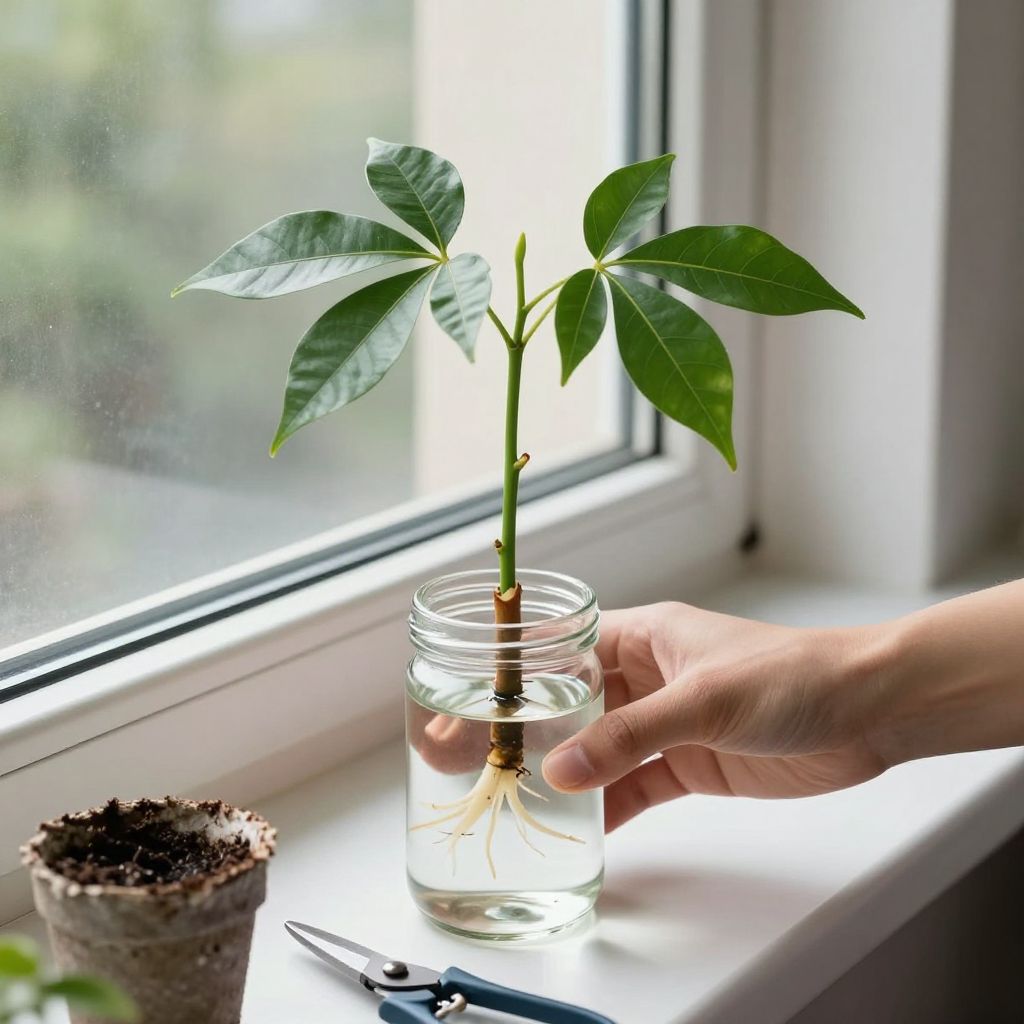
Can you propagate a money tree? Yes, you can propagate a money tree, but it is not as simple as snapping off a stem and sticking it in water. The money tree, Pachira aquatica, is usually propagated from stem cuttings, and success depends on healthy parent growth, warm conditions, and careful moisture control.
If you want to multiply your plant, the best results come from taking a clean cutting from an actively growing stem and rooting it in a light, airy medium. With the right timing and patience, you can grow a new money tree that looks just like the parent plant.
Can you propagate a money tree?
Yes. Money trees are commonly propagated from stem cuttings, and in some cases by air layering. Seed propagation is possible in theory, but it is not practical for most home gardeners because it is slow and difficult indoors. For the average plant owner, stem cuttings are the easiest and most reliable method.
How money tree propagation works
Money tree stems can form roots from nodes, which are the slightly swollen points where leaves or branches emerge. A cutting needs at least one healthy node to root successfully.
The plant roots best when it is actively growing, usually during warmer, brighter months. Cooler temperatures, low light, and soggy soil reduce the odds of success.
Best propagation methods
- Stem cuttings: The most common and beginner-friendly method.
- Air layering: Useful for larger stems when you want a more mature new plant.
- Seeds: Rarely used at home because they are less practical and slower.
Step-by-step: how to propagate a money tree from a cutting
Use a healthy, pest-free plant with firm green stems. Avoid taking cuttings from a stressed plant that is dropping leaves, yellowing, or recovering from root rot.
- Choose a stem: Select a healthy stem with several leaves and at least one node.
- Make a clean cut: Use sterilized pruners or a sharp knife to cut just below a node.
- Trim the lower leaves: Remove leaves from the bottom portion so no foliage sits in the rooting medium.
- Let the cut dry briefly: Allow the cutting to sit for a short time so the cut end can callus slightly.
- Prepare a pot: Fill a small container with a loose, well-draining mix.
- Insert the cutting: Place the node into the mix and firm it gently so it stands upright.
- Water lightly: Moisten the mix without soaking it.
- Keep it warm and bright: Place the pot in bright, indirect light and maintain steady warmth.
Best rooting medium
A money tree cutting needs oxygen around the stem, so a heavy potting mix can slow rooting or cause rot. A light mix works better than dense garden soil.
- Use a houseplant potting mix amended with perlite or coarse sand.
- Choose a pot with drainage holes.
- Keep the mix evenly moist, not wet.
Can you root a money tree in water?
You can try rooting a money tree cutting in water, but it is usually less reliable than rooting in a well-draining medium. Water propagation can help you watch root development, yet cuttings may struggle when moved to soil if the roots are weak or sparse.
If you use water, change it regularly and keep only the node submerged. Once roots are a few inches long and have some branching, move the cutting carefully into a light potting mix and keep moisture consistent while it adjusts.
Air layering money tree stems
Air layering is a useful option if you want to propagate a thicker, more established stem. It can be especially helpful when the plant has become leggy and you want to reduce height while making a new plant at the same time.
Basic air layering approach
- Choose a healthy stem section with a node.
- Make a small wound or remove a narrow ring of outer tissue, depending on your method.
- Wrap the area with moist sphagnum moss.
- Cover it with plastic or another moisture-holding wrap.
- Check regularly to keep the moss lightly moist.
- When roots form, cut below the rooted section and pot it up.
This method takes longer than a cutting, but it can produce a sturdier new plant because the stem stays attached to the parent while roots develop.
Ideal conditions for rooting
Money tree propagation succeeds more often when you match the plant’s tropical preferences. Think warm temperatures, filtered light, and gentle moisture rather than intense sun or constant wetness.
- Light: Bright, indirect light is best.
- Temperature: Warm room temperatures help, especially during root formation.
- Humidity: Moderate humidity is helpful, but avoid stagnant, overly damp air.
- Airflow: Good airflow reduces fungal problems.
If your home is dry, you can place the pot on a pebble tray or near other plants to raise local humidity slightly. Avoid sealing the cutting in a constantly wet, airless environment, which can lead to rot.
Common propagation mistakes
Most money tree propagation failures come from too much water, poor cutting selection, or impatience. A healthy cutting still needs time to form roots, and forcing the process often does more harm than good.
- Using a weak parent plant: Cuttings from stressed plants root poorly.
- Taking a cutting without a node: No node usually means no roots.
- Overwatering: Soggy soil is one of the fastest ways to lose a cutting.
- Using heavy soil: Dense mixes hold too much moisture.
- Too much direct sun: Harsh light can scorch tender cuttings.
- Moving it too soon: Tugging on the cutting repeatedly can damage new roots.
How to tell if the cutting is rooting
Rooting happens below the surface, so you need to watch for indirect signs. A cutting that stays firm and begins producing new growth is usually on the right track.
Signs of success
- New leaves or buds appear
- The cutting stays turgid and green
- Gentle resistance when you test it very lightly
- No soft, blackened stem tissue at the base
Be careful not to pull the cutting out of the pot to check roots. If you want to inspect it, do so sparingly and only after several weeks, or wait until you see growth above the soil line.
Transplanting a rooted money tree cutting
Once the cutting has a small but established root system, move it into a slightly larger pot. A container that is too large can stay wet too long and slow the plant down.
- Choose a pot with drainage holes.
- Use a well-draining indoor potting mix.
- Remove the cutting carefully and keep the roots intact.
- Plant at the same depth it was growing before.
- Water lightly to settle the mix.
- Keep it in bright, indirect light while it adjusts.
After transplanting, avoid fertilizing immediately. Let the plant settle in first, then feed lightly only when it is actively growing and showing healthy new leaves.
Ongoing care for a young money tree
Young money trees need stable conditions more than heavy feeding or frequent repotting. The goal is steady growth without stress.
- Water: Water when the top layer of mix begins to dry, not on a fixed calendar.
- Light: Bright indirect light helps prevent weak, stretched growth.
- Pruning: Pinch or trim lightly to encourage branching if needed.
- Pot size: Move up gradually as roots fill the container.
If leaves yellow or drop after transplanting, check the roots and moisture level first. Overwatering is more common than underwatering with this plant, especially indoors.
Pests and diseases to watch for
Propagation itself does not cause pests, but stressed cuttings are more vulnerable. Check the parent plant and the new cutting regularly so problems do not spread.
Common issues
- Mealybugs: White, cottony insects that hide in leaf joints.
- Spider mites: More likely in dry indoor air.
- Scale: Small, fixed bumps on stems and leaves.
- Root rot: Caused by poor drainage and excess moisture.
If you spot pests, isolate the plant and treat it promptly with a suitable houseplant-safe method. For rot, reduce watering, improve drainage, and remove badly damaged tissue if necessary.
When propagation is most likely to succeed
The best time to propagate a money tree is when the plant is actively growing and conditions are warm enough for root development. In many homes, that means spring or summer, but your local climate and indoor conditions matter more than the calendar.
If your home stays cool or dim in winter, wait for brighter conditions. If you have a warm, well-lit indoor setup year-round, you may be able to propagate successfully outside the traditional growing season.
Final takeaways
So, can you propagate a money tree? Yes, and the most practical method is a healthy stem cutting rooted in a light, well-draining mix. Keep the cutting warm, bright, and only lightly moist, and be patient while roots develop.
If you want to try it, start with one strong cutting from a healthy plant and monitor moisture closely. For more houseplant care guidance, you may also find related indoor plant articles helpful, especially on bright-light placement and repotting practices.