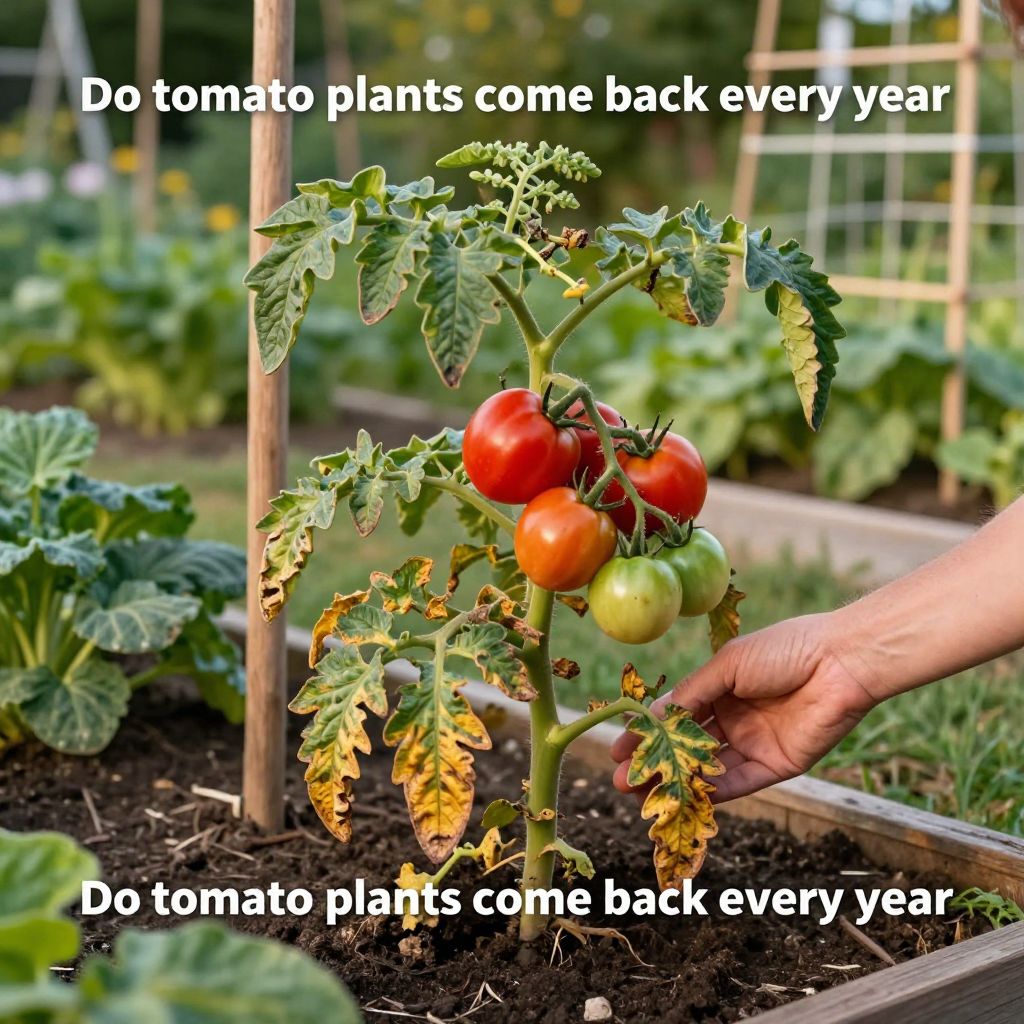
Do tomato plants come back every year? In most gardens, the answer is no. Tomatoes are usually grown as annuals, which means they complete their life cycle in one season and die after frost or sustained cold.
In warm climates, or with indoor protection, a tomato plant can sometimes survive longer than one season. The key is understanding your climate, the plant’s growth habit, and whether you want to overwinter it or simply replant each year.
Do tomato plants come back every year?
Tomato plants are tender perennials by nature, but they are treated as annuals in most home gardens because frost kills them. In frost-free climates, or when brought indoors and kept healthy, they can live beyond one growing season. Even then, older plants often become less productive than fresh plants.
Why tomatoes usually do not survive winter outdoors
Tomatoes (Solanum lycopersicum) are warm-season plants that grow best in heat and full sun. Cold temperatures, frost, and short days slow them down quickly, and a hard freeze usually ends the plant.
Even before a freeze, cool weather can reduce flowering, fruit set, and overall vigor. Once nights stay chilly, the plant may decline even if it does not die immediately.
What “annual” means for tomatoes
When gardeners call tomatoes annuals, they mean they are planted in spring, grow, flower, fruit, and then finish their life cycle in one season. That is the normal pattern in temperate regions.
In tropical or frost-free areas, tomatoes may behave more like short-lived perennials, but they still often perform best when replaced regularly.
Can tomato plants live more than one year?
Yes, tomato plants can live more than one year if they are protected from frost and kept in suitable conditions. This is more realistic in containers, greenhouses, sunrooms, or very mild climates than in an open garden bed.
However, older plants often become woody, more disease-prone, and less productive. Many gardeners find that starting fresh plants each season gives better harvests with less trouble.
When overwintering makes sense
- You have a beloved variety you want to keep.
- You live in a frost-free or very mild climate.
- You have indoor space with strong light.
- You want to save time by keeping a healthy plant alive instead of starting from seed.
How to overwinter tomato plants
If you want to try keeping a tomato plant alive through winter, move it before frost and give it a gentler, lower-growth environment. The goal is survival, not heavy fruiting through the cold months.
- Choose a healthy plant. Pick one with strong stems, no major disease, and minimal pest damage.
- Prune it back. Remove weak growth and reduce the plant size so it is easier to manage indoors.
- Pot it up if needed. Use a container with drainage holes and fresh, well-draining potting mix.
- Inspect carefully. Check the undersides of leaves and stems for aphids, whiteflies, mites, or eggs.
- Provide bright light. A sunny window may help, but a grow light is often more reliable indoors.
- Water sparingly. Keep the soil lightly moist, not soggy, because indoor plants use less water in winter.
Best indoor conditions for survival
- Bright light for much of the day
- Good air circulation
- Moderate temperatures, away from freezing drafts
- Well-drained soil that does not stay wet
- Regular pest checks
Do not expect the plant to grow like it does in summer. Overwintered tomatoes often rest, then resume stronger growth when days lengthen.
Should you keep the same tomato plant or start fresh?
For most gardeners, starting new tomato plants each year is the simplest and most productive approach. New plants usually establish faster, flower more reliably, and are less likely to carry over pests or disease.
Keeping a plant alive is best viewed as an experiment or a way to preserve a favorite variety, not as the standard method for getting the biggest harvest.
Pros of overwintering
- Earlier growth in spring if the plant survives well
- Possible head start on fruiting in warm conditions
- Useful for rare or favorite varieties
Cons of overwintering
- Higher risk of pests and disease
- More indoor space and light needed
- Older plants may produce less over time
- Extra work compared with replanting
Growing conditions tomatoes need to thrive
Whether you are growing tomatoes for one season or trying to keep them longer, strong growing conditions matter. Healthy plants are more likely to set fruit, resist stress, and survive mild cold better than weak plants.
Sunlight
Tomatoes need full sun, which usually means at least 6 to 8 hours of direct sunlight daily. Less light can lead to leggy growth, fewer flowers, and poor fruiting.
Soil
Use rich, well-draining soil with plenty of organic matter. Compost helps improve moisture balance and nutrient availability, especially in beds that dry out too fast or stay compacted.
Drainage
Good drainage is essential. Tomatoes dislike waterlogged soil, which can encourage root problems and reduce vigor.
Watering
Water deeply when the top layer of soil begins to dry, but avoid keeping the root zone constantly wet. Uneven watering can contribute to blossom-end rot and fruit cracking.
Support and spacing
Use cages, stakes, or trellises to keep plants off the ground and improve airflow. Better airflow can help reduce disease pressure, especially in humid weather.
Pruning and maintenance for healthier plants
Pruning can help manage size, improve airflow, and make overwintering easier. It should be done carefully, because overpruning can stress the plant and reduce fruiting.
- Remove yellowing or diseased leaves promptly.
- Trim crowded lower growth to improve airflow near the soil.
- Pinch out weak shoots if the plant is becoming too dense indoors.
- Keep tools clean to avoid spreading disease.
For indeterminate tomatoes, light pruning and support can keep the plant manageable. Determinate types naturally grow to a set size and may be less useful for long-term overwintering.
Common pests and diseases that shorten a tomato plant’s life
Pests and disease often determine whether a tomato plant survives beyond one season. If you want to overwinter tomatoes, inspect them closely before bringing them indoors.
Common pests
- Aphids
- Whiteflies
- Spider mites
- Thrips
Common diseases
- Early blight
- Late blight
- Powdery mildew
- Leaf spot diseases
Important: If a plant shows serious disease symptoms, do not overwinter it. Bringing an infected plant indoors can spread problems to other houseplants or seedlings.
How to reduce pest and disease problems
- Remove fallen leaves and plant debris from around the base.
- Water at the soil level instead of overhead when possible.
- Give plants enough space for air movement.
- Rotate planting locations each year if you grow tomatoes outdoors.
- Check plants weekly for early signs of trouble.
Propagation: how to make new tomato plants instead of keeping old ones
If your goal is to keep a favorite tomato going, propagation from cuttings can be a practical alternative to overwintering a full plant. Tomatoes root fairly easily from healthy stem cuttings in warm conditions.
Simple cutting method
- Choose a healthy, non-flowering stem tip.
- Cut a section several inches long with clean pruners.
- Remove the lower leaves.
- Place the stem in water or moist potting mix.
- Keep it warm and in bright light until roots form.
This method can be useful if a plant is still healthy but too large to bring indoors. It also gives you a backup plant if the mother plant declines.
Harvesting and end-of-season care
As the season winds down, harvest ripe and nearly ripe fruit before frost threatens. Tomatoes that are full-sized but still green can often ripen indoors if picked before cold damage sets in.
What to do before the first frost
- Pick mature fruit that is showing color.
- Remove damaged leaves and debris.
- Decide whether to compost the plant or try overwintering it.
- Clean cages, stakes, and tools to reduce disease carryover.
If you are not overwintering the plant, pull it after harvest and clean the bed well. This helps reduce pest and disease pressure for next season.
Common mistakes to avoid
- Waiting too long to move plants indoors. Frost damage can be enough to end the plant’s chances.
- Overwatering indoors. Cooler, lower-light conditions mean the plant uses less moisture.
- Ignoring pests. A few aphids or mites can become a bigger problem indoors.
- Expecting heavy winter fruiting. Overwintering is mainly for survival, not peak production.
- Keeping diseased plants. Weak or infected plants are poor candidates for long-term care.
What to expect in different climates
Your local climate matters more than any general rule. In frost-free regions, tomatoes may keep growing longer outdoors, while gardeners in colder areas usually need to treat them as seasonal crops.
If you garden in a short-season climate, focus on choosing fast-maturing varieties and starting with healthy transplants. If you live in a mild climate, you may be able to stretch the season, but plant health and productivity still need close attention.
Conclusion: the practical answer for home gardeners
So, do tomato plants come back every year? Usually not outdoors, but they can survive longer in frost-free climates or with indoor protection. For most gardeners, the best plan is to plant fresh tomatoes each year and only overwinter a plant if it is healthy and worth the extra effort.
If you want to keep one going, move it before frost, give it bright light, and watch closely for pests and disease. For more seasonal tomato care, you may also want to read a guide on how to grow tomatoes in containers or pruning tomato plants for better airflow.