Wondering when to harvest squash so it tastes best and keeps well? The right picking time depends on the type of squash you’re growing, because summer squash and winter squash are harvested at very different stages. Pick too early and you lose flavor and yield; wait too long and texture, seed size, and storage quality can decline.
The good news is that squash gives clear visual clues. Once you know what to look for, you can harvest confidently and avoid the most common mistakes.
When to harvest squash?
Harvest squash when it reaches the right size and maturity for its type: summer squash is picked young and tender, while winter squash is harvested fully mature with hard skin and a dried stem. Check color, skin firmness, and stem condition, and harvest before frost, rot, or overripening damages quality.
Know which squash you’re growing
“Squash” covers two main harvest groups, and timing is different for each.
Summer squash
Examples include zucchini, yellow crookneck, and pattypan squash. These are harvested immature, when the skin is still tender and seeds are small.
Winter squash
Examples include butternut, acorn, spaghetti squash, and many pumpkins. These are harvested mature, after the rind has hardened and the flesh has fully developed flavor and storage potential.
How to tell when summer squash is ready
Summer squash is best picked small to medium, before it becomes oversized and seedy. Most varieties are at their best when they are about 6 to 8 inches long for zucchini, though some types are naturally smaller or larger. The skin should look glossy and feel tender enough to scratch with a fingernail.
Look for these signs:
- Size is still manageable and the flesh feels firm, not pithy.
- The skin is glossy rather than dull and tough.
- The blossom end is still soft and fresh-looking.
- Seeds are small and barely developed.
If a zucchini or yellow squash starts to feel heavy for its size, it is probably moving past peak eating quality. You can still use oversized fruit, but it may need scooping out seeds or shredding for other uses.
What happens if you wait too long?
Overmature summer squash becomes watery, stringy, and full of large seeds. The plant may also slow down production if large fruits are left on the vine, because it puts energy into seed development instead of making new squash.
How to tell when winter squash is ready
Winter squash needs a longer ripening period on the vine. Harvest when the rind is hard enough that you cannot easily pierce it with a fingernail, the color is fully developed for the variety, and the stem has begun to dry and cork over. Many types also sound hollow when tapped, though that clue is less reliable than skin and stem condition.
Common signs of maturity include:
- Hard rind that resists fingernail pressure.
- Deep, even color typical of the variety.
- Stem turning dry, tan, or corky.
- Leaves near the fruit beginning to age naturally.
Winter squash should be harvested before hard frost. A light frost can damage the rind and reduce storage life, even if the fruit still looks fine on the outside.
How long does it take?
Harvest timing depends on variety and weather, not just the calendar. Seed packets often list days to maturity, but cool weather, poor pollination, drought stress, or early disease can change the schedule. Use the plant’s appearance as your main guide.
Practical steps for harvesting squash
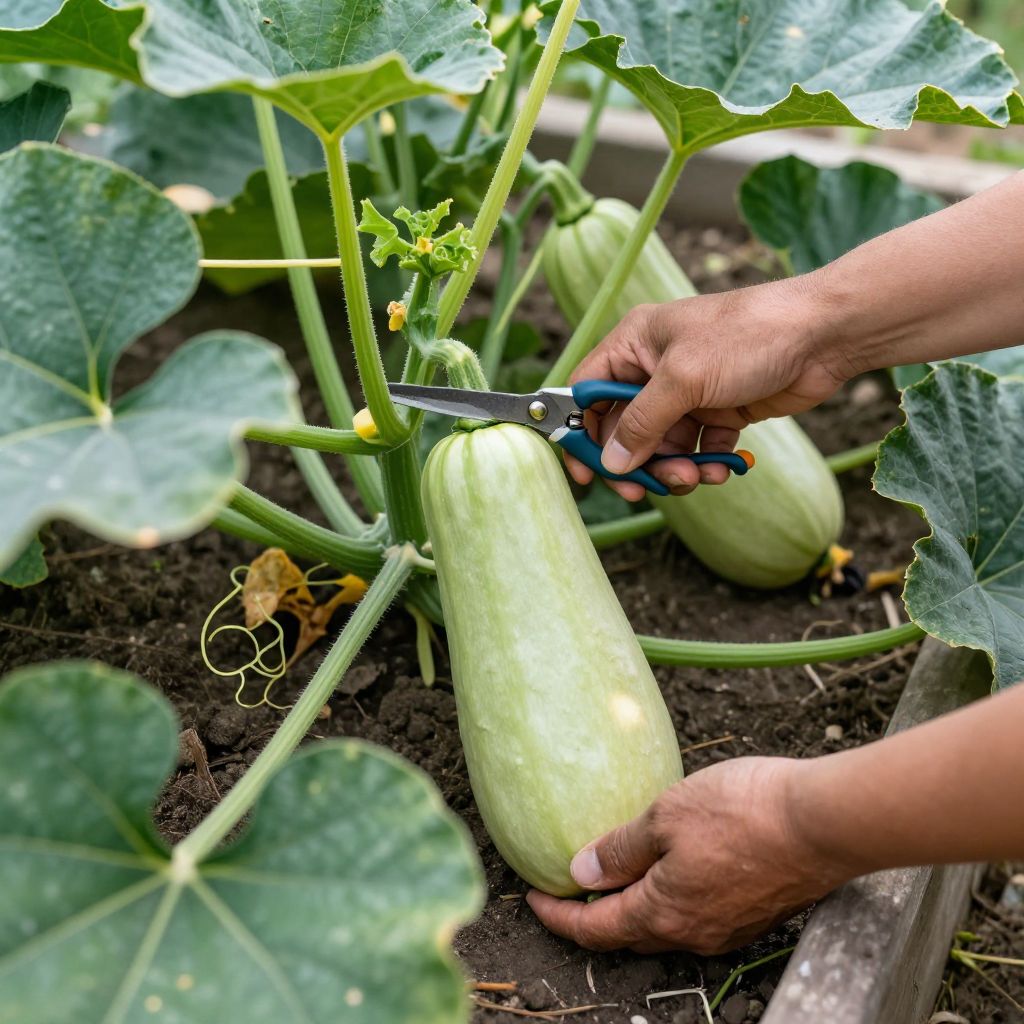
Use clean, sharp pruners or a knife rather than pulling fruit off the vine. Squash stems can tear, and a rough break may shorten storage life or damage nearby fruiting stems.
- Inspect the plant and choose fruit that matches the maturity signs for that type.
- Cut the stem, leaving a short stub attached to the fruit when possible.
- Handle the squash gently to avoid bruising the skin.
- Place harvested fruit in a shaded, dry spot right away.
- Sort out any damaged fruit for immediate use.
Do not twist or yank squash from the vine unless the stem is already loose. A clean cut is safer for the plant and better for storage.
How to harvest for best flavor and storage
What you do after picking matters almost as much as harvest timing. Summer squash should be cooled and used soon after harvest for the best texture. Winter squash benefits from curing, which helps toughen the skin and improve keeping quality.
Summer squash after harvest
Store summer squash in the refrigerator and use it within a few days if possible. The flavor and texture are best when it is very fresh. If the skin becomes wrinkled or the flesh softens, quality is dropping quickly.
Winter squash after harvest
Many winter squash types store better after curing in a warm, dry, airy place for about 7 to 14 days, depending on the variety and conditions. Keep the fruit out of direct rain and protect it from freezing temperatures. After curing, store in a cool, dry location with good air circulation.
Not every squash stores equally well. Thin-skinned or damaged fruit should be used sooner, while properly matured, intact fruit usually keeps much longer.
Signs your squash is not ready yet
If you’re unsure when to harvest squash, check the fruit against these warning signs of immaturity.
- Summer squash is still very small and the flower is attached and fresh.
- Winter squash rind can be dented with a fingernail.
- The stem is green and soft on a winter squash that should be mature.
- Fruit is pale or unevenly colored for the variety.
- The squash feels light and underfilled.
For winter squash, picking too early often means poor flavor and shorter storage life. For summer squash, waiting too long usually means the opposite problem: oversized fruit with coarse texture.
Common harvesting mistakes to avoid
Many harvest problems come from trying to judge squash by size alone. Bigger is not better for summer squash, and color alone is not enough for winter squash.
- Leaving summer squash too long on the vine.
- Picking winter squash before the rind hardens.
- Harvesting after frost damage.
- Pulling fruit off and tearing the stem.
- Storing bruised or wet squash with sound fruit.
Another common mistake is harvesting all fruit at once when only some are ready. Squash plants often produce over several weeks, so check vines regularly.
What to do if pests or disease affect harvest timing
Squash vines can be affected by powdery mildew, squash bugs, vine borers, and other issues that reduce plant health before fruit is fully mature. If the vine is declining, you may need to harvest slightly early rather than lose the crop altogether.
In that situation, prioritize fruit that is closest to maturity. For winter squash, you can sometimes improve keeping quality by curing carefully, but very immature fruit will not store as well as fully mature fruit.
When disease changes the plan
If leaves are dying back from disease, don’t assume the squash is ready just because the vine looks tired. Check the fruit itself. A hard rind and mature stem still matter more than plant decline alone.
How often to check your plants
During peak season, inspect squash plants every one to two days, especially summer squash. Fruit can grow surprisingly fast in warm weather, and a zucchini that was perfect yesterday can be oversized by the next day.
Winter squash usually needs less frequent checking, but you should still watch for color change, stem drying, and frost risk as the season progresses.
Quick harvest checklist
Before you pick, ask yourself these questions:
- Is this summer squash still tender and small enough?
- Is this winter squash fully colored and hard-rinded?
- Is the stem dry enough for mature winter squash?
- Is frost or wet weather coming soon?
- Do I have a clean tool ready for a neat cut?
If you can answer yes to the right harvest signs for your squash type, it’s time to pick.
Final tips for better harvests
The best way to learn when to harvest squash is to combine the plant’s visual signs with regular checking. Start with the type of squash, then judge size, skin texture, stem condition, and weather. That approach gives you better flavor, better texture, and better storage results.
For more help after harvest, you may also want to read about how to cure winter squash for storage and how to grow zucchini successfully in the home garden.