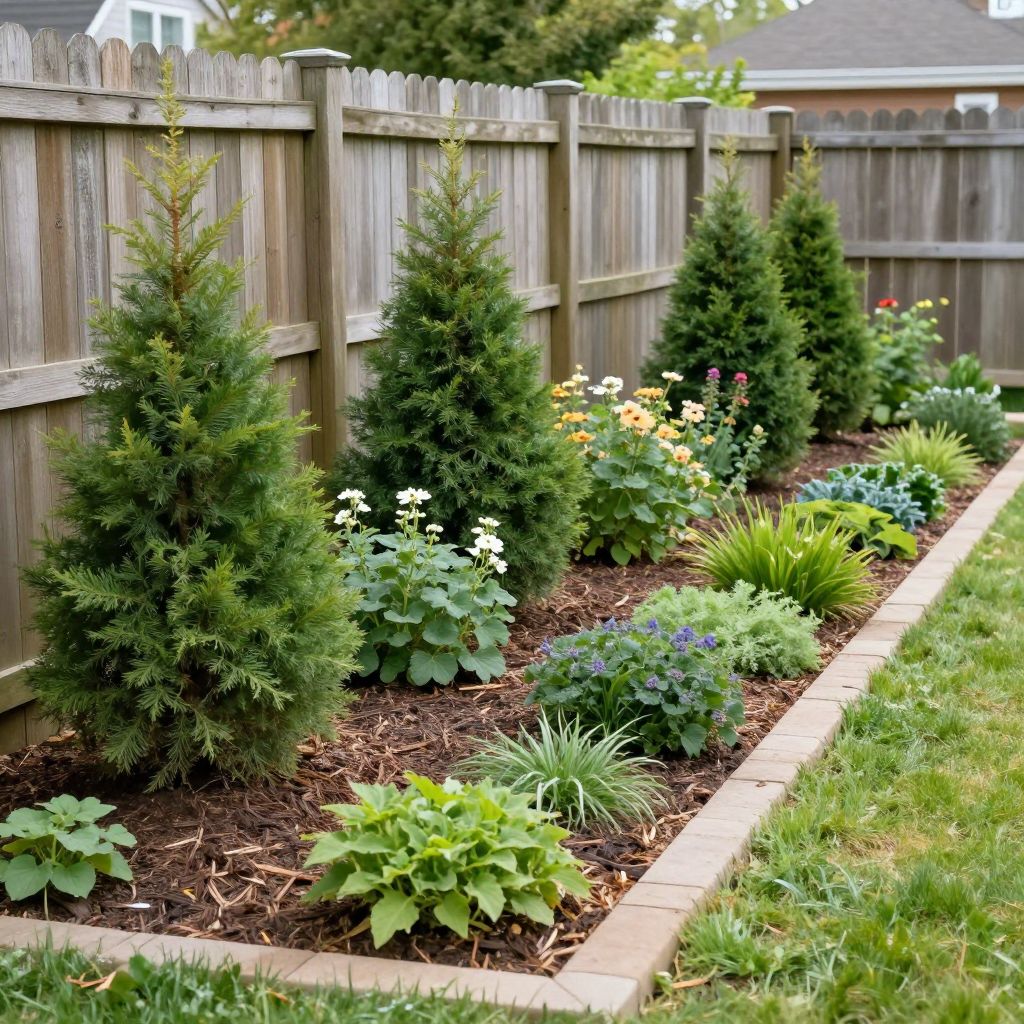
What should you plant along a fence line if you want it to look good, grow well, and not become a maintenance headache? The best choice depends on sunlight, soil, moisture, fence material, and how much room the roots and branches will have to spread.
In many yards, the smartest fence-line planting uses a mix of shrubs, climbers, perennials, or narrow trees chosen for the site. The goal is to soften the fence, add privacy or color, and avoid future problems like root damage, mildew, overcrowding, or constant pruning.
What to plant along fence line?
Choose plants based on the fence’s purpose and the conditions beside it. For privacy, use shrubs or climbers; for color, use perennials and ornamental grasses; for a tidy border, use compact shrubs or repeating low plants. Always match mature size to the available space so roots, branches, and maintenance stay manageable.
Start with the fence and site conditions
Before buying plants, look closely at the fence line itself. A sunny, dry fence beside a driveway needs different plants than a shaded, damp fence at the back of the yard.
Check these four things first
- Sunlight: Full sun, part shade, or deep shade changes what will thrive.
- Soil: Sandy soil drains quickly; clay holds water and can stay soggy.
- Space: Measure the planting strip width and the distance to posts, foundations, and walkways.
- Purpose: Privacy, screening, flowers, wildlife support, or a low-maintenance border all call for different plants.
If the strip is very narrow, avoid large shrubs that will outgrow the space. If the area is windy or exposed, choose sturdy plants that do not flop easily or break against the fence.
Best plant types for a fence line
1. Shrubs for privacy and structure
Shrubs are one of the most reliable answers to what to plant along fence line areas because they create a long-lasting framework. Evergreens give year-round screening, while deciduous shrubs can provide flowers, berries, and seasonal interest.
Good options vary by climate, but common landscape choices include boxwood, holly, viburnum, ninebark, hydrangea, and inkberry holly in suitable regions. Pick varieties that stay within the width you can maintain without constant shearing.
2. Climbing plants for a vertical look
Climbers are useful when the fence is solid and you want to save ground space. They can soften a plain fence, but they need support and regular pruning to keep them from becoming tangled or heavy.
Examples include clematis, climbing roses, honeysuckle, jasmine in warm climates, and espaliered fruit trees where conditions allow. Do not let vigorous vines attach directly to weak or old fencing unless the structure can handle the weight.
3. Perennials for color and lower maintenance
Perennials work well when you want a softer, layered look rather than a full screen. Repeating a few tough plants along the fence line creates rhythm and is usually easier to maintain than a mixed collection of many different species.
Consider coneflowers, daylilies, salvias, black-eyed Susans, hostas for shade, and ornamental grasses for movement. Group plants in drifts of three or five for a more natural look.
4. Ornamental grasses for movement and screening
Grasses are excellent along fence lines because they tolerate wind, add texture, and often need only annual cleanup. Taller types can hide the lower part of a fence without making the area feel heavy.
Choose grasses that suit your climate and soil, and give them enough room to arch without spilling into paths. In small spaces, use compact varieties instead of large clumping types that can spread wide.
5. Narrow trees or small ornamental trees
In wider planting strips, small trees can create height and privacy without the bulk of large shade trees. They work best when planted far enough from the fence to allow trunk flare, branch spread, and future pruning access.
Use caution with fast-growing species. A tree that looks small at planting can become too large for a fence line in just a few seasons if the mature size is ignored.
How far from the fence should you plant?
As a general rule, plant far enough away that the mature width of the plant will not press into the fence. For shrubs, that often means at least half the mature width from the fence line, and sometimes more for vigorous species. For trees, leave much more room for trunk and root spread.
If you are unsure, it is safer to plant too far away than too close. A plant that has room to grow can be pruned into shape; a plant that is cramped often becomes thin, unhealthy, and difficult to manage.
Preparing the soil along a fence line
Fence lines often have compacted soil, construction debris, dry spots, or poor drainage. Good soil preparation makes a bigger difference here than in many other parts of the yard.
Prepare the planting strip
- Remove weeds, turf, rocks, and old roots.
- Loosen the soil to a depth of about 8 to 12 inches where possible.
- Mix in compost if the soil is poor, compacted, or low in organic matter.
- Check drainage by watering the area or observing how quickly rain disappears.
- Shape the bed so water does not pool against the fence posts.
Use compost to improve structure, but do not create a planting hole that is much richer than the surrounding soil. Roots need to move outward into the native soil, not stay trapped in a pocket of amended mix.
Planting steps for a healthy fence line bed
Planting correctly helps roots establish quickly and reduces stress. This is especially important along fences, where reflected heat, dryness, and root competition can make conditions tougher than they first appear.
- Dig a hole as deep as the root ball and about 2 to 3 times as wide.
- Set the plant so the top of the root ball is level with or slightly above the surrounding soil.
- Backfill with the native soil you removed, breaking up clumps as you go.
- Water thoroughly to settle the soil and remove air pockets.
- Mulch with 2 to 3 inches of organic mulch, keeping it a few inches away from stems and trunks.
Avoid piling mulch against the fence posts or the plant’s base. Excess mulch can hold moisture against wood and encourage rot or stem problems.
Watering and mulching after planting
New fence-line plantings usually need more attention than established beds because the area may dry out faster near fences, walls, or paved surfaces. Water deeply rather than lightly and often.
Check soil moisture with your finger. If the top few inches are dry and the plant is not yet established, water again. Once plants are rooted in, most need less frequent but deeper watering, adjusted for rainfall, soil type, and season.
Mulch helps conserve moisture, suppress weeds, and moderate soil temperature. Organic mulches such as shredded bark, leaf mold, or composted wood chips are usually best for shrubs and perennials.
Maintenance tips for a neat fence line
Pruning
Prune to keep plants off the fence, away from walkways, and within their allotted space. Light, regular pruning is better than waiting until the plant becomes overgrown.
For flowering shrubs and climbers, learn whether they bloom on old wood or new wood before cutting. Pruning at the wrong time can remove flower buds and reduce display.
Weeding and edging
Fence lines often collect weeds because mowing is awkward there. A defined edge and mulch layer make maintenance easier and help the bed look intentional.
Pull weeds when small, especially near young plants that are still competing for water and nutrients. Avoid deep digging close to roots once the bed is established.
Feeding
Most healthy fence-line plants do not need heavy feeding. In many gardens, a yearly top-dressing of compost is enough, especially if the soil is already decent.
If plants look weak, pale, or stunted, test the soil before adding fertilizer. Poor drainage, root crowding, or too much shade are often the real problem.
Common mistakes to avoid
- Planting too close: Crowding leads to constant pruning and poor airflow.
- Choosing the wrong mature size: A plant that fits now may overwhelm the space later.
- Ignoring light levels: Shade plants fail in hot sun, and sun lovers stretch in deep shade.
- Overwatering soggy soil: Fence lines can stay damp longer than expected after rain.
- Using aggressive vines on weak fences: Heavy growth can damage panels, posts, and hardware.
- Skipping soil preparation: Compacted soil slows root growth and weakens new plantings.
Troubleshooting fence-line problems
If plants look sparse or lean
They may be reaching for light. Try a better-suited plant, thin nearby overgrowth, or choose a species that tolerates the light level you actually have.
If leaves yellow or growth stalls
Check drainage first. Waterlogged roots, compacted soil, or buried stems often cause more trouble than a lack of fertilizer.
If vines or shrubs keep invading the fence
Prune more often and choose less vigorous varieties next time. For aggressive climbers, install a support system that keeps growth off the fence surface.
If the bed dries out too fast
Add mulch, improve soil organic matter, and consider drip irrigation or soaker hoses. Narrow strips near fences may need targeted watering during hot, windy periods.
Simple plant combinations that work well
Good fence-line planting usually relies on repetition and restraint. A few well-chosen plants look better than a crowded mix of unrelated species.
- Sunny privacy border: Shrubs plus ornamental grasses for height and texture.
- Shady fence line: Hostas, ferns, hydrangeas, and shade-tolerant shrubs where climate allows.
- Flowering border: Repeated perennials with one or two climbers for vertical interest.
- Low-maintenance screen: Evergreen shrubs spaced for mature width, with mulch underneath.
If you want year-round structure, combine evergreen shrubs with seasonal perennials rather than relying on one plant type alone. That gives you a fuller look through the seasons and reduces the risk of the whole border looking bare at once.
Conclusion
The best answer to what to plant along fence line is the plant that matches your light, soil, space, and maintenance level. Start with a clear plan, choose plants for their mature size, and give them good soil, mulch, and room to grow. If you are unsure, begin with a small section and expand once you see how the site behaves.
For more practical garden planning, you may also want to read about choosing shrubs for small spaces and designing a low-maintenance border.