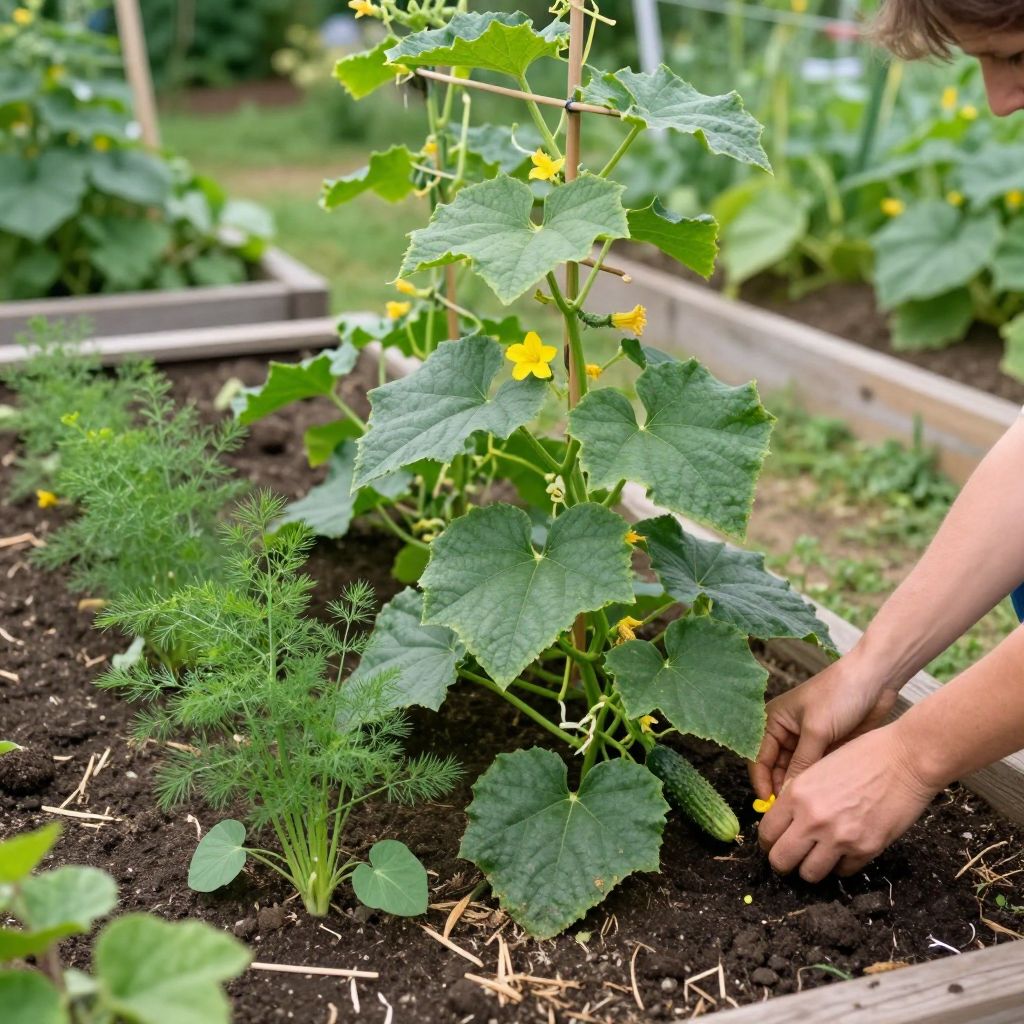
What to plant next to cucumbers depends on how much space, sun, and airflow you can give them. The best companion plants help shade the soil, attract pollinators, discourage pests, or make efficient use of a trellis without crowding the vines.
Choose companions that share cucumbers’ love of warm weather, rich soil, and regular moisture. Avoid plants that compete too aggressively, create too much shade, or increase disease pressure around the leaves.
What to plant next to cucumbers?
Good companions for cucumbers include beans, peas, radishes, lettuce, dill, nasturtiums, marigolds, and sunflowers in the right setting. These plants can improve space use, support beneficial insects, or provide light shade. Keep tall or sprawling neighbors far enough away to preserve airflow and reduce mildew and pest problems.
Best companion plants for cucumbers
Beans and peas
Beans and peas can work well near cucumbers because they use vertical space and help you grow more in a small bed. Pole beans are especially useful on a separate trellis or on the same support only if there is plenty of room. Bush beans can fit along the edge of a bed without overwhelming cucumber vines.
These legumes are often suggested because they do not compete heavily with cucumbers for the same growth habit. Still, give both crops enough room so their leaves do not mat together and trap moisture.
Radishes
Radishes are one of the easiest short-season crops to tuck beside cucumbers. They mature quickly, so you can harvest them before cucumber vines fully spread. They also help you make use of open soil early in the season while cucumbers are still small.
Because radishes stay low, they usually do not interfere with cucumber growth. They are a practical choice for interplanting in the front of a bed or along the sunny edge of a trellis.
Lettuce and other leafy greens
Lettuce, spinach, and similar greens can grow near cucumbers if they receive partial shade later in the season. In hot weather, cucumber foliage may help keep these crops from bolting too quickly. This is especially useful in warm climates where spring greens fade fast.
Plant leafy greens where they will get morning sun and some afternoon relief. If cucumber leaves become dense, harvest the greens early before they are shaded out.
Dill
Dill is a classic companion for cucumbers because it can attract beneficial insects such as hoverflies and parasitic wasps. Those insects help keep aphids and other small pests in check. Dill also fits neatly into the same kind of loose, airy planting style cucumbers prefer.
One caution: dill can grow tall and may self-seed if left too long. Plant it where it will not crowd the cucumber canopy, and harvest leaves regularly if you want to keep it compact.
Nasturtiums
Nasturtiums are useful near cucumbers as a low-growing companion and a possible trap crop for aphids. They sprawl at ground level, which can help cover bare soil and reduce splash from watering or rain. Their flowers also attract pollinators.
Use them as a border or at the ends of a bed rather than directly under the center of a dense cucumber patch. They need room to spread, and too much crowding reduces their usefulness.
Marigolds
Marigolds are often planted near cucumbers because they are compact, easy to tuck into edges, and may help support a more diverse garden around the bed. They are not a cure-all for pests, but they can be a sensible companion in mixed plantings.
Choose shorter varieties if you want them to stay out of the cucumber canopy. Tall marigolds can shade young cucumber plants if placed too close.
Sunflowers
Sunflowers can be helpful as a living support or windbreak on the north side of a cucumber planting, especially in larger gardens. They may also draw pollinators into the area. Use them thoughtfully, though, because they can cast strong shade and compete for water if planted too close.
If you use sunflowers, place them where they will not block the cucumbers’ sun. In most gardens, that means keeping them on the north or northwest side, not between cucumber rows and the brightest light.
Plants to avoid near cucumbers
Some plants are poor neighbors for cucumbers because they compete too much, increase disease risk, or make it harder to manage the bed. Avoid crowding cucumbers with plants that need very different conditions or that spread aggressively.
- Potatoes and other heavy feeders that can increase competition and complicate pest management.
- Aromatic herbs planted too densely, which can reduce airflow if they form a thick border.
- Large, sprawling crops that shade cucumbers or tangle with the vines.
- Plants with similar disease issues if your garden has a history of mildew or bacterial leaf problems.
In practice, the biggest issue is often not a specific “bad” companion, but overcrowding. Cucumbers need space for leaves to dry after rain or watering, and poor airflow can invite disease.
How to arrange companions around cucumbers
Use a trellis when possible
A trellis makes companion planting much easier. Vertical cucumbers take up less ground space, leaving room for low crops like lettuce, radishes, or nasturtiums beneath or beside them. A trellis also improves airflow, which is one of the best ways to reduce powdery mildew.
Place the trellis so it does not shade nearby plants that need full sun. In many gardens, a north-south orientation works well because it spreads light more evenly through the day.
Keep the root zone open
Cucumber roots appreciate evenly moist soil, but they do not like being constantly disturbed. When planting companions, leave enough space to water and mulch without digging too close to the main stems.
A light mulch of straw, shredded leaves, or untreated grass clippings can help conserve moisture and reduce weed pressure. Keep mulch a little away from stems to avoid rot.
Think in layers
The best cucumber companions usually fit into one of three layers:
- Low growers like radishes, lettuce, and nasturtiums.
- Mid-height plants like bush beans or marigolds.
- Tall supports like a trellis, pole beans, or sunflowers placed carefully.
This layered approach helps you use space efficiently without creating a dense, humid jungle at ground level.
Soil, sunlight, and watering for mixed plantings
Cucumbers grow best in fertile, well-drained soil with plenty of organic matter. Companion plants should fit those same conditions whenever possible, especially if they are sharing the same bed. Add compost before planting to improve moisture retention and soil structure.
Most cucumber companions do best in full sun, though some leafy greens can tolerate a bit of afternoon shade once temperatures rise. If your site is very hot, a little shade from taller plants may help, but too much shade will reduce cucumber flowering and fruiting.
Water at the base of the plants rather than overhead when you can. Wet leaves, especially in crowded beds, can encourage fungal disease. Consistent moisture is important, but soggy soil is not.
Common mistakes when planting next to cucumbers
Overcrowding the bed
This is the most common mistake. Cucumbers grow quickly once they establish, and a bed that looks spacious in spring can become packed by midsummer. If you plant too many companions, you may end up with poor airflow and smaller harvests.
Placing tall plants on the wrong side
Tall companions should not shade cucumbers during the main part of the day. In most gardens, put taller plants on the north side so they do not block sunlight from shorter crops.
Ignoring disease pressure
If your cucumbers regularly get powdery mildew or downy mildew, companion planting will not solve the problem by itself. Spacing, trellising, watering at the soil line, and removing infected leaves matter more than any companion plant choice.
Mixing plants with very different water needs
Cucumbers like steady moisture. If you place them beside plants that prefer dry soil, one crop will usually suffer. Choose companions that can tolerate the same irrigation pattern, or keep them in separate sections of the bed.
Pest and pollination benefits of companion planting
Cucumbers depend on pollinators for fruit set in most home gardens. Flowers nearby can help draw bees and other beneficial insects into the area. Dill, nasturtiums, marigolds, and sunflowers can all contribute to a more active pollinator zone.
Companion plants may also help confuse or discourage some pests, but they are not a substitute for inspection. Check the undersides of leaves for aphids, cucumber beetles, and early signs of mildew. Catching problems early is much easier than trying to fix a crowded, neglected bed later.
- Look for yellowing, spotted, or curling leaves.
- Remove heavily damaged leaves to improve airflow.
- Hand-pick pests when populations are small.
- Keep weeds down so insects have fewer hiding places.
Simple planting plan for a cucumber bed
- Prepare the bed with compost and loosened, well-drained soil.
- Install a trellis or support before planting if you plan to grow vertically.
- Plant cucumbers with enough room for mature vines and access for watering.
- Fill edges and open spaces with low companions such as radishes, lettuce, or nasturtiums.
- Add a few pollinator-friendly flowers like dill or marigolds where they will not crowd the vines.
- Mulch lightly and water at the base to keep the bed evenly moist.
- Thin or harvest companion crops early if cucumber growth starts to close in on them.
When companion planting works best
Companion planting is most effective when you match the plants to your climate and your bed size. In cooler areas, early-season lettuce and radishes are especially useful before cucumbers take over. In warmer regions, low flowers and heat-tolerant greens may be better choices.
If you garden in containers, choose only a few compact companions. A pot with cucumbers and too many extras can dry out quickly and become difficult to manage. In containers, less is usually better.
Conclusion
If you are wondering what to plant next to cucumbers, start with low, quick crops like radishes and lettuce, then add helpful companions such as dill, nasturtiums, or marigolds. Keep the bed open, sunny, and well-ventilated, and your cucumbers will have a much better chance of growing cleanly and producing well.
For more practical garden planning, you may also want to read about how to trellis cucumbers for better airflow and the best vegetables to grow in companion planting beds.